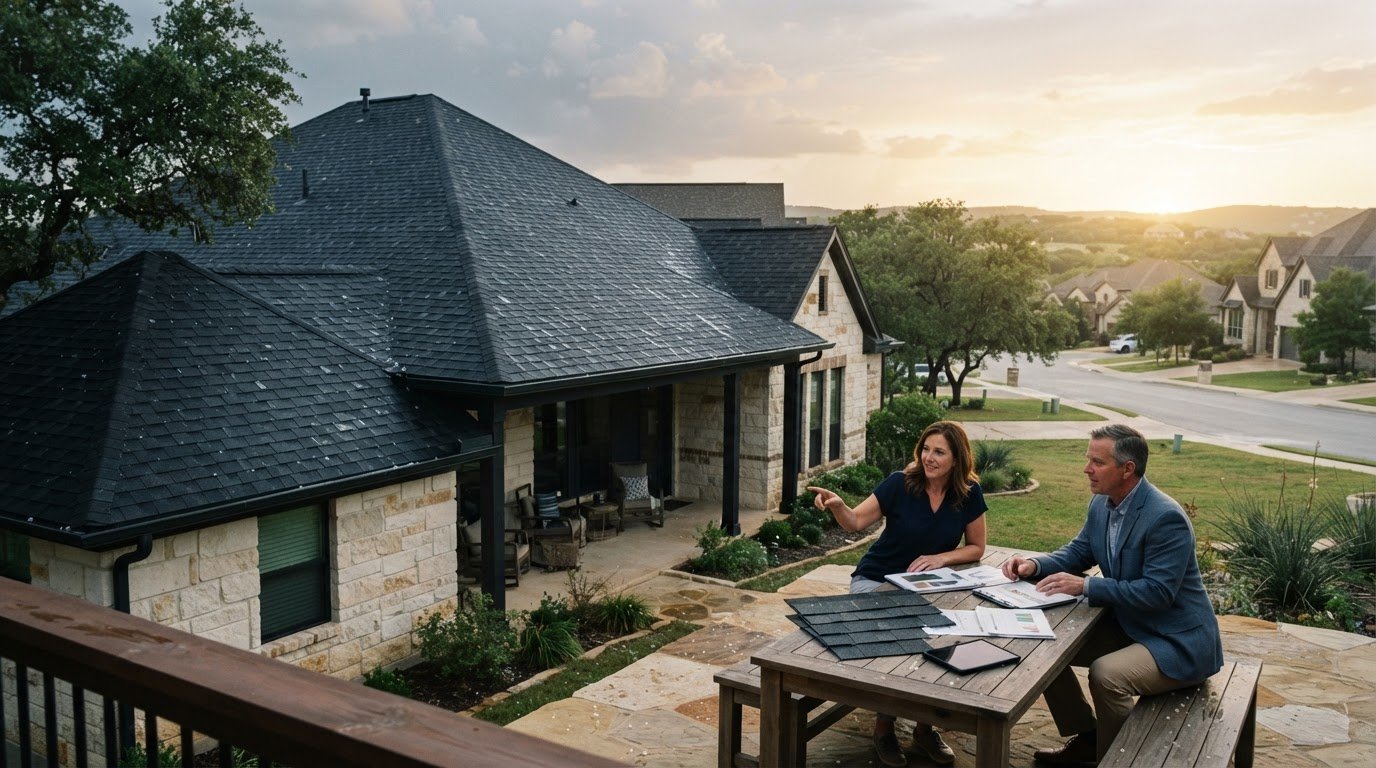
If you are searching for a hail impact resistant roof shingle insurance discount in Round Rock, start with an important distinction: a Class 4 rating does not guarantee a lower homeowners insurance premium. Whether a roof affects your premium depends on the insurer, the policy, and your circumstances. Review those details before treating a possible credit as part of the value of a roofing upgrade.
Impact-resistant shingles are designed to better withstand impacts, and a Class 4 rating describes a product’s performance under a standardized test. It does not make a roof hail-proof or determine how a policy will treat damage. Before choosing shingles, identify the exact product, gather its rating and installation records, and review how your policy addresses the roof.
This article explains what to compare and which questions can make a policy review more useful. Chris Lewis of The Lewis Agency has more than 25 years of insurance experience and helps homeowners in Round Rock and across Austin and Central Texas understand their coverage. That includes homeowners in Leander, Cedar Park, Georgetown, Liberty Hill, and nearby communities.
Key Takeaways
- A Class 4 rating describes a shingle’s tested impact resistance. It does not guarantee an insurance discount or prevent hail damage.
- For Round Rock homeowners, any possible effect on a premium depends on the policy and insurer’s criteria. Review the question before committing to an upgrade.
- Gather product identification, rating information, installation records, and current policy documents to make a roof review more specific.
- Compare roofing options by their product documentation and suitability for your home, not by the rating alone.
- Chris Lewis has more than 25 years of insurance experience and can help explain policy language through The Lewis Agency, an Allstate agency.
Can impact-resistant roof shingles earn a homeowners insurance discount in Round Rock?
A roof upgrade may affect a homeowners insurance premium, but a Class 4 shingle rating does not guarantee a discount. Any premium effect depends on the insurer’s criteria, the policy terms, and your individual circumstances. If you live in Round Rock or elsewhere in Central Texas, review the insurance question before you include a possible credit in your roofing budget.
Impact-resistant shingles are designed and tested to better withstand impacts than standard products. That may be one consideration when choosing roofing in a hail-prone area, but it is separate from the policy’s coverage, deductibles, and claim terms. A product rating does not automatically change any of those policy details.
What does impact-resistant mean for roof shingles?
Impact-resistance testing gives buyers a standardized way to compare how roofing materials respond to impacts. For asphalt shingles, the UL 2218 standard assigns impact classifications, with Class 4 as its highest classification. The classification describes a product’s performance in a test. It does not establish how an insurer will treat the roof. For general background on asphalt shingles, see Asphalt shingle.
A test result does not promise that a roof will avoid damage from real hail. Storm conditions and specific impacts can differ from a controlled test. A manufacturer’s warranty also has its own terms and does not determine insurance coverage. Keep these distinctions in mind when comparing products and reviewing roof documents.
Does a Class 4 rating guarantee a Round Rock insurance discount?
No. A Class 4 rating does not establish that a roof qualifies for a discount. Insurers set their own criteria, which can depend on the policy and the homeowner’s circumstances. Even if impact-resistant materials are considered, the rating alone may not show whether a particular roof qualifies for a premium adjustment.
Before counting on a lower premium, review the specific product and policy. Ask how the insurer evaluates the roof material and what documentation it uses. Then assess the roofing decision on its own merits, including tested performance, warranty terms, and suitability for your home. This helps you consider a possible insurance effect without treating it as promised savings.
What a Class 4 shingle rating tells you, and what it does not
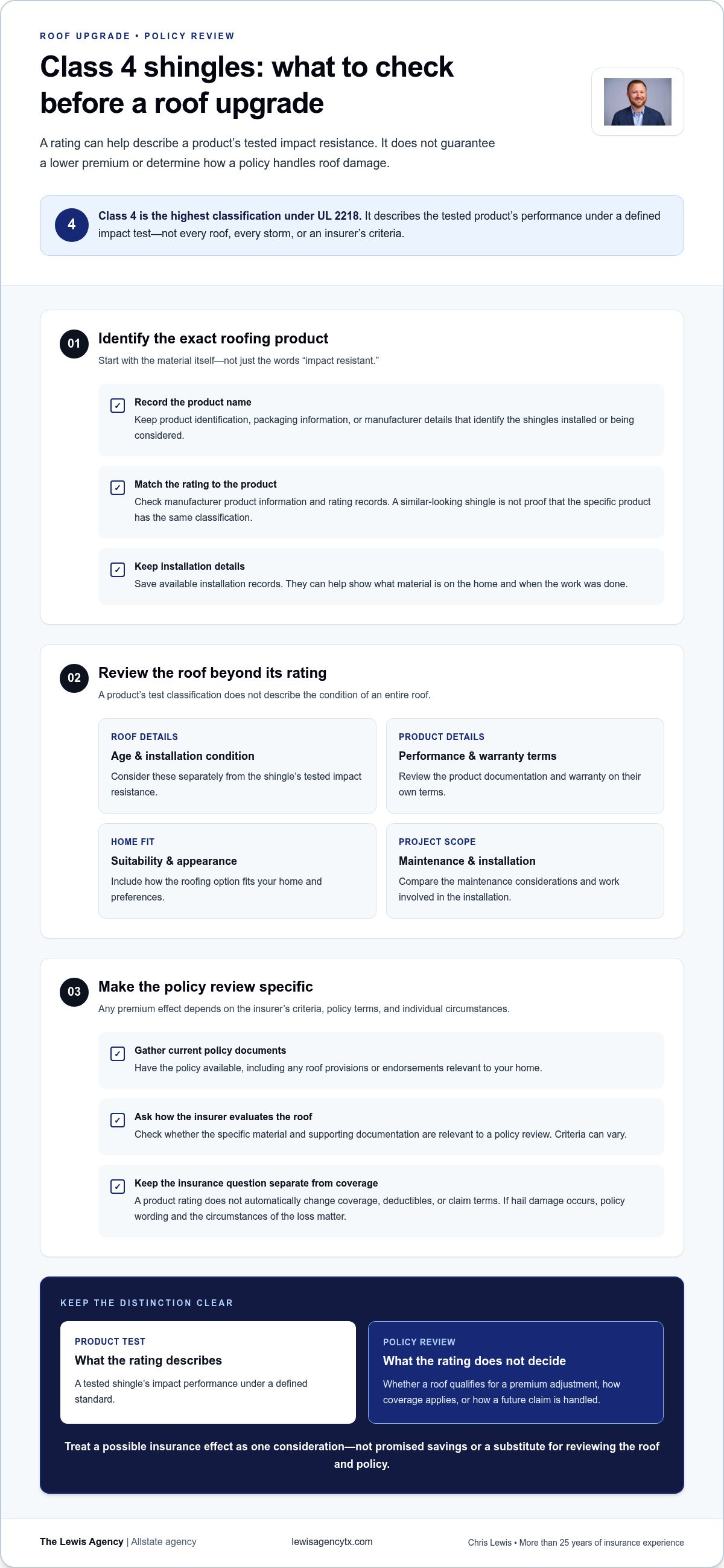
A Class 4 label describes a product’s performance under a defined impact test. It does not tell you whether the roof meets an insurer’s underwriting or discount criteria. One is an assessment of a roofing product in testing. The other depends on the insurer’s rules and the details of your policy.
How should homeowners interpret a Class 4 classification?
UL 2218 is a test standard used to classify the impact resistance of roofing materials. Class 4 is the highest classification under that standard. UL Solutions Roofing Testing and Certification Services explains UL’s work testing and certifying roofing products.
The classification applies to the tested product. It does not certify every shingle that looks similar, the complete roof assembly, or how a roof will perform in every storm. It also does not determine whether an insurer will offer a credit, accept a product for a particular home, or handle a future claim in a particular way.
Which roof details can matter beyond the rating?
A product label is a useful starting point, but it may not provide all the information relevant to a policy review. Keep records that identify the shingle and its rating, along with available installation details. These records can help establish what material is on the home and when the work was done. Insurers may consider details beyond the rating, and the information they use can vary.
Roof age, installation condition, and visible damage are separate from a shingle’s tested impact resistance. A Class 4 product does not show that an existing roof is in good condition. Likewise, cosmetic marks alone do not establish whether the roof’s function is affected. If hail damage occurs, the policy wording and circumstances of the loss matter. The product rating by itself does not determine coverage or a claim outcome.
Compare the label with the manufacturer’s product information and the roof records you have. Then review the policy language that applies to your home, including relevant roof provisions or endorsements. Chris Lewis and The Lewis Agency can help explain your current policy. Review your homeowners coverage with The Lewis Agency.
Compare roofing choices by documentation and possible insurance relevance
Roof options are easier to assess when you separate three questions: What is the material? What documentation supports its claims? How does it fit your home and policy? A possible insurance credit can be one factor, but it should not replace consideration of performance, appearance, maintenance, warranty terms, and the installation scope.
| Roof option | Product identification and available documentation | Questions to review with the insurer |
|---|---|---|
| Standard asphalt shingles | Product name or packaging information, product specifications, and installation records, if available. | How does the policy treat this roof type? Are there roof details or records relevant to a policy review? |
| Documented impact-resistant shingles | Manufacturer product identification, rating information, and installation records that connect the product to the home. | Does the insurer consider this specific product or documentation, and are there policy-specific criteria? |
| Other roof materials | Material and product details, available specifications, and records describing the installation. | How does the policy treat this material, and what information would help clarify its eligibility or coverage? |
What should homeowners compare before selecting shingles?
Look beyond a sales description. Compare the exact product information with the written installation scope. Consider whether the material suits your home, preferred appearance, maintenance expectations, and long-term plans. Read the warranty terms, including what the warranty covers and excludes. These are roofing considerations, separate from whether an insurer may apply a credit.
For a Round Rock homeowner, a possible hail impact resistant roof shingle insurance discount is one factor to explore, not the sole reason to choose a product. The insurer’s review may depend on its rules, the policy, and the records available. Do not treat a rating or marketing statement as a promise of premium savings.
How do warranties and insurance coverage differ?
A manufacturer warranty and a homeowners policy serve different purposes. A warranty sets out the manufacturer’s terms for the product. Homeowners insurance addresses covered losses according to the policy, its exclusions and endorsements, and the circumstances of the loss. Do not assume a warranty will pay for storm damage or replace insurance coverage.
Cosmetic damage is another policy question. A mark or dent may not mean the roof’s function has changed, and policy language can affect how cosmetic damage is treated. Review the applicable wording rather than relying on the shingle rating or warranty alone. The useful comparison is not simply which material sounds more resistant. It is what you can document and how the roof fits your home and policy.
How to check whether a Round Rock roof upgrade may affect your policy
Before choosing a roof upgrade, put the product details alongside your current policy. A focused review can help clarify what the insurer considers and what documents may be relevant. It cannot guarantee a discount, but it can help you make the roofing decision with fewer assumptions.
What documents should you gather for a policy review?
Collect the records you have before discussing proposed or completed roof work. Useful documents may include:
- Product labels or packaging that identify the shingle or roofing material.
- Manufacturer documentation showing the product’s impact-resistance rating.
- An invoice, written scope, or installation records describing the work and materials.
- Your current declarations page and any policy wording or endorsements that address the roof.
Documentation requirements can vary. Keep any instructions about which records are relevant with your roof documents.
What questions can clarify possible insurance effects?
Use these questions to guide a review of your specific policy:
- Does my current policy recognize this product’s documented impact-resistance rating?
- Are there eligibility conditions or proof requirements for this policy?
- Could the roof affect the premium, and how would any change be reflected?
- Would the upgrade affect any policy terms or endorsements, not just the premium?
For the hail impact resistant roof shingle insurance discount Round Rock homeowners may be considering, focus on the specific product and policy rather than a general statement about Class 4 roofs. Record the response, the date of the conversation, and any documents discussed. Save written explanations with your declarations page and installation records. If a review depends on information you do not yet have, note what is needed and keep it with your roof file.
Chris Lewis and The Lewis Agency can help explain policy language and answer questions about your current homeowners coverage. Review your roof and policy questions with The Lewis Agency.
Reviewing a possible roof discount with The Lewis Agency
A hail impact resistant roof shingle insurance discount is not guaranteed. Round Rock homeowners can still review how a documented roof relates to their current policy and get a clearer understanding of its terms. Chris Lewis has more than 25 years of insurance experience and helps homeowners across Austin and Central Texas understand coverage questions.
The Lewis Agency is an Allstate agency. It does not shop homeowners insurance among multiple carriers, and it does not approve discounts or decide whether a roof meets an insurer’s eligibility rules. Insurers make decisions about eligibility, underwriting, rates, renewals, and claims. Those decisions depend on the insurer, policy, endorsements, and individual circumstances.
What can an insurance agency help you understand?
An agency can help explain relevant policy wording and identify questions about roof materials and supporting documents. For example, you can review whether the product label, rating information, and installation records clearly identify the roof. The agency can also help you understand the claims process if damage occurs, but it does not control claim decisions or payments.
A policy review can clarify the terms that apply to your home. It is not a promise that your premium will change or that a particular roof will qualify for a credit. Keep the discussion focused on your policy wording and the insurer’s response to the specific documentation provided.
What is a sensible next step for Round Rock homeowners?
Before replacing a roof or reviewing your policy, gather the product rating information and installation records you have. Set them alongside your current declarations page and any relevant roof coverage terms. Reviewing these materials before renewal or replacement can help you ask focused questions and keep useful records together.
If you’d like help understanding your homeowners policy, ask The Lewis Agency about your homeowners policy. A clear conversation can help you understand your current coverage without assuming a discount is available.
Make your roof decision with clearer policy information
A Class 4 rating describes tested impact resistance. It does not guarantee an insurance discount or determine how a claim will be handled. The hail impact resistant roof shingle insurance discount Round Rock homeowners may be considering depends on the insurer, policy terms, and available roof documentation.
Before choosing an upgrade, gather product and installation records, then review your declarations page and relevant policy wording. Ask how your specific policy treats the documented roofing material and whether any requirements or policy changes apply. Consider durability, maintenance, appearance, and warranty terms alongside any possible insurance effect.
Chris Lewis has more than 25 years of insurance experience and helps homeowners in Round Rock and across Austin and Central Texas understand their coverage through The Lewis Agency, an Allstate agency. The insurer makes decisions about eligibility, rates, renewals, and claims. A policy review can help you understand the terms and ask informed questions, whether you are in Round Rock, Leander, Cedar Park, Georgetown, or Liberty Hill.
Review your homeowners policy with The Lewis Agency before a roof replacement or renewal. Bring your roof records and policy questions to make the conversation more useful.
Frequently Asked Questions
Do Class 4 shingles qualify for an insurance discount in Round Rock?
They may be considered, but a Class 4 rating does not guarantee a discount. Eligibility and any premium effect depend on the insurer’s rules, the policy, and individual circumstances. For the hail impact resistant roof shingle insurance discount Round Rock homeowners may be considering, review the specific product documents alongside the current policy. Do not assume the rating alone will change the premium.
How can I find out whether my policy recognizes impact-resistant shingles?
Review your current policy with The Lewis Agency and ask how it treats the specific shingle product you are considering. Provide the product identification and rating documentation, then discuss any applicable eligibility conditions or proof requirements. Chris Lewis can help explain policy wording. The insurer determines eligibility and any resulting premium or policy changes.
What does a Class 4 roof rating mean?
Class 4 is the highest impact-resistance classification under UL 2218, a standardized test for roofing materials. It indicates how the tested product performed under that test, not how every roof or roof assembly will perform in a storm. A Class 4 rating does not mean a roof is hail-proof, establish insurance eligibility, or promise a particular outcome if damage occurs.
Can impact-resistant shingles lower my homeowners insurance premium?
They may affect a premium if the insurer recognizes the material and the policy’s conditions are met, but do not assume a reduction. The insurer determines whether a roof qualifies and whether a premium change applies. Before choosing an upgrade, review product and installation records alongside your current policy. Consider the roof’s performance, appearance, maintenance, and warranty separately from any possible insurance effect.
What documents may an insurer request for an impact-resistant roof review?
Useful records may include product labels or packaging, manufacturer documents showing the rating, an invoice or written installation scope, and installation records. Keep your declarations page and any relevant policy wording or endorsements with them. Requirements vary, so the insurer may specify which documents it considers. Save the response and requested materials for future reference, such as at renewal or after roof work.
Are impact-resistant shingles worth considering if a discount is not guaranteed?
They may be worth considering for reasons beyond insurance, including their tested impact resistance and suitability for your home and maintenance preferences. Compare the manufacturer’s product information, installation details, and warranty terms. A possible discount is one factor, not a promised saving. Weigh the roof’s overall fit for your home before deciding.
Does a roof rating guarantee that hail damage will be covered?
No. A product rating does not determine whether a specific loss is covered. That depends on the policy wording, applicable exclusions or endorsements, and the circumstances of the damage. If hail affects your roof, the rating may help identify the material, but it does not guarantee claim payment or a particular outcome. Review your policy before a storm and keep roof documentation available.

Article by
Chris Lewis
Chris Lewis is the owner of The Lewis Agency, an Allstate insurance agency serving Austin and Central Texas. With more than 25 years of insurance experience, Chris focuses on helping Central Texas homeowners better understand their insurance coverage, including deductibles, roofs and hail, severe weather risks, water damage and other important coverage considerations. He created LewisAgencyTX.com to provide practical homeowners insurance education and help homeowners better understand their coverage before they need it.