
Combining home and auto coverage may simplify your insurance setup, but it doesn’t make two policies one. In Texas, home and auto insurance bundling typically links separate home and vehicle policies through the same insurer. A multi-policy discount may reduce the combined premium, though savings depend on the policies and household details.
A discount is often why homeowners consider home and auto insurance bundling in Texas, but price alone doesn’t show whether a bundle is a good fit. This article explains how bundling works, what can affect the cost, and how to assess possible savings without treating a discount as guaranteed. Focus on how each policy protects your home or car, not just whether the policies are bundled.
Key Takeaways
- Home and auto coverage generally remain separate policies, even when they’re linked for bundling.
- Ask how eligibility and any discount could change if you add or cancel a policy.
- Potential savings vary by insurer and individual circumstances, so consider the policy details alongside the price.
- The Lewis Agency can help explain homeowners and auto coverage and answer questions about combining policies.
How Do Home and Auto Insurance Bundles Work in Texas?
In Texas, a bundle generally combines separate home and auto policies with one insurer. Each policy keeps its own terms, coverage, and claims process.
Managing Policies Together
Managing policies through one insurer may make it easier to view policy information, track renewal dates, and handle routine billing questions in one place. The policies still cover different risks, so review each one separately. A homeowners policy covers risks related to the property, while an auto policy addresses the vehicle. A shared account doesn’t combine those protections.
Comparing Bundle Discounts by Insurer
Discounts and eligibility vary by insurer and individual circumstances, so there’s no single comparison that applies to every Texas household. Compare the total premium alongside each policy’s coverage and deductible. Texas drivers generally must carry minimum auto liability limits of 30/60/25: $30,000 for injuries to one person, $60,000 for injuries in one accident, and $25,000 for property damage, though exceptions may apply. Homeowners coverage depends on policy terms. Flood insurance is generally required by certain lenders for properties in designated high-risk flood areas.
Reviewing Bundle Quotes With an Insurance Professional
An insurance professional can explain a quote’s terms and help you compare it with your current coverage. Review the limits, deductibles, exclusions, and property or vehicle details used to prepare the quote. For hail, wind, or hurricane concerns, check each policy separately. A bundle doesn’t create one shared rule for weather-related coverage.
Switching to a Home and Auto Bundle With Professional Help
When switching, an insurance professional can explain proposed start dates and how new policies relate to existing coverage. Bundling generally means purchasing both policies from the same insurer, while keeping them as separate policies. Before canceling an existing policy, understand whether that change affects a discount on the remaining policy. A homeowners resource center can help explain common coverage topics.
Potential Savings From Bundling Home and Auto Insurance
Home and auto insurance bundling in Texas may lower the combined premiums for eligible policies. Potential savings depend on the insurer’s terms and your circumstances. A discount alone doesn’t show whether the policies suit your needs or whether the total cost is lower.
How to Compare Potential Savings
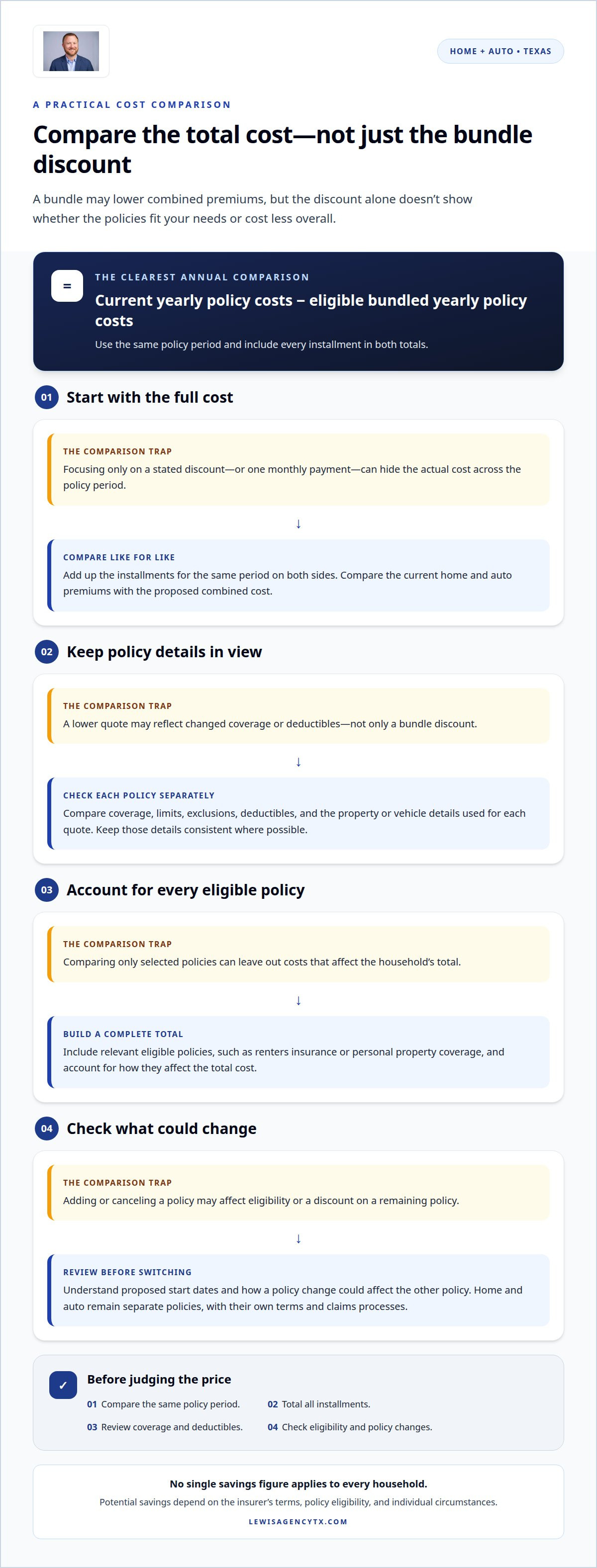
There’s no single average savings figure that applies to every customer. The amount depends on the insurer’s offer and whether the policies and household qualify. Compare the proposed total with your current premiums, accounting for any changes in coverage or deductibles. This helps distinguish a real cost reduction from a price difference caused by changed policy details.
Renters insurance or personal property coverage may have different eligibility terms from a homeowners policy. Include relevant policies when reviewing a quote, and consider how each affects the total cost.
Estimating Potential Bundle Savings
Estimate possible savings by comparing your current home and auto premiums with the proposed combined cost. Keep coverage details consistent where possible. For example, if a new homeowners quote changes dwelling coverage or the deductible, the price difference may reflect that change rather than the bundle discount alone.
Review the billing schedule as well. A lower installment doesn’t necessarily mean a lower total premium. Compare the amounts due over the same policy period, and distinguish billing differences from the stated discount.
Potential Annual Savings
Potential annual savings equal the yearly cost of your current policies minus the yearly cost of eligible bundled policies. Use the same policy period and include all installments in both totals. This gives a clearer comparison than looking at individual monthly payments.
Before switching, read the policy documents and compare coverage, exclusions, and deductibles. Include the premiums for any other eligible policies in the total. A bundle’s value depends on both its cost and whether the coverage suits your household.
The Lewis Agency: Homeowners Insurance Policies
The Lewis Agency is an Allstate agency serving homeowners who want clear guidance on home and auto coverage. Agency owner Chris Lewis has approximately 25 years of homeowners insurance experience. The agency offers homeowners, auto, landlords, and condo insurance policies.
If you’re considering combining home and auto coverage, a review can clarify how each policy addresses your property, vehicle, and household needs. The policies remain separate, so understand their coverage, exclusions, deductibles, and renewal details individually. Questions about either policy can affect how you assess the overall arrangement.
The Lewis Agency can explain policy language, answer coverage questions, and help you understand how proposed policy details compare with your current coverage. For a home in Austin or Central Texas, that conversation may include property details and the coverage you’re considering for the home and vehicle. The agency can explain the policies it offers, but it does not shop homeowners insurance among multiple carriers.
Homeowners insurance is central to The Lewis Agency’s personal coverage guidance. Auto insurance may also be relevant when you’re exploring a home and auto bundle. Landlords insurance and condo insurance address other housing situations. The right questions depend on whether you own the home you live in, rent out a property, or own a condo, as well as the terms of each policy.
A policy discussion can help you understand what a proposed arrangement includes and what may change if you add or cancel a policy. The Lewis Agency can clarify policy terms and explain the claims process, while insurers make coverage, underwriting, and claim decisions. Reviewing the details helps you make an informed coverage choice.
If you’d like to discuss your home and auto coverage, contact The Lewis Agency.
Frequently Asked Questions
What does it mean to bundle policies?
A bundle is an insurer’s label for a qualifying set of policies, not a separate type of coverage. The label doesn’t explain what each contract protects or which terms apply. It doesn’t determine whether a particular loss is covered; that depends on the applicable policy wording and endorsements. Review the policy documents, not just the bundle description.
What if I have an auto policy, but need another product?
Tell an insurance professional what has changed so they can discuss relevant policy needs. Buying a home, moving into a condo, or renting out a property can raise different insurance questions. The right discussion depends on how you use or own the property and what you need to protect. A change in circumstances is a good time to review your coverage.
Are bundling and multipolicy or multiline the same thing?
These terms are related, but their exact meanings can vary by insurer. “Bundling” often means combining qualifying policy types, while “multi-policy” or “multiline” may describe a broader group of policies. Neither term tells you which combinations qualify. Read the insurer’s wording for the specific policies and terms being discussed.
Does a claim on one policy raise rates on the other?
A claim on one policy doesn’t automatically mean another policy’s rate will rise. Any premium change depends on the insurer’s rules, the claim, and the policy involved. A home damage claim and a vehicle accident, for example, involve different circumstances. Ask how the insurer treats the particular claim and whether it could affect future renewal terms.
How do companies decide what to charge me?
Insurers set premiums using their own rating methods and information about the risk being insured. The selected coverage and deductible can affect the quoted amount, along with other factors in the insurer’s rating process. A quote is based on the details provided, so correcting or changing those details may affect the result. Review the terms alongside the premium.

Article by
Chris Lewis
Chris Lewis is the owner of The Lewis Agency, an Allstate insurance agency serving Austin and Central Texas. With more than 25 years of insurance experience, Chris focuses on helping Central Texas homeowners better understand their insurance coverage, including deductibles, roofs and hail, severe weather risks, water damage and other important coverage considerations. He created LewisAgencyTX.com to provide practical homeowners insurance education and help homeowners better understand their coverage before they need it.