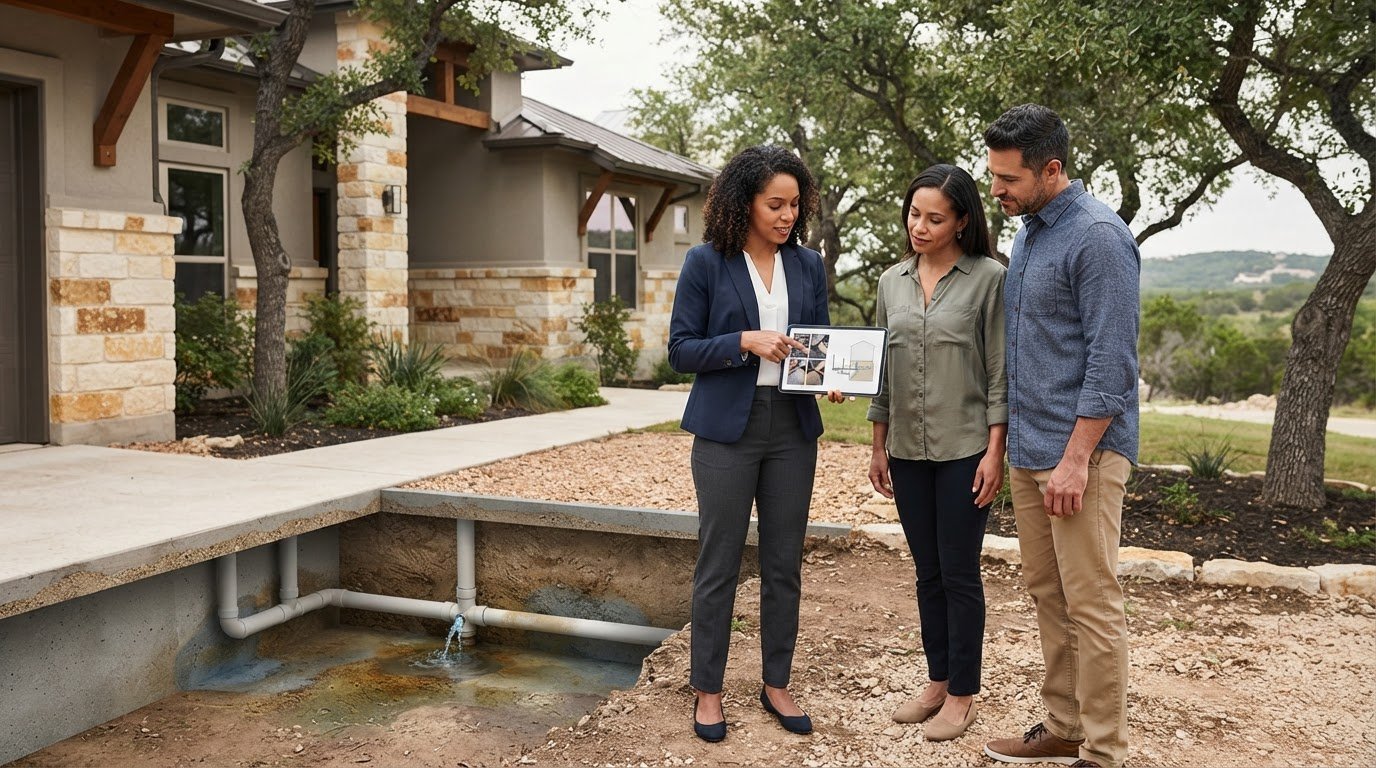
What if a slab leak is covered in one part of the loss, but not another? For Cedar Park homeowners, questions about foundation coverage after a slab leak rarely have a simple yes-or-no answer. A policy may treat the pipe repair, the work needed to reach the leak, water damage inside the home, and damage to the foundation differently. While the cause is being investigated, it’s understandable to worry about what the water may be doing beneath your home.
Coverage often depends on how and when the leak developed, what damage it caused, and the wording of your policy and any endorsements. A sudden pipe failure may be evaluated differently from a slow leak or gradual foundation movement, but no general rule can determine the outcome of an individual claim.
This article explains which parts of a slab leak loss may be considered separately, what policy language and records can help clarify the situation, and why the distinction between sudden damage and gradual deterioration matters. Chris Lewis has more than 25 years of insurance experience. He and The Lewis Agency help Cedar Park and Central Texas homeowners understand their coverage and the claims process, without promising a particular claim outcome.
Key Takeaways
- Notice possible warning signs, such as unexplained water use, damp flooring, or unusual sounds. Record what you observe without assuming the cause.
- Review the policy wording and applicable endorsements to understand how slab leak and foundation coverage may apply to your Cedar Park home.
- Consider leak detection, pipe repair, access work, and damage to the home or foundation as separate coverage questions.
- After suspecting a leak, document what you observe, take reasonable steps to limit further damage, and keep related records and receipts.
- Review your policy’s exclusions and claim-reporting instructions. A policy conversation can help clarify the wording.
Slab Leak Warning Signs in Cedar Park: What Homeowners May Notice
A suspected leak beneath your floor can raise two concerns at once: what might need repair, and whether your homeowners policy could apply to resulting damage. In Cedar Park, a damp spot or an unexplained change in water use can be unsettling, but no single clue confirms a slab leak. Note what you’re seeing and avoid treating a symptom as a diagnosis.
Which household changes can point to a possible slab leak?
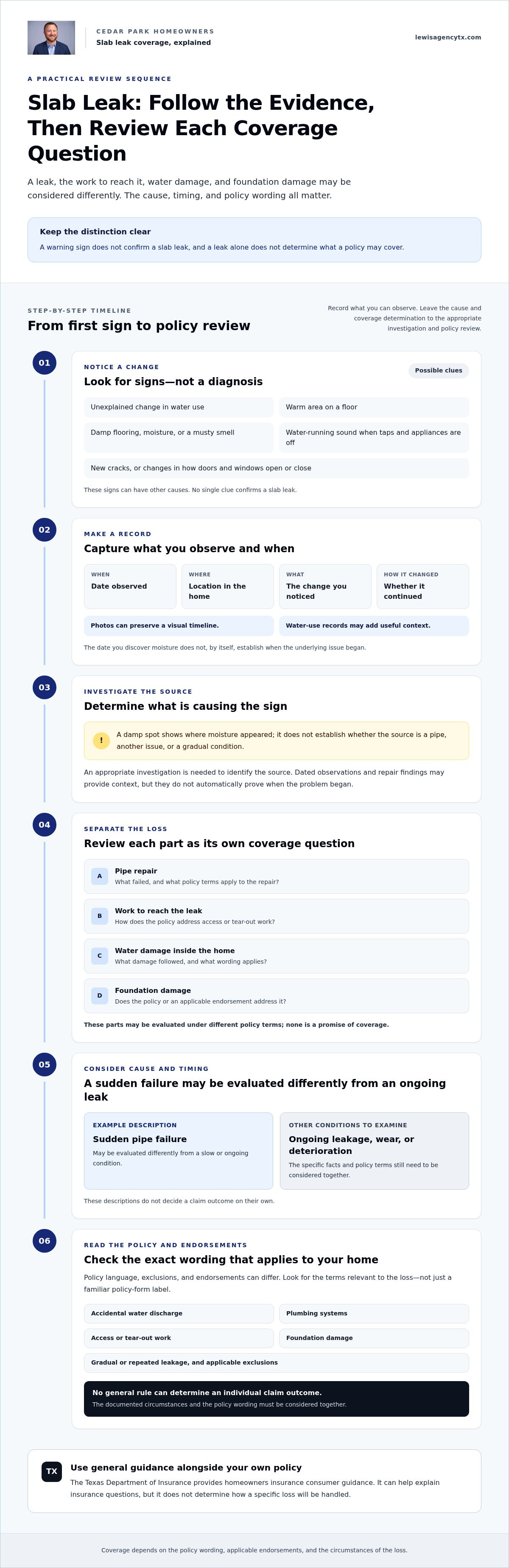
Pay attention to changes from your home’s usual pattern. Recording where and when a change appears, and whether it continues, can make it easier to describe later.
- An unexplained increase in water use or a water bill that differs from your usual pattern.
- A warm area on the floor, which may be associated with a hot-water line but doesn’t prove a leak.
- Damp flooring, unexplained moisture, or a musty smell in one area.
- The sound of water running when taps and appliances are off.
- New cracks or changes in how doors and windows open or close.
These signs can have other causes, including issues unrelated to plumbing. A warm floor, for example, isn’t enough on its own to identify what is happening beneath the slab. An appropriate investigation is needed to determine the source. Until then, make a simple record: note the date, location, what you observed, and whether it changed. Photos and relevant water-use records may help preserve a clearer timeline.
Why identifying the source matters for an insurance review
A plumbing problem and damage to the home are related, but they are not necessarily the same coverage question. An insurance review may consider what failed, when the problem began, and what damage followed. The policy wording and any applicable endorsements also matter. A symptom alone doesn’t establish the cause or determine whether a loss is covered.
This distinction matters when Cedar Park homeowners review coverage for a slab leak and possible foundation damage. A damp patch, for instance, shows where moisture appeared, but not whether it came from a pipe, another source, or a gradual condition. Records of when the patch first appeared and how it changed can give later discussions useful context, though they don’t prove when the underlying issue began.
A slab is part of a home’s structure. For general background on how foundations fit into building design, see Foundation (architecture). That overview isn’t insurance guidance, but it can help frame why a plumbing issue and possible structural damage may need to be considered separately. Dated, factual observations give you a practical starting point for understanding both the source and the policy questions that follow.
Does Homeowners Insurance Cover a Slab Leak in Cedar Park?
A homeowners policy may help with parts of a slab leak loss, but there isn’t one answer for every home. Coverage depends on the cause, the resulting damage, the policy wording, and the circumstances. The presence of a leak alone doesn’t establish what may be covered.
It helps to separate the loss into parts. The policy may evaluate the plumbing repair, the work needed to reach the pipe, and damage to the home under different terms. Foundation damage can raise an additional question, including whether applicable policy language or an endorsement addresses it. The details matter.
How cause and timing may affect the coverage question
When a leak began and how it developed may be relevant during a review. A sudden pipe failure and resulting water damage may be evaluated differently from damage associated with ongoing leakage, wear, or deterioration. Those descriptions don’t decide the outcome on their own. The specific facts and policy terms still need to be considered together.
For example, a homeowner may discover water damage on one day without knowing when the leak started. Dated photos, repair findings, and other records may help establish what was observed and when. They provide context, but the discovery date alone doesn’t prove the leak began that day. When reviewing possible foundation coverage after a slab leak, Cedar Park homeowners should focus on the documented cause and exact policy wording rather than assume that a sudden discovery settles the coverage question.
Why policy wording matters more than a general rule
Home policies can differ in their coverage language, exclusions, and endorsements. A familiar policy-form label doesn’t tell you every term in your own contract or determine whether a particular loss qualifies. Review the policy documents that apply to your home, including any endorsements, and look for wording about accidental water discharge, plumbing systems, access or tear-out work, foundation damage, and gradual or repeated leakage. These are areas to examine, not promises of coverage.
The Texas Department of Insurance offers homeowners insurance consumer guidance to help Texans understand policies and insurance questions. Use it as general information alongside your own policy, since it can’t determine how a specific loss will be handled. If the wording is difficult to follow, a policy conversation can help clarify the relevant terms. The Lewis Agency helps Cedar Park homeowners understand policy language and the claims process. Coverage decisions remain subject to the policy and individual circumstances.
A practical next step is to gather your policy and any applicable endorsements before drawing conclusions. If you’d like help understanding the wording in your homeowners policy, review your coverage with The Lewis Agency.
Slab Leak, Pipe Repair, and Foundation Damage: Compare the Coverage Questions
A slab leak can involve several different expenses, and they don’t all raise the same insurance question. Separating the work into parts can make policy language easier to review. The table below is a guide to what to examine, not a prediction of whether a particular cost will be covered.
| Part of the loss | Policy question to review |
|---|---|
| Leak detection | Does the policy address the cost of locating the source, and under what circumstances? |
| Pipe repair or replacement | How does the policy treat repairing the failed pipe itself? |
| Access and tear-out | What wording applies to opening flooring, concrete, or other parts of the home to reach the pipe? |
| Resulting damage to the home | How does the policy address water damage to finishes or belongings, and any reported foundation damage? |
The leak and the plumbing repair
Finding the source and fixing the pipe are separate steps. Detection work aims to locate the leak; plumbing work addresses the damaged or failed line. A policy may treat those expenses differently from damage caused by water escaping from the pipe. Review the relevant coverage language, exclusions, and endorsements rather than assuming the detection fee or pipe repair has the same treatment as the resulting damage.
Keep records that distinguish these tasks. An itemized estimate or invoice may show which charges relate to locating the leak, repairing the line, or addressing other work. That detail can make a policy discussion more specific.
Access work, flooring, and foundation effects
Reaching a pipe beneath a slab may require opening part of the home. That access work is not the same as repairing flooring or other finishes afterward. Neither task is the same as diagnosing or structurally repairing a foundation. Each may involve different policy wording and facts.
A crack, uneven floor, or other foundation change also doesn’t by itself establish that a plumbing leak caused it. The cause may require separate evaluation. For slab leak foundation coverage, Cedar Park homeowners should keep the reported plumbing source, access work, visible damage, and foundation findings distinct in their records. This helps reviewers assess what happened without treating every repair as one undifferentiated expense.
Policy terms and claim outcomes vary. A careful review considers the documented cause, timing, damage, applicable exclusions, and endorsements. The practical question is not simply, “Is a slab leak covered?” It’s which part of the loss is being considered and what the policy says about that specific part.
What Cedar Park Homeowners Can Do After Suspecting a Slab Leak
A suspected leak can feel urgent, especially if moisture is spreading or you’re unsure how long it has been present. A steady record can help you explain what you observed and keep the insurance questions organized. Focus first on the condition of the home, then on your policy’s reporting instructions.
Document the condition and timeline
Write down when you first noticed a change and what happened afterward. Keep the notes factual: describe the location, appearance, and any changes without guessing at the cause. Dated photos can help show what was visible at different points.
- Record observations. Note the date, room or area, and what you saw or heard. Add updates if the condition changes.
- Take reasonable steps to limit further damage. If it’s safe and practical, address an active water source or protect affected belongings. Avoid actions that could put anyone at risk.
- Keep related records together. Save photos, receipts, invoices, inspection or service findings, and communications about the issue. If work is performed, keep paperwork that describes what was inspected or repaired.
- Review your policy and reporting instructions. Find the applicable claim-reporting steps and timeframes in your policy documents, and follow them if you decide to report a loss.
For a hypothetical example, a homeowner might note a damp area on Monday, photograph it, and record that it appeared larger later in the week. That timeline documents observations, but it doesn’t establish when a leak began or prove what caused the moisture. Keep conclusions separate from what you directly observed.
Report the issue and understand the next steps
If you report a claim, use the process and timeframes stated in your policy. You can ask what information is needed and how to provide records about the condition, investigation, and work performed. Keep a note of when you reported the issue and any instructions or follow-up communications you receive.
The insurer makes coverage and claim decisions based on the policy and circumstances. Reporting a concern doesn’t guarantee approval or payment, and documentation doesn’t predetermine the investigation. The Lewis Agency can help explain policy language and process questions, but it doesn’t decide claim outcomes.
A clear record can make a policy conversation more productive, particularly if you’re reviewing slab leak foundation coverage in Cedar Park. To discuss your policy wording and understand the claims process, talk with The Lewis Agency about your homeowners coverage.
Reviewing Slab Leak Foundation Coverage with The Lewis Agency
A policy conversation can help turn a confusing set of terms into practical questions about your home. For a suspected slab leak, that may mean locating the relevant coverage language, exclusions, and endorsements, then understanding how the policy distinguishes the pipe, access work, water damage, and possible foundation effects. The goal is clarity, not a promised claim result.
What a policy review can help clarify
Bring the policy documents and any records you have about the suspected loss. A review can help identify wording to consider and questions that may be useful to ask during the claims process, such as what information is needed or how to report the issue under the policy. It can also help distinguish an endorsement’s terms from the policy’s general language.
Chris Lewis has more than 25 years of insurance experience and helps homeowners understand policy language and the claims process. The Lewis Agency is an Allstate agency. It can provide guidance about the policy and process, but the insurer makes claim and coverage decisions. Those decisions depend on the applicable policy and the circumstances of the loss.
A useful discussion can start with what you know: when you noticed the issue, what has been investigated, and which costs or damage are being considered. Then you can look at the relevant policy wording without assuming that one answer applies to every part of the loss. That’s a practical way to approach questions about slab leak foundation coverage in Cedar Park.
A local resource for Cedar Park homeowners
Slab leak questions are one part of a broader homeowners coverage picture. Homeowners in Cedar Park and across Austin and Central Texas, including Leander, Georgetown, Round Rock, Liberty Hill, and nearby communities, can benefit from understanding their policy before a problem arises. Review how the contract describes covered property, exclusions, and endorsements. The Austin homeowners insurance coverage guide offers additional context for reviewing homeowners coverage.
You don’t need to know every insurance term before asking a question. Start with the part of the policy or situation that feels unclear, and work through it step by step. A conversation can help you better understand what your policy says and what questions remain, while leaving any claim determination to the insurer.
If you’d like to talk through your policy questions, Talk with The Lewis Agency.
Make Your Next Policy Review a Clear One
Before a future loss, take a few minutes to get familiar with the parts of your homeowners policy that feel unclear. Keep the policy and any endorsements together, and note questions you want answered. That preparation can make a later conversation more focused, especially if you need to understand how a specific situation relates to the wording in your contract.
For slab leak foundation coverage, Cedar Park homeowners should rely on their own policy language rather than broad assumptions about what a policy may cover. A review can help you understand the terms and identify questions to raise, though only the insurer can make a coverage determination for a claim.
The Lewis Agency serves homeowners in Cedar Park and Central Texas. Chris Lewis brings more than 25 years of insurance experience and can help explain policy language and the claims process. For a clearer understanding of your homeowners policy, ask The Lewis Agency about reviewing your coverage. A little preparation can help you feel more informed about your next steps.
Frequently Asked Questions
Does homeowners insurance cover the pipe under a concrete slab?
It depends on the policy and the circumstances surrounding the pipe failure. The cost to repair or replace a pipe may be treated differently from damage caused by water escaping from it. Check the policy’s wording for plumbing-system coverage, exclusions, and relevant endorsements. If you’re reviewing an estimate, separate pipe work from other charges so you can ask focused questions about each item.
Can homeowners insurance cover the cost of accessing a slab leak?
Possibly, depending on the policy language and the facts of the loss. Access work could involve removing flooring or opening concrete to reach a pipe, while restoring finishes afterward may be a separate expense. Keep estimates or invoices that describe each task separately. That detail can help you compare the work performed with the policy terms, but it can’t establish coverage by itself.
Is foundation damage from a slab leak covered by homeowners insurance?
It may be, depending on what caused the damage, the policy, and any applicable endorsements. For questions about slab leak foundation coverage, Cedar Park homeowners should focus on the documented cause and their policy’s wording, not assume a crack proves a plumbing leak caused it. The insurer may consider available findings when reviewing the loss. Keep plumbing records and foundation observations distinct so their relationship can be evaluated.
Does a slow or long-term slab leak affect whether damage is covered?
It can affect the review, but a slow leak doesn’t automatically determine the outcome. Policies may address sudden water discharge, repeated leakage, wear, and deterioration differently, and the exact wording matters. If the start date is unclear, describe when you first noticed the issue separately from when you believe it may have begun. Avoid guessing; let documented findings and the applicable policy terms guide the discussion.
Should I file a homeowners insurance claim for a suspected slab leak?
Review your policy’s reporting instructions and consider contacting the insurer to ask how to report the situation and what information may be needed. A suspected leak alone doesn’t establish whether a claim is covered. Before deciding what to do, gather the policy, relevant estimates, and available findings, then consider how the terms apply. The insurer makes claim decisions, so reporting doesn’t guarantee payment or approval.
What records should I keep after discovering a possible slab leak?
Keep dated photos, notes describing when you first noticed changes, water-use records, inspection findings, estimates, invoices, and receipts related to the issue. Save claim-related communications and note the date and substance of important calls. For example, if an inspection identifies a suspected source, retain the written report rather than relying only on memory. Organized records can help explain the timeline and the work involved.
Can The Lewis Agency decide whether my slab leak claim will be paid?
No. The insurer determines coverage and claim outcomes under the applicable policy and the facts of the loss. The Lewis Agency can help explain policy language and the claims process, but it doesn’t control the insurer’s decision. If you’re reviewing slab leak foundation coverage in Cedar Park, a policy conversation can clarify what wording to review and what questions to raise with the insurer.

Article by
Chris Lewis
Chris Lewis is the owner of The Lewis Agency, an Allstate insurance agency serving Austin and Central Texas. With more than 25 years of insurance experience, Chris focuses on helping Central Texas homeowners better understand their insurance coverage, including deductibles, roofs and hail, severe weather risks, water damage and other important coverage considerations. He created LewisAgencyTX.com to provide practical homeowners insurance education and help homeowners better understand their coverage before they need it.