
Insurance Policy Audit Checklist for Growing Families
Use this insurance policy audit checklist for growing families to review home, auto, and life coverage after moves, renovations, or welcoming a new baby.

What if bringing home a baby, moving, or starting a home project affects more than one insurance policy? Family changes can shift what you own, drive, or want to protect, while policy details are easy to overlook. An insurance policy audit checklist for growing families can help you review those changes calmly without assuming every policy works the same way.
This guide covers which home, auto, life, and liability policies to revisit, plus the documents that make a review more useful. Use it after a new child arrives, when you move or renovate, or as your household’s belongings and responsibilities grow. Policy terms and coverage vary, so the goal is to identify questions, not guess at answers. Chris Lewis has more than 25 years of insurance experience and helps Central Texas homeowners better understand their coverage. The checklist ahead offers a practical place to start.
Key Takeaways
- Match household changes, such as a new child, move, renovation, or new driver, with the policies they may affect.
- Use the insurance policy audit checklist for growing families to review home, auto, life, and liability policy details in one place.
- Gather declarations pages and policy documents so you can distinguish written terms from questions that need an explanation.
- Keep a simple record of changes, policy details reviewed, and follow-up questions for your next coverage conversation.
- Consider how local factors, such as hail exposure, relate to your home and policy without assuming every Central Texas household has the same needs.
Why growing families should revisit their insurance policies
A new child, a move, a renovation, or a newly licensed driver can change how your household uses its home and vehicles. These milestones are good reasons to review your policies, but they don’t automatically change policy terms or mean your family needs more insurance. Start by comparing the information in your documents with your household’s current circumstances, then note questions that need an explanation.
A review is about understanding, not making assumptions. Your existing coverage may still fit, you may find a detail to clarify, or you may decide to discuss a possible change. The answer depends on your policy and circumstances. An insurance policy audit checklist for growing families helps you consider the whole household rather than focusing on just one milestone or type of coverage.
Which family changes can prompt an insurance review?
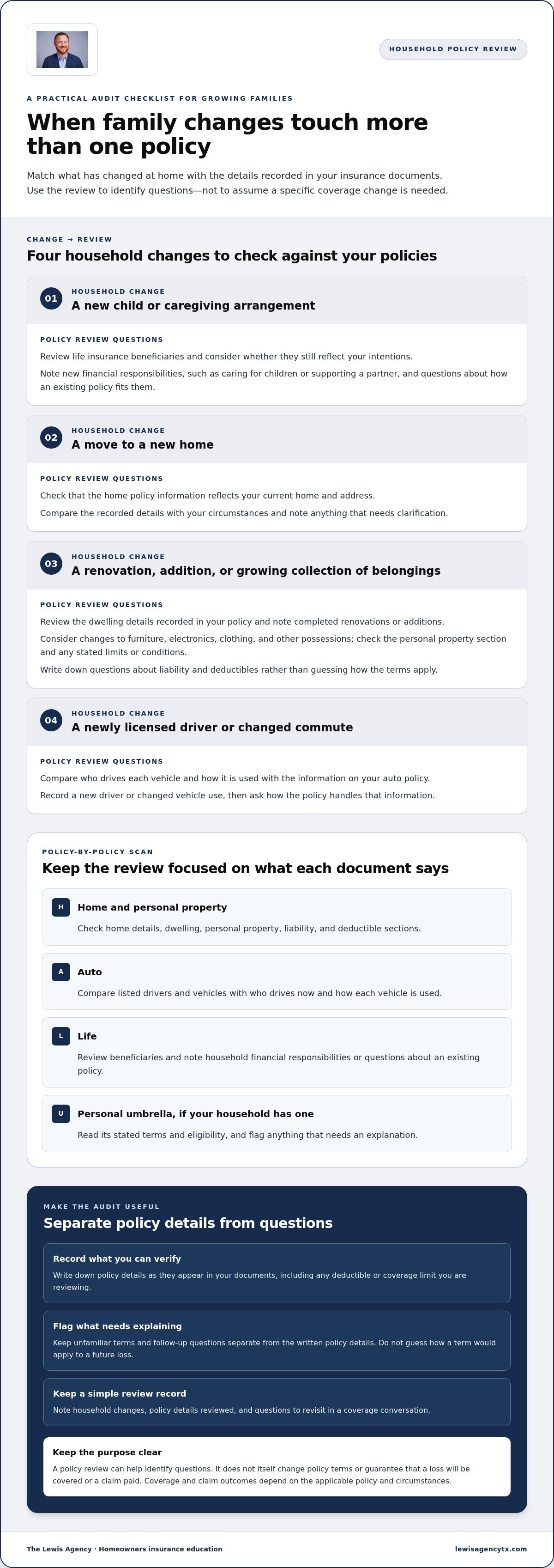
Consider changes in who lives in the home, how the home is used, and who drives your vehicles. A new child or caregiving arrangement may prompt questions about life insurance and household responsibilities. A major purchase may lead you to review personal property details. After a move, check that the policy information reflects your current home and address.
Renovations and additions are also worth noting. If you’ve changed your home’s size, layout, or features, review the dwelling details recorded in your policy and note anything that needs clarification. In Central Texas, for example, a Cedar Park family might finish a room addition while adding belongings as their household grows. Gather the project details and review the relevant policy information, but don’t assume that a particular limit is inadequate.
A newly licensed driver is another reason to review household auto arrangements. Note who drives each vehicle and how it is used, then compare that information with your auto policy. For life insurance questions, a basic overview of life insurance can help frame the purpose of coverage, while your own policy documents explain the terms that apply to you.
What an insurance policy audit can and cannot do
An audit is a structured review of your current policies, their recorded details, and questions raised by household changes. It gives you a clearer starting point for a conversation. It doesn’t guarantee that a loss will be covered or that a claim will be paid. Coverage and claim outcomes depend on the applicable policy and circumstances.
Separate what you can read in the documents from what still needs explaining. For example, record a deductible or coverage limit as it appears, then flag anything you don’t understand rather than guessing how it would apply to a future claim. A review can help identify questions, but it does not itself change policy terms.
Insurers make underwriting, rate, renewal, and coverage decisions. An agent can explain policy language and answer questions, but does not control those decisions. The aim is a more informed review, not an assumption that a milestone requires a particular purchase or outcome.
Growing-family insurance audit checklist: review each household policy
Use this checklist to compare each policy with your family’s current home, belongings, drivers, and responsibilities. The insurance policy audit checklist for growing families isn’t a recommendation to increase coverage. It’s a way to spot information that may need updating and questions that deserve a clear answer. Policy terms and options vary by insurer and policy, so use your own documents as the reference point.
Homeowners and personal property coverage questions
Start with your home and the belongings in it. A renovation, addition, move, or growing collection of family possessions can make it useful to check whether the information recorded still reflects your circumstances. Review the policy’s dwelling, personal property, liability, and deductible sections. Note what each section says and flag unfamiliar language rather than assuming how it would apply to a particular loss.
- Home details: Does the policy describe your current home and address? Note completed renovations or additions that may be relevant to the recorded details.
- Belongings: Consider whether your household’s furniture, electronics, clothing, and other possessions have changed. Review the personal property section and any related limits or conditions stated in your policy.
- Liability and deductibles: Find these sections in your documents and write down questions about how the terms work. Don’t assume another household’s policy details apply to yours.
For more background on home policy terms, consult the Austin homeowners insurance coverage guide. It can help you recognize topics to look for as you review your own policy.
Auto, life, and personal umbrella policy questions
Family routines change, too. Compare the drivers and vehicles listed on your auto policy with who drives in your household now and how each vehicle is used. If a teen has started driving or a family member’s commute has changed, record the difference and ask how the policy handles that information. Don’t assume the change automatically creates a specific coverage requirement or result.
For life insurance, review the beneficiaries and consider whether they still reflect your intentions. A growing family can also change the financial responsibilities you want to account for, such as caring for children or supporting a partner. Note those responsibilities and questions about how your existing policy fits them. The review helps you identify what to discuss; it doesn’t determine that you need a particular amount or type of coverage.
If your household has a personal umbrella policy, read its stated terms and eligibility requirements alongside the underlying policies it refers to. Write down unclear conditions or questions about how the policies relate. The NAIC Consumer Guides offer general insurance information that may help explain common terms, but your policy documents govern your specific coverage.
Keep the checklist practical: mark what you reviewed, record details that seem out of date, and list questions without guessing at the answers. The Lewis Agency can help explain policy wording. You can discuss your policy questions with the agency.
How to check policy details without assuming what is covered
Before comparing details, set aside the current declarations pages and full policy documents for each household policy. The declarations page offers a quick reference, while the policy itself provides the wording, conditions, exclusions, and definitions that help explain how coverage applies. Keep both nearby so you can record what the documents state separately from questions that need an explanation.
Use the declarations page as a starting point
A declarations page generally summarizes key policy information, such as named insureds, listed property, coverage limits, and deductibles. The exact layout varies, and the page isn’t the complete policy contract. Use the guide to reading an insurance declarations page to get oriented, then refer to your policy documents for details the summary doesn’t explain.
Copy information as written rather than interpreting it. If a term or figure is unclear, mark it as a question. Policy wording governs the coverage that applies, subject to the policy’s terms and your circumstances.
Compare current details with recent household changes
Check names, addresses, vehicles, and listed property against your household’s current information. A move, different vehicle, or home project may be a reason to ask whether a detail should be updated, but don’t assume the change automatically alters coverage. Keep the distinction clear: the document says one thing, your family’s circumstances may have changed, and the insurer or agent can help explain questions about how the policy applies.
For renewal context, note changes in the policy documents and renewal offer, then ask about differences you don’t understand. The Texas homeowners insurance rate guide for 2026 may provide broader context, but it doesn’t determine why an individual policy changed.
The insurance policy audit checklist for growing families works best when it turns observations into clear, answerable questions. Use a simple comparison:
Policy detail: What part of the policy are you reviewing?
Current information: What does the document say now?
Family change: What has changed in your household or property?
Question to ask: What needs clarification, without presuming the answer?
For example, if a home addition is complete, note the dwelling information shown in the policy, describe the project, and ask whether any policy details need attention. Don’t conclude from the declarations page alone that the addition is covered in a particular way. The same method works for auto details, names, and other listed property.
Keep your notes with the documents so a policy conversation can focus on the specific points you’ve identified. If you’d like help understanding policy wording, you can discuss your policy questions with The Lewis Agency.
A practical checklist for when and how to review family coverage
A review is easier to finish when you give it a simple structure. Set aside time at a recurring point in the year, such as when you organize other household paperwork, and revisit relevant policies after a meaningful change. A new home, renovation, added driver, or change in caregiving responsibilities can prompt an extra review rather than waiting for the next routine check.
Keep the goal modest: know what you reviewed, note what has changed, and leave with a short list of questions. The insurance policy audit checklist for growing families can make the process repeatable without turning it into a decision to buy or change coverage.
Prepare a family insurance review folder
Gather declarations pages, full policy documents, renewal notices, and relevant updates about your home or vehicles. Your folder can be digital or paper. Keep the information needed for the review, and avoid adding sensitive personal details that aren’t necessary. Sort questions by policy so a home question doesn’t get mixed in with an auto or life insurance question.
- Gather: Collect current documents for each policy you plan to review.
- List changes: Note household updates, such as a move, completed renovation, new vehicle, or changed driver arrangements.
- Review: Compare the documents with those changes, recording what the policy says without guessing how it applies.
- Record questions: Write down unclear terms or details, along with the policy they relate to.
Add the date each policy was reviewed and mark questions as answered or still unresolved. This simple record helps you see what needs follow-up and keeps an unfinished question from disappearing into a stack of paperwork.
Know when to ask for clarification
Ask for an explanation when a term, exclusion, or deductible is unclear, or when you can’t tell how a household change relates to the policy. A summary or general example can explain an idea, but it isn’t a decision about your specific coverage. For Texas-wide consumer information, consult the Texas Department of Insurance and check that the guidance is current and relevant to your question.
Here’s a short version to save or print:
Family policy review: Gather current documents. List household changes. Compare each policy’s details with your current circumstances. Record questions, the review date, and any unresolved follow-up.
Chris Lewis and The Lewis Agency can help explain policy language and organize questions about your coverage. If you have questions about a policy you’ve reviewed, discuss your coverage questions with the agency.
How Central Texas families can turn the audit into a clear next step
Your review is useful when it leaves you with a short, workable list: details you’ve checked, changes you’ve noted, and questions that remain open. Use that list to decide what needs a conversation now and what can stay on file for the next review. Not every question needs to lead to a policy change.
Local circumstances can shape the questions, but they don’t determine the answers. A homeowner in Round Rock might want to understand how a roof-related term applies to their policy, while a family in Georgetown may have questions about a recent addition. Families in Austin, Leander, Cedar Park, and Liberty Hill can use the same review process. Homes, policy wording, and individual circumstances differ, so don’t assume one family’s answer will fit another.
What a policy conversation can clarify
Bring the specific policy page and explain what prompted your question. A focused conversation can help put unfamiliar wording into plain language, point you to related policy terms, and explain where to find information about the claims process. It can also help distinguish what the document says from what still needs clarification.
The insurer makes underwriting, renewal, rate, and coverage determinations. An explanation of policy language can help you understand the terms, but it doesn’t promise a particular decision or claim outcome.
Take the next step at your own pace
Before discussing your policy, group your notes by topic. Mark which questions concern the home, which relate to a household change, and which are about wording you couldn’t interpret. If you’ve updated a home in Austin or elsewhere in Central Texas, bring the relevant project information so your question has useful context.
There’s no need to rush through the list. Start with the question that matters most to your household, and keep the remaining notes for follow-up. A clear question is a solid next step.
If you’d like to discuss what your homeowners policy says, bring your coverage questions to The Lewis Agency when you’re ready.
Keep your family’s coverage questions moving forward
Your review can become a useful reference as your household changes. Keep the notes with your policy documents and add questions when a move, home project, or family milestone gives you a reason to revisit them. You don’t need to settle every question at once. A clear record helps you return to the details with better context.
The insurance policy audit checklist for growing families is a starting point for understanding existing coverage, not a promise about what a policy will cover or a reason to make a change before you’re ready. The Lewis Agency is an Allstate agency serving Austin and Central Texas. A policy conversation can help make language that still feels unclear easier to understand.
Bring your notes and relevant policy documents when you’re ready. Bring your policy questions to The Lewis Agency for a straightforward conversation about what your documents say. One question at a time is a good way to move forward.
Frequently Asked Questions
Does having a baby automatically change my homeowners insurance?
No. A baby’s arrival doesn’t automatically change the terms of your homeowners policy. You may still want to review the policy if your household’s belongings, home setup, or use of the property changes. For example, setting up a nursery may add furniture and equipment to your possessions. Check how your policy describes personal property and liability, and ask about language you’re unsure how to interpret.
When should I tell my insurer that my family has moved or renovated a home?
Contact your insurer or agent around the time you plan a move, and before renovation work begins if you’re unsure whether project details matter to your policy. Share the new address or a description of the planned work, and ask what information is relevant. After a renovation, keep contracts, receipts, and project notes together. Requirements and policy effects can vary, so don’t assume a change is handled automatically.
Should I review my life insurance beneficiaries after having a child?
Yes, review the beneficiary information after a birth and whenever your family circumstances or wishes change. Confirm that the names and details shown match your intentions, and ask how to submit an update if needed. If you’re considering naming a minor, the right arrangement can depend on your circumstances. Consider getting appropriate legal guidance rather than assuming the policy form answers that question.
Can adding a teen driver affect my family’s auto insurance?
It may affect your auto policy, depending on the insurer, policy, and household circumstances. Before your teen begins driving, contact your insurer or agent to ask how to report the new driver and what information is needed. Keep vehicle details and expected driving use handy. Don’t assume the policy’s current driver list or terms will automatically reflect a newly licensed household member.
How often should a growing family review its insurance policies?
Many families find it useful to set a recurring review around the same time each year, such as when renewal documents arrive, then revisit relevant policies after a major change. A new address, renovation, or added household driver can be a reason to check sooner. Put a reminder on your family calendar and note the date of each review so questions don’t get lost between renewals.
What documents should I gather for a homeowners insurance review?
Gather your current declarations page, full policy documents, and any renewal notice. If you’ve moved or completed work on the home, include relevant address information and project records, such as contracts or receipts. A current home inventory or recent photos of belongings may also help you discuss changes in what your family owns. The insurance policy audit checklist for growing families can help organize these materials and questions.

Article by
Chris Lewis
Chris Lewis is the owner of The Lewis Agency, an Allstate insurance agency serving Austin and Central Texas. With more than 25 years of insurance experience, Chris focuses on helping Central Texas homeowners better understand their insurance coverage, including deductibles, roofs and hail, severe weather risks, water damage and other important coverage considerations. He created LewisAgencyTX.com to provide practical homeowners insurance education and help homeowners better understand their coverage before they need it.