
Texas hail claim history and its impact on home insurance rates
Understand how hail claim history can impact home insurance in Texas, plus deadlines, deductibles, and why premium or renewal changes aren't automatic.

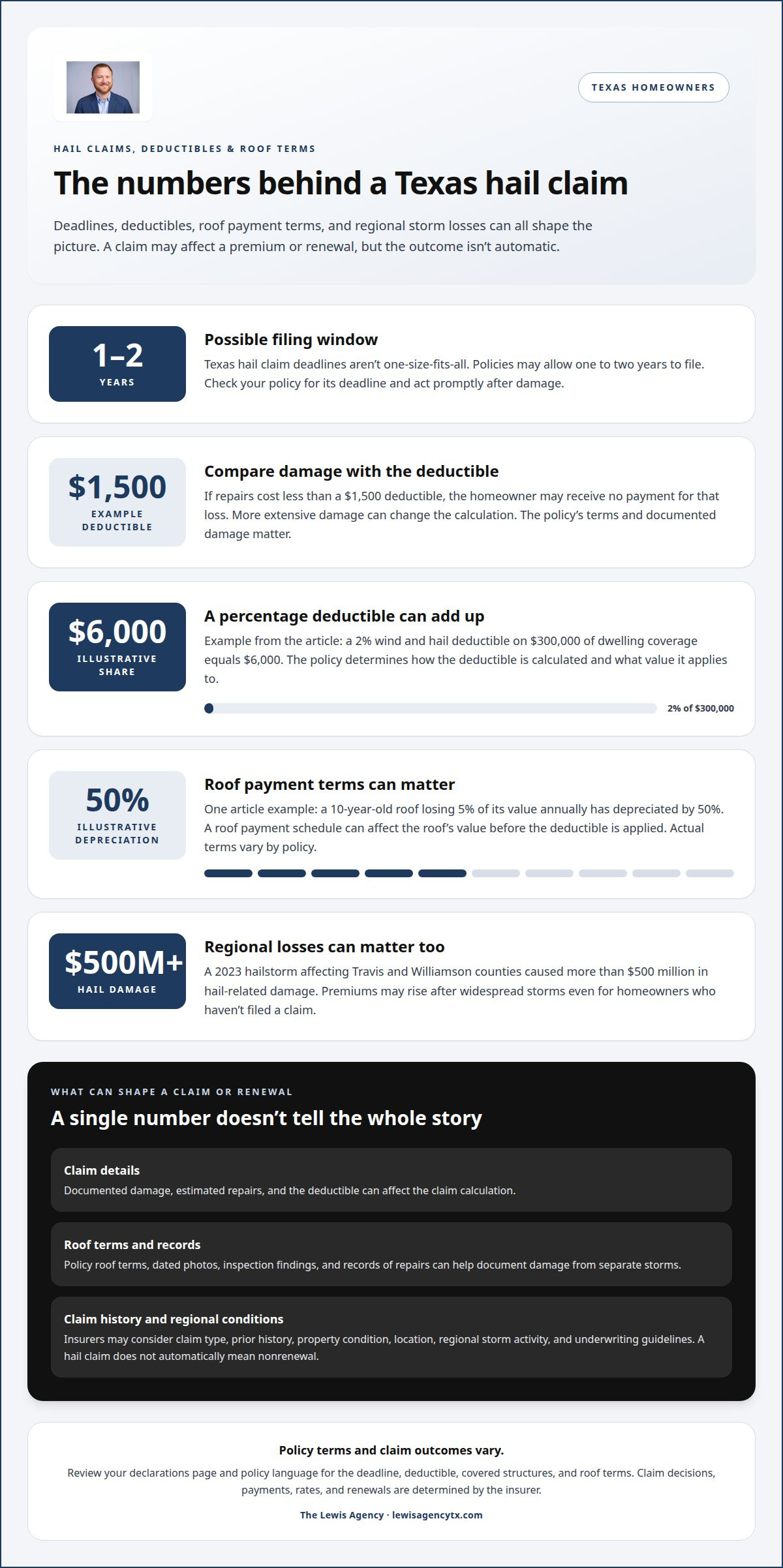
A Texas hail claim deadline isn’t one-size-fits-all: policies may give homeowners one to two years to file. The impact of hail claim history on home insurance in Texas can depend on your insurer, past claims, and regional storm losses. A claim may affect your premium or renewal, but the outcome isn’t automatic.
It’s understandable to wonder whether filing for roof damage could make coverage more expensive later. This article explains what may affect that decision, including how hail coverage and deductibles work, where to find filing deadlines, and how insurers may consider claim history at renewal. A premium change may also reflect broader storm conditions, not just one homeowner’s claim.
Key Takeaways
- Texas hail claim filing deadlines may range from one to two years, depending on your policy. Find the deadline in your policy and act promptly after damage.
- Before filing, weigh the documented damage against your deductible and understand which hail-related repairs your policy may cover.
- A hail claim may affect your premium or renewal, but insurers can also consider regional storm losses and other factors.
- A policy review can help clarify your roof coverage, deductible, and how a past claim may fit into your insurance history.
Does homeowners insurance cover hail in Texas?
Hailstorm coverage is a named peril in most Texas homeowners policies, but policy terms shape how it applies. For Central Texas homeowners, the deductible and roof payment terms can affect whether filing makes sense.
Hail Damage Coverage
Hail coverage may apply to insured property damaged by a storm, subject to the policy’s terms, exclusions, and deductible. The Texas Department of Insurance recommends reviewing your policy and deductible to understand how storm claims may apply.
When separate storms affect a roof, dated photos and inspection findings can help distinguish damage from each weather event. If an inspection later identifies additional damage, submit the report and photos through the existing claim process, noting which areas are newly documented.
Claim Decisions and Deductibles
A claim decision depends on documented damage, estimated repairs, the deductible, and any roof payment schedule in the policy. If repairs cost less than a $1,500 deductible, a homeowner may receive no payment for that loss. More extensive damage can change the calculation.
A deductible reduces the covered amount paid. A roof payment schedule can also affect the roof’s value before the deductible is applied. In one example, a 10-year-old roof losing 5% of its value annually has depreciated by 50%.
A roof inspection helps determine the extent of hail damage and why repairs are needed. Keep dated photos and inspection records. Submit newly discovered damage promptly so it can be considered with the claim.
Wind and hail deductibles
A wind and hail deductible is the amount a homeowner pays toward covered storm damage before insurance contributes. In Texas, these deductibles may be a flat amount or a percentage, and the policy determines how the amount is calculated.
For example, a 2% deductible on $300,000 of dwelling coverage equals $6,000. These examples show why the percentage and calculation base matter: the homeowner’s share can be much larger than a flat deductible.
The exact terms vary by policy and insurer. Check whether the percentage applies to dwelling coverage or another stated value, and whether a separate deductible applies to wind and hail claims.
Location can shape the coverage available. In parts of Texas where a standard policy excludes wind and hail, including some coastal areas, homeowners may need separate windstorm coverage. The Texas Windstorm Insurance Association is one named source of windstorm policies for eligible properties. Regional storms and underwriting requirements can also affect the terms insurance companies offer.
Before a claim, read the declarations page and policy language to identify the deductible, covered structure, and any roof terms. A policy review can help clarify those details; the homeowners insurance resource center offers related guidance.
Hail claims and insurance rates
A hail claim can influence renewal decisions, but regional storm losses can matter even without a claim. The effect depends on the insurer’s underwriting guidelines and the homeowner’s claim history.
Rates After Widespread Hailstorms
Yes, premiums may rise after widespread hailstorms even when an owner hasn’t filed a claim. Insurers can adjust rates across a region to account for storm losses, construction costs, and other underwriting factors. A 2023 hailstorm affecting Travis and Williamson counties caused more than $500 million in hail-related damage. This regional experience illustrates how hail claim history can impact home insurance in Texas, even when an individual owner has no claim.
Nonrenewal After a Hail Claim
One hail claim doesn’t automatically mean a Texas insurer will nonrenew a homeowner’s policy. A claim may affect the premium at renewal, while insurers may also consider claim type, prior history, regional events, and underwriting guidelines. Additional claims may contribute to a nonrenewal decision. Review renewal notices to understand the factors affecting your policy.
Claim History and Insurance Eligibility
Multiple hail claims can affect eligibility because insurers may consider the number and type of claims when reviewing an application or renewal. Texas insurance companies may report filed claims to the Comprehensive Loss Underwriting Exchange, or CLUE. The impact of hail claim history on home insurance in Texas also depends on property condition, location, and regional storm activity.
Keep claim records, inspection photos, and contractor estimates together. If a later hailstorm causes new damage, dated documentation can help distinguish it from earlier events and support a replacement review. For help understanding how claim history relates to your coverage, ask a homeowners insurance question.
The Lewis Agency: Homeowners Insurance Policies
The Lewis Agency helps Central Texas homeowners understand how their policies address hail damage, deductibles, roof terms, and claim history. Its plain-English guidance can help you make sense of policy language, coverage questions, and the claims process. Claim decisions, payments, rates, and renewals are determined by the insurer.
A policy review can be useful before storm season, after roof repairs, or when a renewal raises questions. Gather your policy documents and any claim or inspection records you want to discuss. A review can clarify what your current coverage says and help identify questions about your homeowners insurance needs.
For help understanding your policy, contact The Lewis Agency to discuss your coverage questions.
Make Your Next Policy Review Count
Make insurance planning part of your home’s regular upkeep. Set a reminder to review your policy after a major home improvement or roof update. Keep your latest documents together so they’re easy to find when household details change.
Understanding how hail claim history can affect home insurance in Texas is useful, and a simple recordkeeping habit can make future decisions clearer. Keep policy updates, repair receipts, and inspection reports together in a digital or paper home file. This gives you one place to track changes over time.
A little organization now can make your next review more focused. Keep your file current to be better prepared to make informed decisions about your home.
Frequently Asked Questions
How long do I have to file a hail claim in Texas?
Texas hail claim deadlines may range from one to two years, depending on the policy. Note the storm date, when you first noticed the damage, and when you reported it. If multiple storms occurred, give the insurer the clearest timeline you can. These details help connect the reported loss to the correct event and policy period.
How do wind and hail deductibles work?
Check your declarations page to see whether wind and hail have a separate deductible from other covered losses. If the policy uses a percentage, find the stated calculation base before estimating your share. Keep that figure with your policy records so you can quickly understand the deductible for a storm loss.
ACV vs RCV: How Will Your Hail Damage Claim Be Paid?
Your policy’s loss-settlement language explains whether actual cash value or replacement cost applies to damaged property. Review the roof-specific terms, since the valuation method may depend on policy wording or an endorsement. If a claim estimate uses a different method than expected, ask the insurer to identify the applicable policy language and explain the calculation.
Are There Any Policy Limits and Endorsements Restricting Coverage?
Policy limits and endorsements can change how a loss is handled, so read the full policy alongside the declarations page. Look for terms that apply specifically to roofs, exterior materials, and hail. If a limit or exclusion appears in the claim explanation, ask which wording applies and how it affects the damaged property.
What if the Damage Existed Before the Hailstorm?
Tell the insurer about known earlier damage and any repairs made before the storm. A home inspection report, maintenance invoice, or prior repair record can provide useful context about the roof’s condition. Be clear about what changed after the hailstorm and what was already present, rather than attributing every roof issue to the new event.

Article by
Chris Lewis
Chris Lewis is the owner of The Lewis Agency, an Allstate insurance agency serving Austin and Central Texas. With more than 25 years of insurance experience, Chris focuses on helping Central Texas homeowners better understand their insurance coverage, including deductibles, roofs and hail, severe weather risks, water damage and other important coverage considerations. He created LewisAgencyTX.com to provide practical homeowners insurance education and help homeowners better understand their coverage before they need it.