
Texas Roof Storm Damage Insurance Coverage and Hail Claims
Understand roof storm damage homeowners insurance coverage in Texas, including hail claims, deductibles, and replacement cost versus actual cash value.

Hail damage to a roof may be covered by homeowners insurance in Texas, depending on the policy. Roof storm damage homeowners insurance coverage in Texas can vary with the cause of damage, the deductible, and the roof’s settlement terms. Wear and tear or neglect is generally treated differently from sudden storm damage.
A covered storm loss may help pay for repairs, but the amount and timing of payment can depend on whether the roof is insured at replacement cost or actual cash value. This article explains how hail and other storm damage may be covered, how deductibles affect a claim, and how the two roof valuation methods can influence a potential payment. Knowing what to look for in your policy can make the next steps clearer.
Key Takeaways
- Hail and storm damage may be covered, but the cause of the damage and your policy terms matter when an insurer evaluates a claim.
- Learn why a roof claim may be denied or paid at a reduced amount, and which policy details can help explain the decision.
- Understand how replacement cost and actual cash value can lead to different roof claim payments.
- Review your deductible and roof coverage before a storm so you know what to expect if damage occurs.
Does homeowners insurance cover hail in Texas?
Hail damage may be covered when it results from a covered event, but the policy, deductible, and roof terms shape the claim outcome.
Covered and Denied Roof Damage
This distinction separates sudden storm damage from problems that developed over time, and it affects whether repairs qualify for coverage. Hail that dents shingles or wind that tears them away may be covered under the policy. A roof already weakened by wear or neglect may lead to a denied claim or a limited settlement. The adjuster evaluates the reported damage and its cause.
Policy Exclusions and Limitations
Exclusions and limitations identify roof losses a policy won’t cover, or may cover only in a limited way. Texas policies generally exclude damage caused by wear and tear, neglect, or faulty installation. Older roofs may also have limited coverage, depending on the insurer and policy. Read the roof provisions and deductible terms to understand how they could affect a repair settlement.
Claim Denials and Disputes
A denial means the insurer has declined payment, while a reduced payment reflects its assessment of covered damage and applicable policy terms. After a storm, take photos when it’s safe, keep repair receipts, and report the damage to your insurer. If the decision seems inconsistent with the damage, request the reason in writing and compare it with your policy. An estimate or additional photos can help clarify disputed details.
Hail Claims and Insurance Rates
Texas insurers cannot raise a homeowner’s rates for claims related to acts of God, such as hail. This protection applies to an increase based on the hail claim itself; renewal terms may still change for other reasons. Keep claim records and renewal documents together so you can understand what changed and ask informed questions about your policy.
Replacement cost and actual cash value roof coverage
For a covered roof claim, replacement cost and actual cash value can produce different payments. The distinction matters when age-related depreciation affects the amount available to replace damaged shingles.
Can a Texas insurer require roof repairs or replacement to renew or continue coverage? Roof condition can affect renewal terms: insurers may change older roofs to actual cash value coverage, charge more, or decline coverage based on condition.
Comparing Roof Coverage Valuation
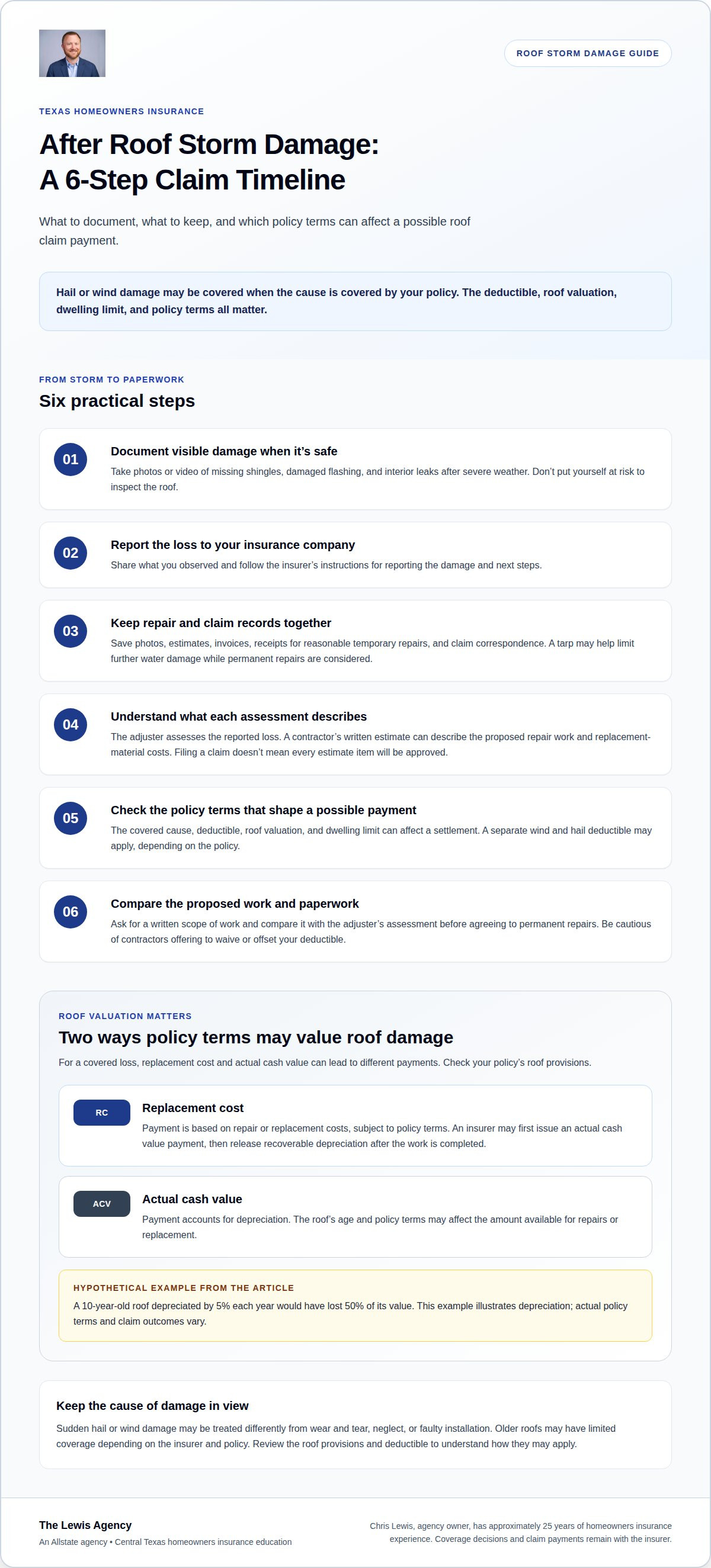
Replacement cost valuation bases payment on repair or replacement costs, while actual cash value accounts for depreciation. That difference can change what you pay out of pocket after a covered loss. For example, a hypothetical 10-year-old roof depreciated by 5% each year has lost 50% of its value.
Replacing a Roof After Covered Damage
After an approved claim, the policy’s valuation terms and deductible help determine the payment for roof repairs or replacement. With replacement cost coverage, an insurer may first issue an actual cash value payment, then release recoverable depreciation after the work is completed. Keep repair estimates and invoices together to track the work and any remaining payment. The dwelling limit and policy conditions also matter.
For help understanding roof valuation language before a storm, you can ask a homeowners coverage question.
Texas homeowners insurance coverage for storm roof damage
Texas home insurance may cover roof damage from hail, windstorm, tornado, or lightning when the cause is covered by the policy. A separate wind and hail deductible may apply, so review that amount alongside your dwelling coverage and roof terms. Damage from wear, neglect, or faulty installation is generally treated differently from sudden storm damage.
After severe weather, document visible damage with photos or video once it’s safe. Photograph missing shingles, damaged flashing, and interior leaks, then report the loss to your insurance company. Keep receipts for reasonable temporary repairs, such as a tarp used to limit further water damage. The adjuster assesses the reported loss, while a contractor’s written estimate can help describe the repair work and the cost to replace damaged materials.
Filing a claim doesn’t mean every item in an estimate will be approved. The policy deductible, covered cause, roof valuation, and dwelling limit all affect a possible settlement. For example, damage to a detached garage may fall under other structures coverage, while damaged ceilings may be considered as part of the home’s covered loss. Keep estimates, claim correspondence, and receipts together to track what the insurer evaluates.
After a Texas storm, be cautious of contractors who offer to waive or offset your deductible. Ask for a written scope of work and compare it with the adjuster’s assessment before agreeing to permanent repairs. Clear paperwork helps you understand the proposed work and how it relates to the reported damage.
For help understanding how your policy addresses storm damage and deductibles, send a homeowners coverage question.
The Lewis Agency: Homeowners Insurance Policies
The Lewis Agency is an Allstate agency that helps homeowners understand their policy terms before a roof claim arises. If hail or wind damages your roof, the agency can explain how your policy describes deductibles, roof valuation, and the claims process. Coverage decisions and claim payments remain with the insurer, but understanding the policy can help you know what questions to ask and what information may be useful.
A policy review can also help you understand how your home’s roof coverage fits with your broader homeowners protection. Chris Lewis, the agency owner, has approximately 25 years of homeowners insurance experience and focuses on helping Central Texas homeowners make sense of their coverage.
If you have questions about roof coverage or want to review your homeowners policy, contact The Lewis Agency.
Make your next policy review count
Use your next renewal or home maintenance review as a chance to understand how your roof is insured. Note questions about roof age, deductible terms, and how the policy handles repairs, then discuss them before severe weather makes the details urgent. A clear understanding of roof storm damage homeowners insurance coverage in Texas can help you make informed decisions about your home and the policy protecting it.
The Lewis Agency can help explain homeowners policy language and answer coverage questions. The agency also offers Auto Insurance and Landlords Insurance for customers considering other personal insurance needs.
Ready to talk through your homeowners coverage? Contact The Lewis Agency with your questions. A thoughtful review is a practical step toward feeling more prepared.
Frequently Asked Questions
Does Home Insurance Cover Roof Damage?
Home insurance may cover roof damage from other covered events beyond hail and wind. For example, damage from snow, sleet, or ice may qualify under some policies, potentially including ice dams and resulting leaks. The policy’s covered causes and exclusions determine how the loss is handled, so check whether the event and resulting damage fit its terms.
Does the Law Require Coverage for Hailstorm Damage?
No. Texas law doesn’t require homeowners to carry hailstorm coverage. That makes the policy’s wind and hail terms especially important, particularly for homes in coastal areas where standard homeowners insurance may not include this coverage. In those areas, separate coverage may be available through a private insurer or the Texas Windstorm Insurance Association, depending on eligibility.
How do wind and hail deductibles work?
A wind and hail deductible is the amount you’re responsible for under the policy before an insurer pays covered claim amounts. Some policies calculate it as a percentage of dwelling coverage. For example, a policy with $300,000 in dwelling coverage and a 2% wind and hail deductible would have a $6,000 deductible. Check the declarations page for the applicable terms.
How long do I have to file a hail claim in Texas?
The deadline depends on your policy. Some Texas homeowners policies require hail claims within one or two years of the storm. The policy’s claim conditions provide the specific time limit and notice requirements. If you’re unsure when damage occurred, note when you first discovered it and promptly contact the insurer to understand the applicable filing deadline.
What Can Happen if Your Roof is Damaged by Hail?
Hail damage may be difficult to spot from the ground. Shingle granule loss, soft spots, and concealed leaks can require a closer inspection to identify. Damage may also affect roof components such as gutters. A professional inspection can help reveal problems that aren’t obvious from the yard, giving you a clearer picture of the roof’s condition after a storm.

Article by
Chris Lewis
Chris Lewis is the owner of The Lewis Agency, an Allstate insurance agency serving Austin and Central Texas. With more than 25 years of insurance experience, Chris focuses on helping Central Texas homeowners better understand their insurance coverage, including deductibles, roofs and hail, severe weather risks, water damage and other important coverage considerations. He created LewisAgencyTX.com to provide practical homeowners insurance education and help homeowners better understand their coverage before they need it.