
Service Line Coverage in Leander TX: What It Protects
Need a service line coverage endorsement in Leander, TX? Learn what underground water and sewer line repairs may be covered before unexpected breaks happen.

A damaged underground line can interrupt water, sewer, power, or other service to your home. A service line coverage endorsement in Leander, TX can help cover repair or replacement costs for eligible lines on the insured property, including excavation, labor, and materials. The lines and causes of damage that qualify depend on the endorsement.
It’s easy to assume the city handles a break because the line is buried, but responsibility depends on where the line runs and local rules. This article explains service line coverage, which types of damage may qualify, how an endorsement affects a homeowners policy, and where city responsibility may begin or end. Understanding these points can help you review your protection before a repair becomes urgent.
Key Takeaways
- Find out where responsibility for your water and sewer lines begins, since the boundary between homeowner and municipal responsibility can vary.
- Review the endorsement’s limit and eligible line types to understand how it may respond to a damaged underground line.
- Wear, corrosion, freezing, and other causes may qualify, depending on the endorsement’s terms and exclusions.
- Understand how an endorsement changes a homeowners policy form, including the commonly referenced HO 00 03 form.
- Compare service line coverage with any utility protection you already have to spot possible overlap.
Isn't the city responsible for my sewer and water lines?
Not necessarily. In many municipalities, homeowners are responsible for buried utility lines on their property, while local rules determine where municipal responsibility begins.
Homeowner Responsibility for Buried Lines
A homeowner may be responsible for the underground section connecting a house to a public utility line. That boundary matters: a break on the property side may leave the owner arranging and paying for repairs. For example, a sewer problem near the house may involve a different responsible party than a problem in the city’s main line.
The break’s location is central to determining responsibility. A water line may run from a municipal connection across a yard and into a home, but the division of responsibility varies by municipality. The same applies to sewer lines: a homeowner’s section may connect the house to a public sewer main, while the public system serves the wider neighborhood.
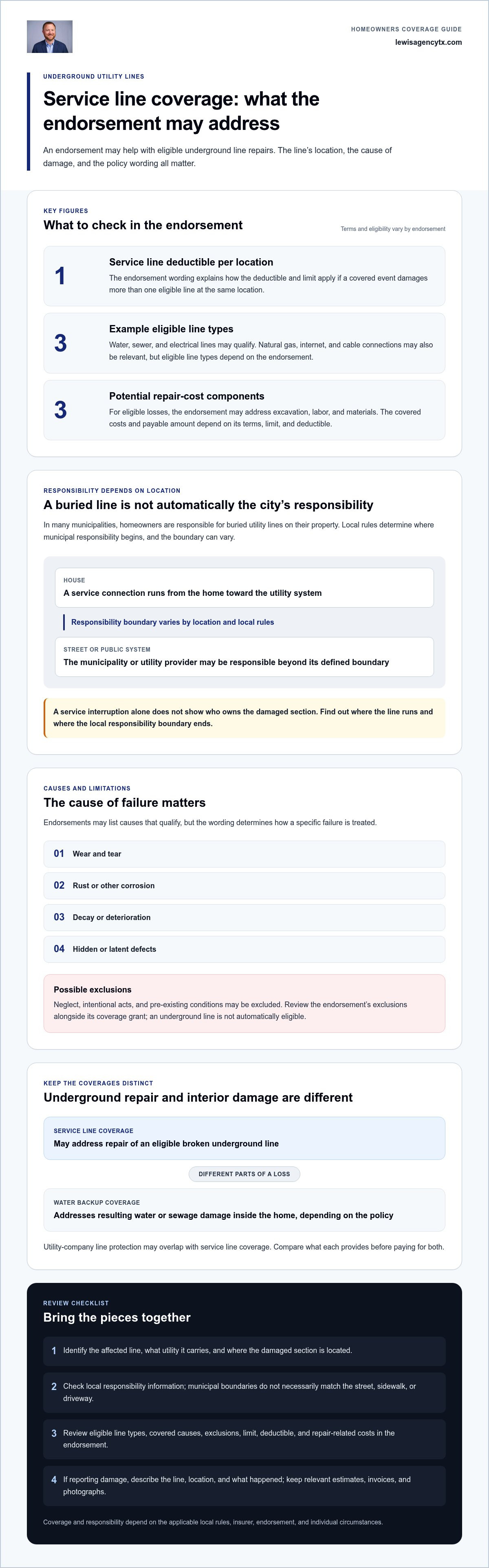
For a Leander property, find out where the city’s or utility provider’s responsibility ends before assuming a buried pipe is publicly maintained. Local rules vary, and the boundary may not match the visible edge of a street, sidewalk, or driveway. A service interruption alone does not show who owns the damaged section; its location matters.
Covered Underground Service Lines
Covered underground service lines are buried connections that carry utilities between a property and the street or utility system. Depending on the endorsement, eligible lines may include water, sewer, and electrical lines. A failure can interrupt an essential service even when the pipe or cable is hidden beneath a yard or driveway.
Other utility connections may include natural gas, internet, and cable lines, but eligible line types depend on the endorsement. For example, damage to an underground electrical line can interrupt power, while a water-line break can disrupt household water service. The policy wording determines which lines qualify and what conditions apply.
First, identify the line’s location and the utility it carries. Note whether the damaged section runs across the property, toward the street, or beyond the property boundary. Then review the municipality’s responsibility information alongside the policy endorsement. These details can help clarify whether the issue involves a private connection, a public system, or potential coverage for an eligible line.
Service line coverage may overlap with utility-company line protection plans, so compare what each covers before paying for both.
What is Service Line Coverage?
Service line coverage is an endorsement added to a homeowners policy for certain damage to underground utility lines. It may help pay eligible repair or replacement costs, including excavation, labor, and materials.
Coverage Limits and Deductible
The coverage limit is the most the endorsement may pay for a covered service line loss. The deductible is the amount applied under the endorsement’s terms. Both matter because excavation and repairs can cost more than fixing the damaged pipe or cable alone.
Compare the stated limit with the work described in the endorsement, including access to the damaged section and restoration related to repairs.
The endorsement also explains how its deductible applies. Only one service line deductible applies at each location. If a covered event damages more than one eligible line at the same location, the wording explains how the deductible and limit apply to the loss.
The limit does not guarantee a particular payment. Eligible costs, the deductible, and the policy terms determine the amount payable. That is why the limit alone does not explain the full protection.
Exclusions and Limitations
Exclusions and limitations describe circumstances or costs the endorsement does not cover. A damaged line does not automatically qualify for protection, even if it is underground and connected to the home.
Possible exclusions include neglect, intentional acts, and pre-existing conditions. For example, damage linked to an existing condition may be treated differently from a sudden failure. The endorsement’s wording defines how these terms apply and which line types and causes qualify.
Coverage can also differ by insurer and state. One endorsement may include a particular utility line, while another may define eligible lines or covered expenses differently. Review the exclusions alongside the coverage grant instead of relying on the endorsement’s name.
Service line coverage and water backup coverage address different parts of a loss. Service line coverage may pay to repair a broken pipe; water backup coverage addresses resulting water or sewage damage inside the home. Leander homeowners reviewing both can distinguish the underground repair from interior cleanup and damage.
Review the endorsement’s limit, deductible, covered-line definitions, and exclusions together. These terms show how the policy treats excavation, repair, replacement, and related expenses after a service line failure.
Covered causes of loss
Service line endorsements list causes of damage that may qualify for coverage. How a line failed matters: a frozen water pipe, corroded sewer pipe, and damaged electrical connection can involve different causes and policy terms.
How do Leander homeowners file a service line damage claim? Report the damage through the insurer’s claims process. Describe the affected line, its location, and what happened. Keep relevant records, such as repair estimates, invoices, and photographs, so the insurer can review the loss and associated expenses.
Covered occurrences can include wear and tear; rust or other corrosion; decay; deterioration; and hidden or latent defects. These terms describe different forms of gradual or concealed damage. Corrosion, for example, can weaken a buried metal pipe, while a latent defect may not be visible until the line fails. The endorsement’s wording determines how a cause is treated.
Other listed causes can include collapse, electrical, mechanical, or pressure systems breakdown, and freezing. Collapse coverage excludes collapse caused by sinkhole or subsidence. If shifting ground causes a line to give way, the physical result may look similar to other damage, but the stated cause can affect how the loss is evaluated.
Underground lines can be stressed in several ways. Tree roots can grow around a sewer pipe, aging infrastructure can deteriorate, ground shifts can put pressure on connections, and extreme weather can contribute to damage. These are possible causes, not proof that a particular loss qualifies. The insurer evaluates the cause under the endorsement’s terms.
For example, roots pressing against a buried sewer line could cause a blockage or break. A frozen water line is another possibility, while a damaged electrical connection may interrupt power. In each case, consider which line was affected, what caused the damage, and whether the endorsement lists that cause as a covered occurrence.
Some endorsements may also cover landscaping restoration or personal property damage caused by a service line failure. These associated losses are separate from repairing or replacing the line itself. For example, a lawn damaged during excavation involves restoration work, and coverage depends on how the endorsement treats that expense.
Before repairs proceed, document visible damage and keep records of communications and costs. The insurer reviews the reported cause under the applicable policy terms. Covered causes, eligible expenses, and limits depend on the endorsement, so its list of causes is a starting point, not a guarantee of payment.
Homeowners policy forms modified by the endorsement
A service line endorsement adds specific terms to a homeowners insurance policy. One identified example modifies the HO 00 03 Homeowners 3 Special Form.
Leander homeowners should treat this as an optional coverage choice, not assume it is included in every policy. The endorsement’s wording explains what it changes.
Adding the Endorsement to a Policy
An endorsement is added to an existing homeowners policy to change or expand its terms. The base policy and added wording work together when a loss occurs.
For example, the service line enhancement endorsement modifies the HO 00 03 form. It adds terms addressing eligible underground service line losses, rather than replacing the entire homeowners contract. The policy and endorsement should be read together: the base form supplies the broader structure, while the endorsement describes the added protection and its limits.
Look for the endorsement in your policy documents and note its form name, covered lines, causes, exclusions, and limit. A label alone does not show whether a particular utility or repair expense qualifies. If a water line fails, the endorsement helps explain how the added terms apply alongside the underlying homeowners policy.
Service Line Coverage Requirements
Service line coverage is an optional endorsement, not a standard feature to assume is included in every policy. This helps Leander homeowners distinguish an additional coverage choice from the basic terms of their homeowners insurance.
The endorsement can be added to a policy, but its presence depends on whether it is attached to that policy, not simply on whether the home has water, sewer, or electrical service. A buried sewer lateral, for instance, does not by itself mean the policy includes this protection.
Policy forms also vary. HO 00 03 is a commonly referenced homeowners form, but actual Texas policy forms and coverage differ by insurer. The endorsement example specifically modifies HO 00 03; that does not mean every Texas homeowner has that base form.
Look at the declarations and endorsement pages for the form names listed on your own policy. Then compare the endorsement’s coverage grant with its exclusions and limits. If the policy lists a different base form, the relevant question is how its attached endorsement changes that form, not whether the HO 00 03 example automatically applies.
This distinction matters when a utility line fails. The endorsement may add coverage for specified service line losses, while other policy terms still govern the rest of the claim. Reading the complete policy helps clarify which terms apply to a particular loss.
Service line coverage as a home insurance endorsement
An endorsement changes selected terms of a homeowners contract, while the rest of the policy wording remains in effect. Leander homeowners should read a service line coverage endorsement alongside the underlying policy to understand how both apply to a loss.
The endorsement may address repair or replacement costs after covered damage to an underground service line. A standard homeowners policy typically does not cover repairing or replacing a damaged service line. Depending on the endorsement’s terms, coverage may include excavation, labor, and materials, subject to stated limits.
How does service line coverage differ from a home warranty or utility service protection plan? It is an endorsement within homeowners insurance; a warranty or utility protection plan is a separate agreement. The contracts may cover different repairs and eligible lines, and may have different exclusions. Compare their terms to spot overlapping protection.
Which homeowners insurers offer service line coverage in Leander, TX? Insurers may offer it as an endorsement, but availability and terms vary. When comparing policies, focus on the endorsement’s line definitions, covered causes, and limits rather than its label.
Settlement terms can also affect the benefit. Some endorsement wording settles a covered service line loss using the smaller of the cost to replace damaged property without depreciation or the cost to repair it. If repair and replacement estimates differ, the specific settlement language determines which amount is considered.
Some endorsements may extend beyond the physical line. They may include additional living expenses if a service line failure makes the home temporarily uninhabitable. Some may also cover lost business income if the failure interrupts business operations. These benefits depend on the endorsement’s terms and address distinct consequences of a failure.
Green upgrades are another possible feature. For covered service line property, an endorsement may cap payment at 150% of the cost to repair or replace it with like kind and quality, including specified fees, costs, and loss of use. The endorsement described here recognizes LEED, Green Globes, and the Energy Star Rating System as green rating systems.
Utility-company line protection plans may overlap with a homeowners endorsement, but the contracts can cover different expenses. Compare which lines and causes each covers, how excavation is treated, and whether either includes additional living expenses. Reviewing a service line coverage endorsement in Leander, TX alongside a utility plan can clarify whether the protections address separate needs or overlap.
Review your homeowners policy to understand how an endorsement’s coverage, limits, and settlement terms fit together.
The Lewis Agency: Homeowners Insurance Policies
The Lewis Agency provides homeowners insurance guidance to Central Texas homeowners, including in Leander, Austin, Cedar Park, Georgetown, Round Rock, and Liberty Hill. If you’re reviewing an endorsement, focus on its covered lines, causes of damage, exclusions, limits, and deductible. The agency’s free online Resource Center offers plain-English guidance on deductibles, claims, water damage, and other common homeowners insurance questions.
This review can also help distinguish a service line endorsement from other policy protections, such as coverage for damage inside the home after a backup. Coverage and terms vary by policy, so the written documents matter when evaluating a specific situation.
For plain-English guidance on homeowners insurance and policy endorsements, visit The Lewis Agency’s free Resource Center or contact the agency.
Make your next policy review more useful
Many homeowners carefully review their dwelling coverage, roof deductible, and liability limits but overlook the underground utility lines serving their property.
A damaged water or sewer line can create an unexpected expense, particularly when excavation is necessary to reach the problem. And while homeowners insurance may offer service line protection through an endorsement, coverage is not automatically included in every policy.
At The Lewis Agency, we help homeowners in Leander, Austin, Cedar Park, Georgetown, and surrounding Central Texas communities understand their homeowners insurance coverage.
With more than 25 years of homeowners insurance experience, Chris Lewis understands the importance of reviewing coverage details before an unexpected loss occurs.
Have questions about service line coverage? Contact The Lewis Agency at 512-494-4888 to review your homeowners policy and discuss available coverage options. Coverage availability, eligibility, limits, deductibles, and exclusions vary by policy.
Frequently Asked Questions
What does a service line coverage endorsement cover?
It may cover eligible costs to repair or replace a damaged underground service line, according to the endorsement’s terms. A claim might involve accessing a buried line, not just fixing the damaged section, so review how excavation and related work are handled. The endorsement also defines qualifying causes of damage. Damage inside the home after a sewer backup is a separate concern and may involve different policy coverage.
Which underground utility lines are covered by service line insurance?
Water, sewer, and electrical lines are common examples. Some endorsements also include natural gas, internet, or cable connections. The listed utility type matters: a line serving one function does not automatically qualify because another line is covered. If you’re reviewing a buried cable issue, look for cable or communications lines in the endorsement’s definitions rather than relying on the general phrase “service line.”
What exclusions and coverage limits apply to service line endorsements?
Endorsements can exclude losses involving neglect, intentional acts, or pre-existing conditions. They also set a maximum payment and define which repair expenses count toward it. A repair estimate may include access work and restoration, but the endorsement determines whether each item is eligible. Read the exclusions alongside the coverage grant: a listed cause alone does not mean every cost is covered.
Does service line coverage include sewer lines, water lines, and electrical lines?
It may cover all three, but the endorsement must list or define those eligible line types. A sewer lateral, water connection, and underground electrical cable serve different purposes, so check each category separately in the policy documents. If one incident affects more than one utility, the endorsement explains how the covered property and expenses are evaluated together.
Who is responsible for repairing water and sewer lines between a Leander home and the street?
Responsibility depends on where the damaged section lies and how local rules divide responsibility between homeowners and the municipality. A private line running through a yard may be treated differently from a public main beneath a street. For a Leander property, locate the break and determine whether it is on the private connection or public system. The street edge alone does not establish the boundary.

Article by
Chris Lewis
Chris Lewis is the owner of The Lewis Agency, an Allstate insurance agency serving Austin and Central Texas. With more than 25 years of insurance experience, Chris focuses on helping Central Texas homeowners better understand their insurance coverage, including deductibles, roofs and hail, severe weather risks, water damage and other important coverage considerations. He created LewisAgencyTX.com to provide practical homeowners insurance education and help homeowners better understand their coverage before they need it.