Water Backup Endorsements in Round Rock and Their Cost
Learn what a water backup endorsement for Round Rock homeowners covers, how sump pump overflows are handled, and what influences endorsement coverage costs.
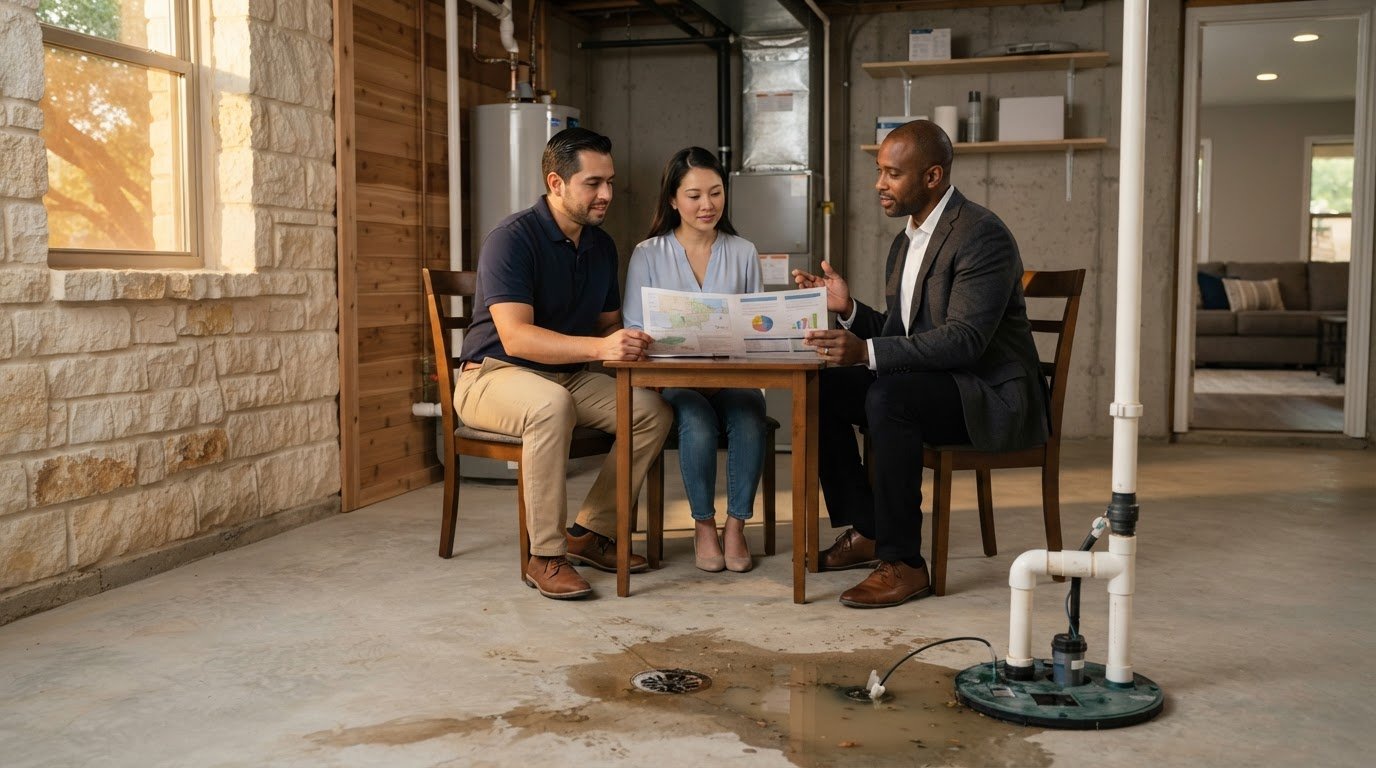
For Round Rock homeowners, a water backup endorsement may cover certain damage when water or sewage backs up through a sewer or drain, or overflows from a sump system. It may help pay for damage to the home and belongings, but generally won’t cover replacing a damaged sewer line or repairing the sump pump itself. Cost and limits depend on the policy.
The source of the water matters because homeowners insurance can treat different losses differently. This article explains what backup coverage may protect, what can affect its cost, how damage to a sump pump differs from damage caused by pump failure, and how to add an endorsement to a policy. It also explains how backup damage differs from flooding and sudden pipe leaks.
Key Takeaways
- Water backup coverage may help with damage from sewer or drain backups and sump overflows, but it doesn’t cover every water loss.
- Look closely at exclusions, coverage limits, and deductibles to understand how an endorsement could respond to a backup.
- Damage caused by a sump pump overflow is different from damage to the pump itself, which may not be covered.
- The source of the water matters: backup damage, flooding, and a sudden burst pipe can be treated differently under a homeowners policy.
- Review your policy’s endorsement options and wording to understand how to add coverage that fits your home.
What Is Water Backup and Do You Need Water Backup Coverage?
For Round Rock homeowners, a water backup endorsement may cover certain damage from backed-up drains or overflowing sump systems. Whether it fits your home depends on the policy wording, your plumbing, and the coverage limits you choose.
Water backup coverage is generally optional, not automatic. Its place in a homeowners policy is separate from any conditions in a mortgage agreement, so review your policy and loan documents for their respective terms.
Water Backup and Sump Overflow Coverage
A water backup and sump overflow endorsement may cover damage to insured property when water or waterborne material backs up through a sewer or drain, or overflows from a sump. This can matter when contaminated water reaches floors, walls, or belongings before you can stop it.
Examples include sewage backing up through a basement drain, a clogged drain causing a toilet overflow, or a sump pump system overflowing. Some limits commonly start at $5,000, but the amount available depends on the endorsement. Check whether the stated limit fits the property and cleanup costs you could face.
Coverage Exclusions
A water backup endorsement doesn’t cover every water-related loss. Flooding and damage to the failed pump or sewer line itself are common exclusions. Resulting damage inside the home isn’t the same as the cost of replacing the equipment or line that caused it.
Flooding from heavy rain, an overflowing river, or a tidal surge is different from water backing up through a drain. A separate flood policy may be relevant to flood risks. Endorsement wording also determines how exclusions apply, including whether damage to personal belongings or additional living expenses may qualify.
For example, if a sewer backup damages flooring and the sewer line also needs replacement, the endorsement may cover the indoor damage but not the line repair. Read the policy’s definitions, exclusions, and limit together rather than relying on the endorsement’s name alone.
Coverage in Homeowners Policies
Homeowners insurance doesn’t automatically include water backup coverage in every policy. You may need to add an endorsement, and available limits and terms depend on the insurer and policy.
Check the declarations page and endorsements for terms such as “water backup” or “sump overflow.” Then review the limit, deductible, covered property, and exclusions in the policy wording. If the endorsement isn’t listed, don’t assume a drain backup is covered just because you have homeowners insurance.
Is sinkhole coverage relevant when buying a home? Review it separately from water backup coverage. Sinkhole coverage concerns sudden land collapse; gradual settling or erosion may not meet that description. It addresses a different cause of property damage, so its presence doesn’t tell you whether drain backups are covered.
A Round Rock homeowner can weigh the home’s plumbing layout, sump equipment, and belongings in lower areas when considering limits. Older pipes, nearby trees, or a community sewer system may also make the policy wording worth reviewing. The key question is whether the endorsement’s covered causes and limit match the risks around your home.
What Is a Sewer Backup Endorsement and What Does It Cost?
A sewer backup endorsement may add protection for covered damage when wastewater backs up through a sewer or drain. Its terms matter because a backup, a flood, and a damaged buried sewer line can involve different coverage.
Coverage options and limits vary by insurer and policy, so compare the endorsement wording, covered causes, exclusions, and deductible. The endorsement’s price depends on the case and is given after a quote request; factors include the selected limit and policy details.
Sewer and Drain Backup Exclusions
A sewer backup endorsement may cover damage to insured property from water backing up through a sewer or drain, but it won’t necessarily cover every related repair. This matters if the backup damages furniture while a buried sewer lateral also needs replacement.
Flooding from heavy rain or rising water is a separate cause of damage and generally falls outside water backup coverage. The endorsement may also exclude the cost of repairing or replacing the underground sewer line itself. Review both exclusions before assuming one limit applies to cleanup, belongings, and pipe repairs.
Comparing Water Backup Coverage
Texas homeowners insurers can differ in endorsement wording, available limits, deductibles, and how they treat covered property. Comparing the policy documents directly is more useful than comparing endorsement names alone.
Check whether the terms cover water or waterborne material backing up through drains and whether they include sump overflows. Review how the deductible applies and what the policy says about cleanup, damaged belongings, and additional living expenses. These details affect what you may be responsible for after a sewer backup.
To understand the cost, consider the selected coverage limit and policy terms alongside the premium quoted for your home. A lower limit may leave you responsible for more of a large loss, while a higher limit means purchasing more coverage.
Available Coverage Limits in Round Rock
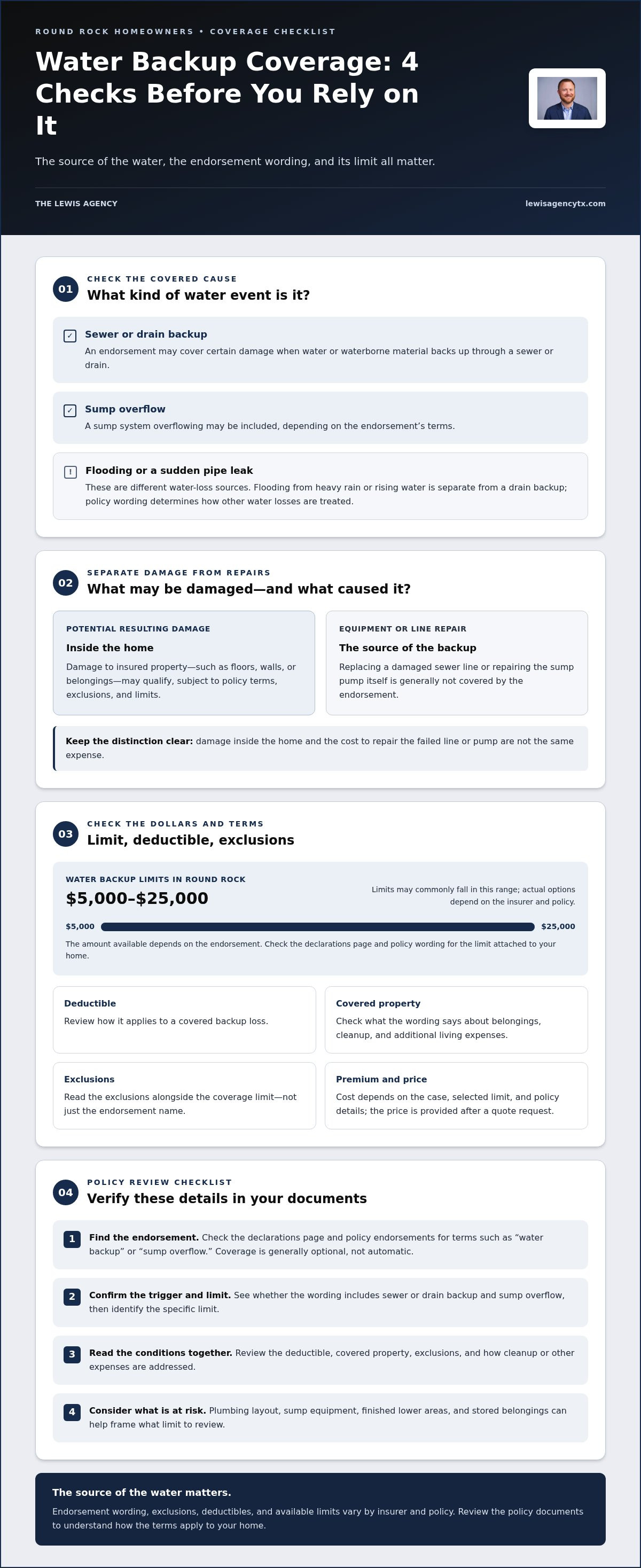
Round Rock homeowners may find water backup limits commonly ranging from $5,000 to $25,000. The actual options depend on the insurer and policy, so use the declarations page and endorsement wording to identify the limit attached to your home.
Consider what could be affected by a backup, including flooring, finished rooms, stored belongings, and cleanup needs. A hypothetical loss affecting a finished lower level could involve several types of property, while a smaller event might affect only one room. Match the limit to the areas and belongings at risk, then consider the deductible separately.
Prevention can reduce some causes of a sewer backup, although it can’t change policy exclusions. Flush only toilet paper, and put cooled cooking grease in the garbage rather than down the drain. Roots can enter cracks in sewer lines and trap debris, so a camera inspection can help identify concerns before a blockage worsens. A backwater prevention valve in lower-level drains may also help keep sewage from flowing back into the home.
If repeated backups or slow drains raise questions about your policy, a homeowners policy review can help clarify how the endorsement and its limits apply.
Sump pump failure and overflow
A sump pump moves water away from a foundation, but mechanical failure or a power outage can stop it from working. If water then overflows from the sump and damages insured property, a water backup and sump overflow endorsement may apply. The pump itself and related equipment are treated differently from the resulting water damage.
Picture a sump pump failing during a storm, allowing water to spread across a finished room. The endorsement may cover eligible damage to flooring, walls, or belongings, subject to its terms and limit. In an illustrative example, a $15,000 sump pump damage claim has a $10,000 coverage limit and a $1,000 deductible. The limit and deductible affect the amount available for covered damage; the example doesn’t promise a particular claim payment.
Pay close attention to power failure wording. A pump can stop because of mechanical breakdown, a power outage, or water overwhelming the system. The endorsement determines whether resulting damage is covered when the pump fails or overflows. A battery backup sump pump may help keep water moving during an outage, but it doesn’t change policy exclusions or guarantee coverage.
Keep the equipment and surrounding drainage system in working order. Follow the pump manufacturer’s maintenance guidance, keep the sump area clear, and check that the discharge path isn’t blocked. Look for slow flow or gurgling in nearby drains, which can signal a developing blockage. If your home has a basement or lower-level rooms, avoid storing belongings where water could collect.
A backwater prevention valve in lower-level drains can help limit sewage flowing back into a home. It serves a different purpose from a sump pump: the valve helps restrict reverse flow through drains, while the pump moves subsurface water away from the foundation. Both systems need attention, and neither replaces insurance coverage for an insured loss.
Standard homeowners coverage and endorsements don’t treat every water event alike. A sudden pipe burst differs from water backing up through a drain or sump. The endorsement’s definitions and exclusions explain how it handles water caused by pump failure, including whether damage to the pump itself is excluded. Read those details alongside the stated limit before deciding whether the protection fits your home.
For Round Rock homeowners, consider the sump’s location, what’s nearby, and whether a power loss could interrupt pumping. Keep a record of maintenance and note any recurring overflow or drainage problems. These practical details help clarify the role of the endorsement and identify questions about the policy wording before a water problem occurs.
Separating backup damage from other water damage
The source of water helps determine which part of a homeowners policy may apply. A drain backup, a sudden pipe burst, and flooding can all damage a home, but they are different events. For Round Rock homeowners, identifying where the water came from is a practical first step when describing a loss and reviewing the relevant policy language.
Water backup coverage may apply when water or sewage pushes through a sewer or drain into the home. A sudden pipe burst is different: homeowners insurance typically covers damage from a pipe that suddenly bursts, subject to the policy’s terms. Flooding from heavy rain or rising water is another category, and a water backup endorsement generally doesn’t cover flood damage.
The difference can matter even in the same room. If a pipe bursts behind a wall, water may damage drywall, flooring, and furniture. If a sewer backs up through a floor drain, the endorsement may cover resulting damage to insured property. If outside floodwater enters that room, the backup endorsement isn’t designed to cover that cause.
Covered property can include the home’s structure and, depending on the policy, personal belongings. For example, contaminated water could damage flooring, electrical systems, walls, or furniture. This illustrates how property can be affected, but the policy wording determines how a specific loss is handled.
The cause of the water and the source of the damage also matter for buried pipes. Tree roots can enter cracks in sewer lines and collect debris, eventually contributing to a blockage or backup. An endorsement may cover resulting indoor damage, while the cost of repairing or replacing the buried sewer lateral may fall outside its coverage. Separate terms can apply to underground service lines.
Cleanup is another part of the loss to consider. Removing standing water and drying affected materials promptly can help limit ongoing damage and mold growth. Water backup cleanup and drying takes an average of 3.5 days. During cleanup, keep records of affected rooms and belongings, and photograph visible damage before removing damaged items when it is safe to do so.
When reporting water damage, describe what happened plainly: where the water first appeared, whether a pipe broke, and whether water came through a drain. Keep receipts for emergency work and list damaged property, such as furniture or appliances. Those details help distinguish backup damage from other water problems and make it easier to find the relevant policy provisions.
Adding an endorsement to a homeowners policy
Start by reviewing your current homeowners policy. Find the declarations page and endorsement schedule, then look for water backup or sump overflow wording. If it isn’t included, ask the insurer about adding an endorsement. The policy documents should show the selected limit, deductible, premium, and effective date.
Before choosing a limit, consider which parts of the home could be affected. A basement or lower-level room may hold furniture, stored belongings, or household equipment. Think through how a sewage backup could affect those items and the surrounding building materials. Choose an amount that reflects the potential covered loss rather than simply selecting the lowest available option.
Read the endorsement itself rather than relying on a short description. Check how it defines backup, which drains or sump systems it addresses, and whether it covers damage to personal property. Look for exclusions involving floods, the pump itself, or buried sewer lines. The deductible and limit matter too: they shape how much of a covered loss could remain your responsibility.
Ask for the proposed change in writing. Review the updated policy documents after the endorsement is added and confirm that the stated limit matches your selection. Keep the documents with your other home records, including a note of the effective date. If comparing options, use the same questions for each version of the endorsement so the differences are clear.
Timing matters, too. Discuss the change before a water problem occurs, since the endorsement’s effective date determines when its terms apply. Don’t assume that requesting a change means coverage begins immediately. Confirm the date shown in the updated documents, then save a copy where you can find it during an emergency.
For example, a Round Rock homeowner with a basement might list the belongings stored there, note nearby drains, and review the policy’s exclusions. This inventory helps clarify what the selected limit is intended to cover. It also separates water backup concerns from flood risks or repairs to the sewer line itself, which may involve different coverage.
Once you’ve reviewed the wording, write down any remaining questions about the limit, deductible, exclusions, or effective date. A focused policy discussion can clarify how the endorsement fits the homeowners coverage already in place. Review your homeowners coverage and ask for help understanding the endorsement language.
The Lewis Agency: Homeowners Insurance Policies
The Lewis Agency is an Allstate agency that helps homeowners understand their homeowners insurance policies, including water backup endorsements. If you’re unsure how your policy addresses sewer backups, sump overflows, limits, or exclusions, the agency can help explain the relevant wording and claims process.
Bring your declarations page and endorsement documents to a policy discussion. Reviewing them can help you identify the listed coverage, applicable deductible, and questions about damage to your home or belongings. Coverage and claim decisions depend on the policy and individual circumstances.
If you’d like help understanding your homeowners coverage, contact The Lewis Agency or visit lewisagencytx.com.
Make your next policy review count
A home changes over time, and insurance questions can change with it. A finished basement, new storage habits, or plumbing work may shape what you want to review. Keep a short note of home changes for your next policy conversation. It’s a practical starting point for discussing whether a water backup endorsement for Round Rock homeowners fits your needs.
Use that review to consider how the endorsement fits with the rest of your policy. The Lewis Agency offers homeowners insurance policies, auto insurance, and landlords insurance. Coverage terms and claim decisions depend on the policy and circumstances.
Contact The Lewis Agency to discuss your homeowners coverage. A clear review can help you move forward with greater understanding and confidence.
Frequently Asked Questions
Does homeowners insurance cover sewer line replacement?
Homeowners insurance typically doesn’t cover replacing an underground sewer line simply because it’s damaged or worn. A backup endorsement may cover resulting damage inside the home, while service-line coverage, if included, may cover the buried line itself. For example, if a blockage damages indoor flooring and the lateral also needs repair, those costs may fall under different policy terms. Check each coverage section separately.
How Do You Get Ahead of a Sewer Backup Problem Before It Happens?
Reduce common blockage risks by flushing only toilet paper and putting cooled cooking grease in the garbage. Watch for slow drains, gurgling pipes, sewage odors, or recurring issues, and address them before they worsen. A camera inspection can help reveal obstructions or root intrusion in a sewer line. Keeping notes on repeated drainage problems also gives you useful details for a plumber and for understanding your property’s risk.
How do I know if my sewer line is at risk?
Repeated slow drains, gurgling, sewage odors, or water pooling near a cleanout can point to a sewer-line problem. Trees or shrubs nearby may matter because roots can enter cracks and trap debris. If symptoms recur or several fixtures drain poorly at once, a camera inspection can help identify the issue. For a Round Rock home, note when problems occur and which drains are affected.
How does the deductible interact with the limit?
The deductible is the amount applied to a covered loss, while the limit caps the amount available under the endorsement. For example, with a covered loss of $10,000, a $1,000 deductible, and a $10,000 limit, an illustrative calculation leaves $9,000 after the deductible. Policy wording determines how the deductible is applied, so read that section before estimating your share.
What should not be charged against the backup limit?
Don’t assume costs excluded by the endorsement are covered within its backup limit. Sewer-line replacement and repair of the failed sump pump itself may fall outside water backup coverage. Flood damage is a separate cause as well. Keep invoices itemized so cleanup, damaged building materials, personal belongings, and excluded equipment or line work are distinguishable during a claim review.
What does a water backup endorsement cover on a homeowners policy?
A water backup endorsement may cover damage to insured property when water or waterborne material backs up through a sewer or drain, or overflows from a sump. Depending on the policy, insured property may include parts of the home and personal belongings. For instance, a backup affecting a laundry room could damage flooring and stored items. The endorsement’s wording and limit determine what applies.
Does a water backup endorsement cover sewer backup and sump pump overflow?
It may cover both if the endorsement’s terms include sewer or drain backups and sump overflow. The cause and resulting damage matter: sewage entering through a floor drain differs from rainwater entering through an exterior opening. Check the endorsement’s definitions, exclusions, deductible, and limit. A broken pump may be treated differently from water damage caused by its failure.
What is excluded from water backup coverage, including flooding and gradual leaks?
Flooding from heavy rain or rising rivers is generally separate from water backing up through a drain, so a backup endorsement isn’t designed for flood damage. Gradual seepage or a slow leak also differs from a sudden drain backup, and its treatment depends on the policy wording and circumstances. Review exclusions for the specific source of water rather than assuming every indoor water loss fits the endorsement.

Article by
Chris Lewis
Chris Lewis is the owner of The Lewis Agency, an Allstate insurance agency serving Austin and Central Texas. With more than 25 years of insurance experience, Chris focuses on helping Central Texas homeowners better understand their insurance coverage, including deductibles, roofs and hail, severe weather risks, water damage and other important coverage considerations. He created LewisAgencyTX.com to provide practical homeowners insurance education and help homeowners better understand their coverage before they need it.