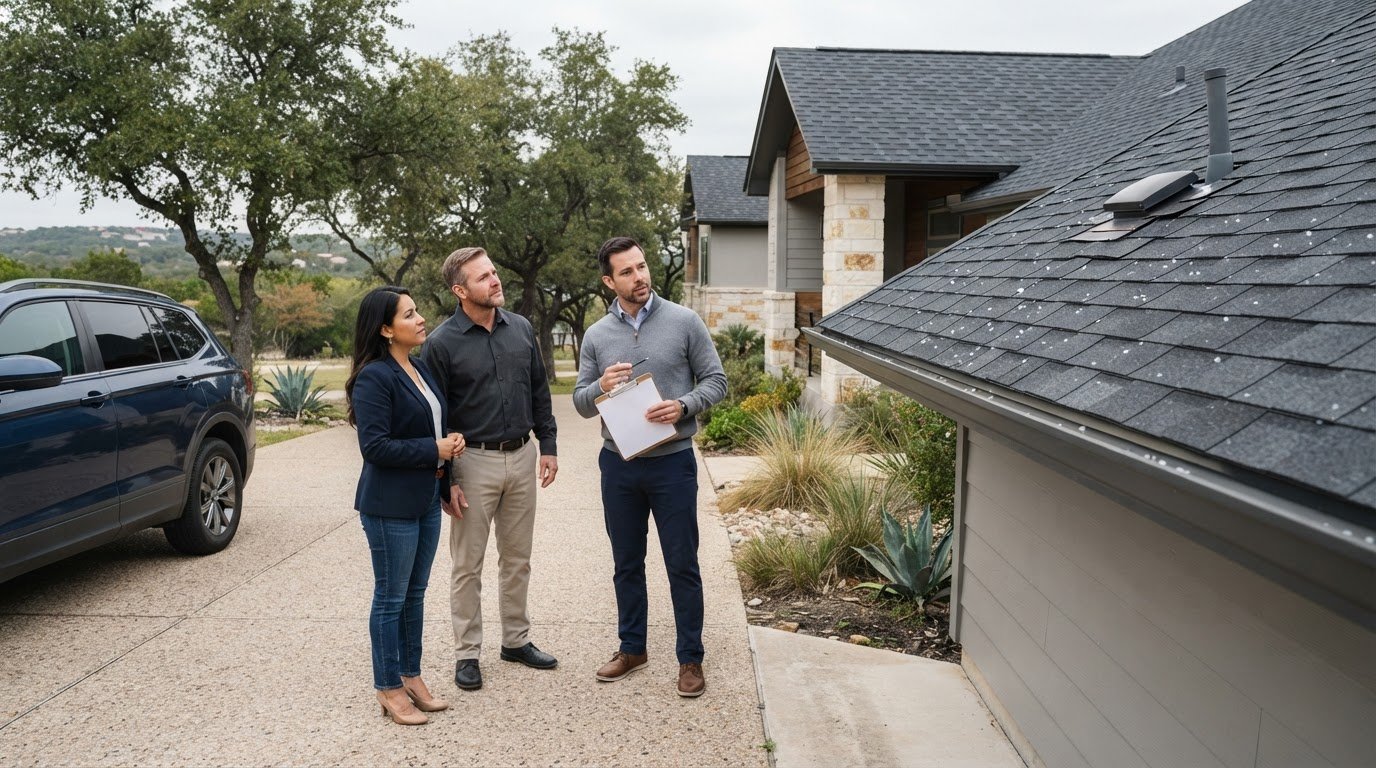
Could hail leave your roof visibly dented without leading to a covered repair? That’s a real concern for Texas homeowners, because a cosmetic roof damage exclusion may limit coverage when damage affects appearance but not the roof’s function. If you’re searching for “cosmetic roof damage exclusion texas home insurance,” the key is to check what your own policy says, not to rely on the roof’s appearance alone.
It’s natural to look at dents or marks and wonder whether the roof can still protect your home. Appearance alone may not answer that question, and coverage depends on the policy language and the facts of the loss. This guide explains what a cosmetic damage exclusion generally addresses, where to look for relevant wording, and what questions can help you understand your policy before a storm or claim.
We’ll also cover practical ways to document roof concerns and set realistic expectations when damage is assessed. The Lewis Agency works with homeowners to understand their coverage needs and review policy options in Austin, Central Texas, Leander, Cedar Park, Georgetown, Round Rock, and Liberty Hill.
Key Takeaways
- A cosmetic roof damage exclusion may limit coverage for certain appearance-related damage, so check your policy’s exact wording to understand how it may apply.
- Review your full policy packet, including endorsements and renewal materials, and search for terms like “roof,” “hail,” “cosmetic damage,” and “functional damage.”
- Use appearance changes and possible functional concerns as questions to investigate, not as a diagnosis or coverage decision.
- After hail, document what you can see from a safe location, avoid climbing onto the roof, and review the policy before asking questions.
- Revisit roof-related wording at renewal and after roof work or material changes so you know what to clarify before a storm.
What Does a Cosmetic Roof Damage Exclusion Mean in Texas Home Insurance?
A cosmetic roof damage exclusion is policy wording that may limit coverage for certain damage considered to affect a roof’s appearance without impairing its protective function. The exact definition and effect depend on the policy and any endorsements. This isn’t a standard feature of every Texas homeowners policy, so don’t assume it applies to your home without checking your documents.
That distinction can be hard to judge from the ground. A mark may be visible, but appearance alone doesn’t show whether the roof’s ability to protect the home has changed. Policies may define covered damage, exclusions, or relevant terms in different ways. In general, property insurance helps protect property against specified losses, but the policy itself explains which losses and limits apply.
How Is Cosmetic Roof Damage Different from Functional Damage?
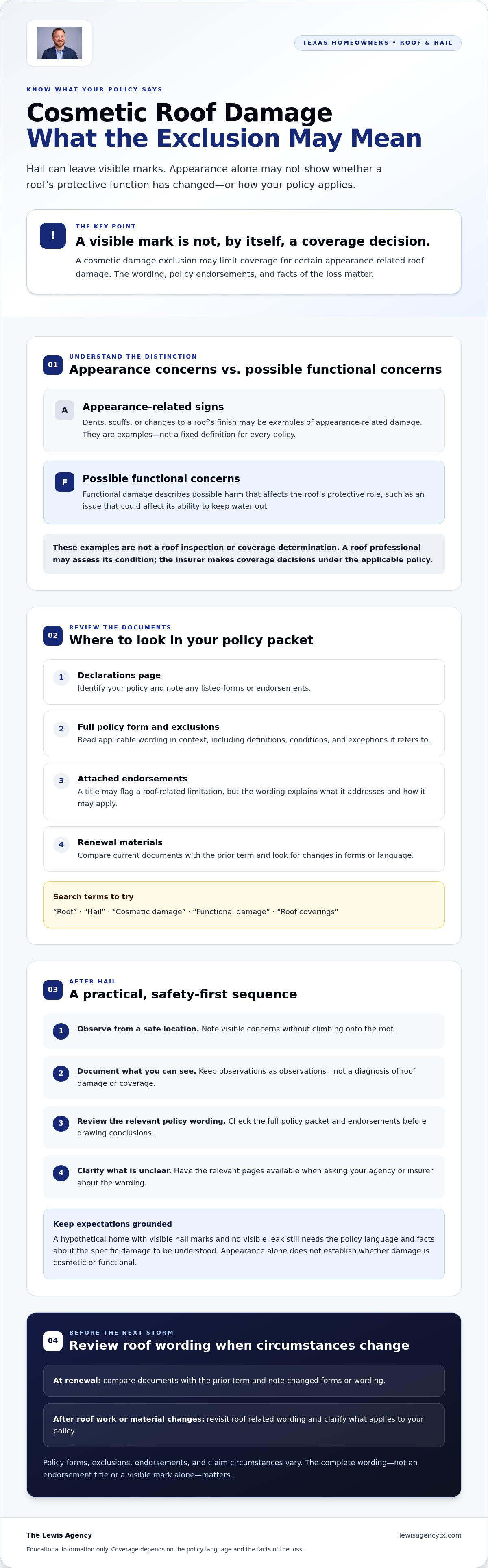
Dents, scuffs, or changes to a roof’s finish can be examples of appearance-related damage, but they aren’t fixed definitions that apply to every policy. Functional damage refers, in plain language, to possible harm that affects the roof’s protective role, such as an issue that could affect its ability to keep water out. These examples are illustrative, not a roof inspection or coverage decision.
Consider a hypothetical Central Texas home after a hailstorm. The homeowner notices marks on the roof but no visible leak. Those observations don’t establish whether the damage is cosmetic or affects the roof’s function. The policy language and evidence about the specific damage matter more than appearance alone. A qualified roof professional may be able to assess the roof’s condition; the insurer makes coverage decisions under the applicable policy.
Why Does the Exact Policy Wording Matter?
Exclusions, definitions, and endorsements can differ among policies. An endorsement may add, change, or limit terms in the main policy, so the title of a provision isn’t enough to understand its full effect. Read the wording in context, including what damage it addresses and any definitions or conditions it refers to.
A cosmetic roof damage exclusion is a policy-specific provision that may restrict coverage for certain appearance-related roof damage, depending on the wording and circumstances. Keep that distinction in mind as you review the documents. A declarations page summarizes important policy details, but it may not show every applicable condition or exclusion. Check the full policy packet and endorsements before drawing conclusions. When reviewing the cosmetic roof damage exclusion texas home insurance wording, look for what the policy says about roof damage, appearance, function, and hail, rather than relying on a brief summary or a visible mark alone.
Where to Find a Cosmetic Damage Exclusion in Your Texas Home Policy
If you’re checking whether your policy has a cosmetic roof damage exclusion, start with the complete policy packet, not just a brief summary or the name of an endorsement. Your documents can show which terms apply to your home.
Which Policy Documents Should You Review?
Use the declarations page to identify your policy and note any listed forms or endorsements. Then find and read the applicable policy form, exclusions, and attached endorsements together. An endorsement title may flag a roof-related limitation, but its title alone doesn’t establish how a particular loss will be handled. The details are in the wording, including any definitions, conditions, and exceptions it refers to.
Gather renewal materials, too. Compare the current documents with the prior term and look for changes in forms or language. If you find a reference to roof coverings or hail, check whether it applies to specific materials, types of damage, or circumstances. Don’t assume a familiar title means the wording is unchanged.
The Texas Department of Insurance’s official definition of cosmetic damage appears in a 1998 bulletin that provides historical context for an optional endorsement. It can help explain the background, but it isn’t a substitute for the current documents issued for your policy. The terms in your own policy packet are the ones to review when clarifying your coverage.
What Questions Can Help Clarify an Endorsement?
If the language is unclear, have the relevant policy pages in front of you when you contact your agency or insurer. Ask focused questions, and refer to the section or wording you’re looking at. For example:
- Which roof materials and types of damage does this endorsement describe?
- Does the policy define “cosmetic” or “functional” damage? Where are those terms defined?
- Does the wording refer to appearance, the roof’s protective function, or both?
- Did any roof-related wording change in the latest renewal, and where can I find the revised language?
For a useful review, gather your declarations page, full policy form, exclusions, endorsements, and current and prior renewal documents. Keep copies of the sections you’re asking about, along with any explanation you receive. That makes it easier to follow the wording and identify questions that still need an answer. If you’d like help understanding your homeowners coverage options, you can contact the Lewis Agency.
Cosmetic Exclusion vs. Functional Hail Damage: What Should Homeowners Understand?
A visible dent after hail doesn’t, by itself, tell you whether the roof’s protective function has changed or how a claim would be handled. The opposite is true, too: damage that isn’t obvious from the ground shouldn’t be assumed to be only cosmetic. For a cosmetic roof damage exclusion in Texas home insurance, the relevant policy wording, roof material, inspection findings, and circumstances of the loss may all matter.
The examples below are illustrative only. They aren’t a diagnosis of roof damage or a decision about coverage.
| Illustrative observation or concern | What it might prompt you to ask |
|---|---|
| Visible marks, dents, or finish changes on roof panels | Does the endorsement address appearance-related damage to this roof material? |
| A possible opening, displaced material, or sign of water entry | What inspection findings can help determine whether the roof’s protective role may be affected? |
| Marks seen after a hailstorm, with no obvious change indoors | What evidence and policy terms are relevant to evaluating the reported damage? |
These observations don’t sort a loss into “covered” or “excluded” categories on their own. Roof materials can respond differently to hail, and a mark’s appearance doesn’t establish whether it affects performance. The policy describes the applicable terms, while inspection findings and the facts of the loss may help clarify what happened.
Does a Metal Roof Change How a Cosmetic Exclusion Applies?
Some endorsements discuss metal roofing or particular roof coverings, but that doesn’t mean every metal roof or hail mark receives the same treatment. Check whether your own endorsement names a roof material, limits the provision to certain coverings, or defines the damage it addresses. Don’t rely on a general description of metal-roof coverage to interpret your policy.
How Can Homeowners Describe Roof Damage Without Drawing Conclusions?
Keep observations separate from conclusions. You might record, “Several panels have visible round marks,” rather than deciding the roof is “only cosmetic” or “no longer watertight.” Take dated photographs from safe, accessible locations, and don’t climb onto the roof. If a closer assessment is needed, consider arranging a professional inspection and keep any findings with your records.
Appearance alone doesn’t settle a coverage question; the policy wording and evidence about the specific loss matter. Clear, factual notes can help you ask more useful questions without trying to determine damage or coverage yourself.
What to Do After Hail or Cosmetic Damage Exclusion
After a hailstorm, take things one step at a time. Don’t climb onto the roof or try to decide from a ground-level view whether damage is cosmetic or functional. Whether to report damage, arrange an inspection, or make a claim depends on your policy and the circumstances. A cosmetic roof damage exclusion in Texas home insurance may affect how certain damage is considered, but only the applicable policy language and claim review can clarify its effect.
- Stay safe. Keep away from damaged areas and document only what you can see from a safe, accessible location.
- Write down observations. Note the storm date, visible changes, and any interior signs, without assuming what caused them.
- Review your policy. Locate roof-related terms, exclusions, endorsements, and any instructions about reporting a loss.
- Ask questions. Contact your insurer or agency to clarify the process and what information may be useful.
What Documentation May Be Useful After a Hailstorm?
Keep dated photographs, written observations, inspection reports, correspondence, and relevant policy documents together. For example, you might note that a ceiling mark appeared after a storm, without stating that hail caused it. An inspection may help describe roof conditions, but records don’t guarantee a claim will be paid. Keep copies of what you submit and any responses you receive.
If you have questions about how your deductible applies, review your policy and the Texas homeowners insurance deductible guide. Your own policy determines the applicable terms.
What If You Disagree with a Coverage Explanation?
Ask the insurer to identify the policy wording and facts behind its explanation. If something remains unclear, request clarification about the review options or complaint channels available to you. The Texas Department of Insurance publishes consumer guidance for Texas policyholders; consult its current materials for information about next steps. Keep the questions factual and refer to specific documents or observations.
If you’d like help understanding homeowners policy options, contact the Lewis Agency. The insurer, not the agency, makes coverage decisions under the applicable policy.
How Austin and Central Texas Homeowners Can Review Roof Coverage Before a Storm
Hail is a familiar weather concern in Austin and Central Texas, which makes it useful to understand your roof coverage before a storm arrives. A search for “cosmetic roof damage exclusion texas home insurance” can introduce the issue, but your current policy documents are the place to confirm what wording applies to your home. Whether you live in Austin, Leander, Cedar Park, Georgetown, Round Rock, Liberty Hill, or elsewhere in Central Texas, review your policy at renewal and after roof work or a change in roofing material.
What Should a Pre-Storm Roof Coverage Review Include?
Start by confirming the policy term and identifying the policy form and endorsements attached for that period. Then look for wording about hail, roof coverings, cosmetic damage, and any limits or conditions that apply. Keep your roof records and policy documents together so you can refer to them if questions come up.
- Is this the current policy term, and which roof-related endorsements are attached?
- How does the policy describe hail damage and cosmetic damage?
- Does the wording address your roof material or describe any relevant limitations?
- Do your roof records reflect work or material changes since the policy was issued?
Roof settlement method is a separate coverage question. For that topic, see the Texas roof actual cash value and replacement cost guide.
When Can an Insurance Conversation Help?
If an exclusion or endorsement is hard to interpret, ask your agency or insurer to explain the wording using your policy documents. You can ask where hail-related terms appear and what the endorsement describes. An insurance conversation can help clarify policy language and available coverage options, but it can’t determine how a future claim will be decided.
The Lewis Agency works directly with homeowners to understand their risks and consider appropriate coverage. If you’re in Austin, Central Texas, Leander, Cedar Park, Georgetown, Round Rock, or Liberty Hill and want to review your homeowners coverage, contact the agency. A policy review can help you identify what to check and what questions to ask, without promising a particular coverage outcome.
Review Your Roof Coverage Before the Next Storm
A cosmetic roof damage exclusion in Texas home insurance is specific to the policy, so visible marks alone won’t tell you whether a loss may be covered. Review the full policy packet, including endorsements and renewal documents, and note how it addresses hail, roof materials, and cosmetic or functional damage. If hail does affect your home, document observations from a safe location and ask questions before drawing conclusions.
Understanding the wording ahead of time can make it easier to know what to check and what to ask when roof concerns arise. The Lewis Agency helps homeowners in Austin, Central Texas, Leander, Cedar Park, Georgetown, Round Rock, and Liberty Hill identify risks and consider appropriate homeowners coverage. Coverage decisions are made by the insurer under the applicable policy.
If you have questions about your homeowners coverage, contact the Lewis Agency to discuss your policy options.
Frequently Asked Questions
What is a cosmetic roof damage exclusion in Texas home insurance?
A cosmetic roof damage exclusion is wording that may limit coverage for certain roof damage considered to affect appearance without affecting the roof’s protective function. The meaning depends on the policy, its definitions, and any attached endorsements. The phrase cosmetic roof damage exclusion texas home insurance doesn’t describe one universal provision, so review your own policy rather than relying on a general explanation or the appearance of a roof mark.
Does homeowners insurance cover cosmetic hail damage to a roof in Texas?
It depends on the policy and the circumstances of the loss. Some policies may include wording that limits coverage for certain cosmetic hail damage, while others may differ in their terms or endorsements. Visible dents don’t automatically mean damage is covered, and they don’t automatically mean it’s excluded. Check the applicable policy language and ask the insurer how it applies to the reported damage.
How can I tell if hail damage to my roof is cosmetic or functional?
You may not be able to determine that from appearance alone. Dents or marks can be observations, but they don’t establish whether the roof’s ability to protect the home has changed. Don’t climb onto the roof to investigate. Take dated photos from a safe place and consider a professional inspection if needed. The inspection can document conditions, while policy terms and claim circumstances guide the coverage review.
Can a cosmetic damage exclusion apply to a metal roof?
It may, depending on the endorsement’s wording. Some roof-related provisions discuss particular materials, including metal, but that doesn’t mean every metal roof or hail mark is treated alike. Check whether your policy specifically refers to metal roofing, the type of damage addressed, and any definitions or limits. The endorsement title alone can’t tell you how it applies to your roof or a particular loss.
Where do I find a cosmetic damage exclusion in my homeowners policy?
Start with your declarations page to identify the policy and any listed endorsements, then review the full policy form, exclusions, and attached endorsements. Check renewal documents as well, especially if wording may have changed since the prior term. Search for terms such as “roof,” “hail,” “cosmetic damage,” “appearance,” and “functional damage.” If a provision is unclear, ask your agency or insurer to explain it using your policy documents.
What should I do if I find roof damage after a Texas hailstorm?
Stay off the roof, record the storm date and what you can see from a safe location, and take dated photos. Note any interior signs, such as a ceiling mark, without assuming what caused them. Keep policy documents, inspection reports, and correspondence together. Homeowners in Austin, Leander, Cedar Park, Georgetown, Round Rock, Liberty Hill, and other Central Texas communities can then check their policy and ask the insurer about reporting and review steps.
Does a cosmetic damage exclusion mean my entire roof is not covered?
Not necessarily. An exclusion may apply only to certain kinds of damage, materials, or circumstances, but the wording in your specific policy determines its scope. Don’t assume the whole roof is excluded based on an endorsement’s title, or assume other roof damage is covered without checking. Read the endorsement with the policy’s definitions and conditions, then ask the insurer to clarify how the language applies to your situation.

Article by
Chris Lewis
Chris Lewis is the owner of The Lewis Agency, an Allstate insurance agency serving Austin and Central Texas. With more than 25 years of insurance experience, Chris focuses on helping Central Texas homeowners better understand their insurance coverage, including deductibles, roofs and hail, severe weather risks, water damage and other important coverage considerations. He created LewisAgencyTX.com to provide practical homeowners insurance education and help homeowners better understand their coverage before they need it.