
Homeowners Insurance Quotes and Costs in Round Rock, Texas
Explore what shapes a homeowners insurance quote Round Rock TX, how Texas and Austin costs compare, and what details to prepare for an online estimate.

A Texas cost average can provide context, but it can’t tell you what a homeowners insurance quote in Round Rock, TX, will cost. Your estimate depends on the home’s features, its location, and the coverage you choose. Statewide and Austin figures are reference points, not substitutes for a quote based on your property.
It’s reasonable to want a clear number before making a decision. But homes in the same area can have different insurance needs and rating factors, including roof age, construction, and policy details. A local estimate is more useful when it reflects the home you’re actually insuring.
This article explains what Texas and Austin cost comparisons can indicate, which details may affect rates in Round Rock, and how to get an online estimate. It also covers coverage choices to understand as you compare an estimate with your home’s needs, helping you make an informed decision without treating a broad average as a personal quote.
Key Takeaways
- Use Texas and Austin cost comparisons as context, not as a prediction of what your home will cost to insure.
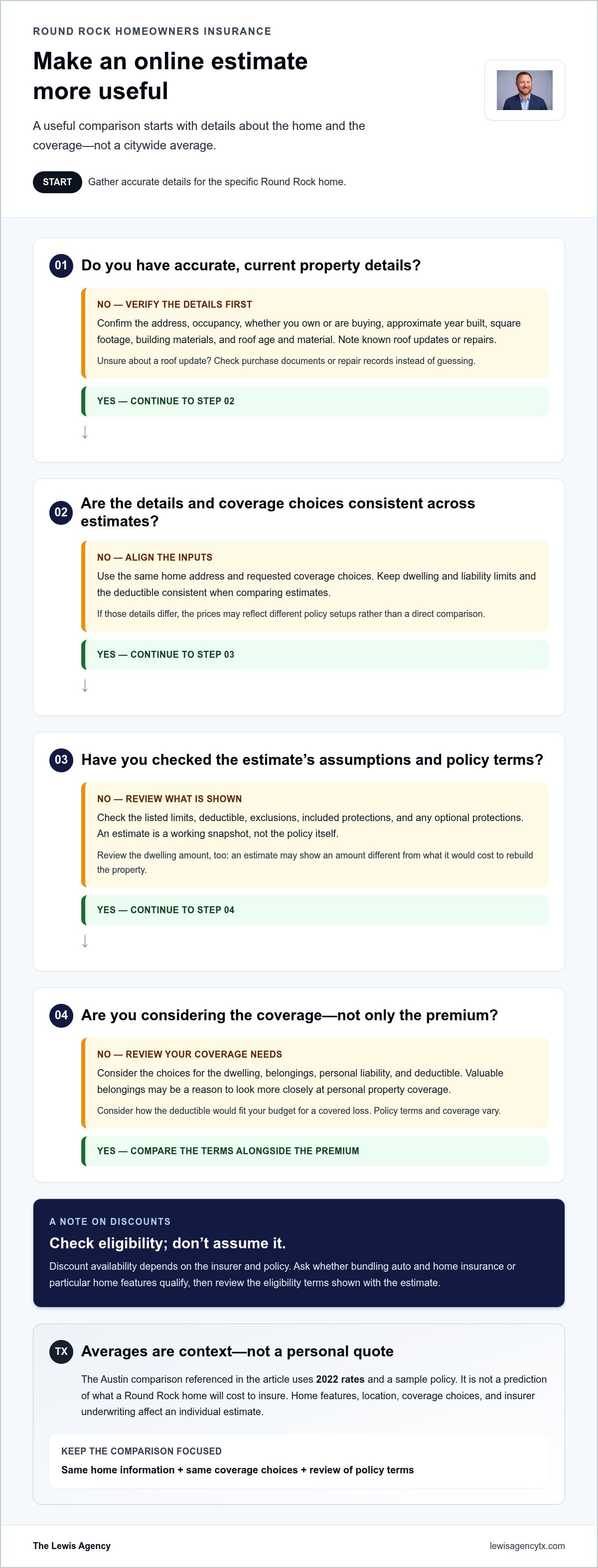
- Prepare details about your home, roof, and desired coverage to make an online estimate more relevant.
- Consider how construction, roof condition, and local storm exposure may influence a Round Rock rate.
- Review what a policy says about property damage, belongings, temporary living expenses, and liability before choosing coverage.
- Ask questions about the estimate and policy details so you can make an informed decision about your home’s protection.
How Much Does Texas Home Insurance Cost?
A Texas average offers context, but it doesn’t predict the cost for a particular Round Rock home. A quote reflects the property details provided, the coverage selected, and the insurer’s underwriting.
Premium Factors
When preparing an estimate, gather accurate details about the home’s age, construction, roof condition, and address. This information describes the property being insured, though its effect on the premium depends on the insurer’s underwriting. Coverage choices matter, too, including dwelling and liability limits and the deductible.
Review those details before submitting a request. For example, note a roof replacement or major home update so the estimate reflects the property as it is now. Then check that the coverage choices reflect what you want insured, rather than choosing options based on premium alone.
Insurer Rate Comparisons
Comparing insurance estimates is most useful when each uses the same home information and coverage choices. If deductibles, limits, or selected protections differ, the prices may reflect different policy setups rather than a direct comparison.
Read the policy terms alongside the premium. Check limits, deductibles, exclusions, and included options. “Home insurance” and “homeowners insurance” are commonly used for owner-occupied homes, but the policy wording determines the coverage.
ZIP Code Rate Differences
Use the Round Rock home’s actual address when requesting an estimate. A nearby ZIP code can’t substitute for the property’s details, and estimates for different addresses may not be directly comparable.
For a useful review, keep the address and requested coverage choices consistent across estimates. This makes it easier to identify differences in quoted terms without assuming that a citywide or ZIP-code average predicts an individual premium.
Discounts and Policy Rules
What discounts can Round Rock homeowners get on insurance? Discount availability depends on the insurer and policy. Ask whether bundling auto and home insurance or particular home features qualify, then review the eligibility terms shown with the estimate.
A deductible is the amount the policyholder pays under the applicable terms for a covered claim. The declarations page lists the deductible, while exclusions describe losses or circumstances the policy doesn’t cover. Claims procedures explain steps such as reporting a loss and providing information. Read these terms together because coverage and claims rules vary by policy.
Online homeowners insurance estimates
An online estimate is a starting point for understanding coverage and price. For a Round Rock property, gather its address, construction details, roof information, and preferred coverage before you begin.
Online Estimate Details
An online estimate uses the information you enter to outline possible home insurance coverage and pricing. It may also show choices for protecting the dwelling, belongings, and personal liability. Read the assumptions carefully: incorrect details may make the estimate inaccurate for the home you intend to insure.
Think of the result as a working snapshot, not the policy itself. For example, an estimate may use a dwelling amount that differs from what it would cost to rebuild the property. Review the displayed coverage choices and note questions about limits, deductibles, exclusions, or optional protections.
Some online forms also ask whether you want to include auto insurance. That information can help assess a home-and-auto request, but bundle terms depend on the insurer and eligibility. Compare the home coverage details separately rather than focusing only on a combined estimate.
Information for a Quote
What information do I need to get a homeowners insurance quote in Round Rock, TX? Start with the property address and details about the home’s age, size, construction, and roof. You’ll also need to consider the coverage you want for the dwelling, belongings, liability, and deductible.
Before opening an online form, collect details that describe the specific house. Useful information includes:
- Property: street address, occupancy, and whether you own or are buying the home.
- Construction: approximate year built, square footage, and primary building materials.
- Roof: age, material, and any known updates or repairs.
- Protection: desired dwelling and belongings coverage, plus liability preferences.
- Insurance history: current insurer details and information requested about prior claims.
Enter each answer consistently. If you’re unsure when the roof was updated, check purchase documents or repair records instead of guessing. Accurate property details make the estimate more useful for reviewing coverage options.
After receiving an estimate, compare its listed limits and terms with your needs. For example, valuable belongings may prompt a closer look at personal property coverage. Consider how the deductible fits your budget for a covered loss, too.
For a structured review of home coverage topics, explore these homeowners insurance resources as you prepare your questions. Keep the estimate and property details together, so the next conversation can focus on the choices that matter for your Round Rock home.
Average homeowners insurance cost in Austin
Austin provides a nearby reference for understanding homeowners insurance costs, but its average isn’t a Round Rock quote. The comparison used 2022 rates and a sample policy, so its assumptions matter as much as the location.
These figures describe the comparison’s setup, not a recommendation for every homeowner. Austin homeowners with different properties, coverage choices, or deductibles may receive different estimates. A Round Rock home has its own address and property details.
Dwelling coverage relates to the insured home’s structure, while liability coverage addresses a different risk. The deductible is the amount the policyholder pays under the policy terms for a covered claim. Changing any of these choices changes what the comparison represents. Before using an Austin figure as a benchmark, identify the assumptions behind it.
For a useful comparison, keep the home details and coverage choices consistent. An Austin homeowner comparing estimates should check:
- Whether the dwelling coverage reflects the home being insured.
- Which liability limit and deductible the estimate uses.
- Whether the policy includes the same coverage options and exclusions.
- Whether the property details, including roof information, are accurate.
These details can help clarify what each estimate includes. A lower premium alone doesn’t show whether two policies offer equivalent protection. For example, estimates may use different deductibles or coverage limits. Compare policy terms alongside the price, not just the totals shown on screen.
Austin is useful as a regional reference, but it can’t replace the address-specific details of a Round Rock property. Local conditions and individual home characteristics affect how insurers assess risk. A vehicle insurance quote uses its own rating details, so vehicle costs don’t establish a home’s expected rate.
Treat the Austin sample as a starting framework. Confirm the coverage amounts, deductible, and property information used for your own estimate. Then review how the policy addresses the home and its contents. This helps Round Rock homeowners understand what an estimate measures before deciding whether its coverage fits their needs.
Factors affecting Round Rock insurance rates
For a Round Rock home, an estimate reflects the property details and coverage choices in the request. Williamson County faces severe storms, hail, and high winds that can damage homes. A roof’s condition and the selected protection are useful details to understand when reviewing an estimate.
Roof condition and age: Roof age, material, and known repairs help describe the home accurately. Hail and high winds can damage roofs, so keep repair or replacement records with your home documents. If a quote request asks about the roof, provide details about the actual property rather than relying on information about a nearby home.
Construction and systems: Newer building codes, modern electrical and plumbing systems, and newer roofs may help new-construction homes qualify for insurance discounts. Eligibility depends on the policy and insurer’s terms. Keep construction and update records available so the information you provide about the home is clear and accurate.
Rebuilding needs: Dwelling coverage concerns the insured structure, not simply its sale price. The home’s size, materials, layout, and finishes help describe what rebuilding may involve. For example, two Round Rock homes with similar sale prices can have different construction features. Review the dwelling amount against the details of the specific home.
Coverage choices: An estimate reflects the coverage options selected for the dwelling, belongings, and liability. Different limits or optional protections mean estimates describe different setups. Before comparing premiums, check that the coverage amounts and options match the protection you want to consider for the home.
Deductibles and damage records: A deductible affects what the homeowner pays for a covered loss under the policy’s terms. Keep records of storm damage, repairs, and updates together. These records can help you provide accurate property information and understand details about the home’s current condition.
Use a consistent review process for a Round Rock estimate:
- Confirm the address, roof details, and construction information.
- Record known storm damage, repairs, and system updates accurately.
- Review dwelling, belongings, and liability coverage selections.
- Compare deductibles and policy terms alongside premiums.
This approach clarifies what each estimate describes without assuming a particular feature guarantees a particular price. A newer roof or modern systems may be relevant to discount eligibility for new-construction homes, while severe weather exposure makes accurate property details especially useful. Read the exclusions and claims terms, too. A premium alone doesn’t explain how a policy responds to a specific loss. Start by checking that the estimate represents the Round Rock home and the coverage options you want to review.
Homeowners insurance in Round Rock
For a Round Rock home, set dwelling coverage based on estimated rebuilding costs, not the home’s sale price. Don’t assume a standard homeowners policy covers flooding; review its exclusions and available flood protection.
Local Homeowners Coverage
A homeowners insurance policy can cover damage to the home, belongings, and liability, depending on its terms. In Round Rock, review how the policy treats weather damage, fire, theft, and vandalism rather than assuming the same coverage applies to every cause.
Check limits for household contents and temporary living expenses after major damage. If a storm makes the home unlivable, policy terms determine whether expenses such as hotel stays or meals qualify. Endorsements can change or add coverage, so read them alongside the base policy.
Flooding deserves careful review. Water entering a home from an overflowing creek or heavy rain may be treated differently from water damage caused by a plumbing leak. The policy wording, exclusions, and any additional flood protection determine how these situations are handled. Sewer backup coverage may also require separate consideration or an endorsement.
Dwelling Coverage and Rebuilding Costs
How much dwelling coverage does a Round Rock home need based on local rebuilding costs? Choose an amount informed by the estimated cost to rebuild the structure, rather than its market value or mortgage balance. Home size, materials, layout, and finishes affect that estimate.
For example, a house with custom finishes may require different materials and labor to rebuild than a similar-sized home with simpler finishes. Review the estimate when renovating, replacing major features, or correcting outdated property details. The dwelling limit should reflect the home being insured.
Use a practical review to identify coverage gaps before comparing policy options. Check the declarations page for limits and deductibles, then read relevant exclusions and endorsements. Ask how the policy addresses hail or wind damage, water losses, belongings, and liability. A named storm risk alone doesn’t establish whether a particular loss is covered.
Also consider what happens if repairs prevent you from living at home. Review any coverage for temporary relocation and understand its terms and limits. For personal property, check whether the policy’s settlement basis matches your expectations. Depending on the contract, replacement value and actual cash value can produce different claim calculations.
Round Rock homeowners can use the homeowners insurance resource center to prepare for a policy review. Bring questions about local weather exposure, dwelling limits, flood exclusions, sewer backups, and endorsements. A clear review connects the home’s rebuilding needs with the protections and limits written into its insurance policy.
The Lewis Agency: Homeowners Insurance Policies
The Lewis Agency is an Allstate agency offering homeowners insurance policies for Round Rock homeowners. If you’re weighing an estimate, reviewing dwelling limits, or trying to understand policy language, the agency can explain coverage options and answer questions about your policy.
Chris Lewis has more than 25 years of insurance experience and focuses on helping Central Texas homeowners understand their coverage before they need it. The agency can also help you understand the claims process, though claim decisions and payments are made by the insurer.
If you’re considering home and auto coverage together, ask how the available options apply to your situation. To talk through a homeowners policy or request a quote, contact The Lewis Agency.
Make your next coverage review count
Use your estimate as the starting point for a practical conversation, not as a decision based on one number alone. Before requesting a homeowners insurance quote in Round Rock, Texas, note home updates, changes in how the property is used, and questions about policy language. That preparation helps focus the discussion on what you want your coverage to do.
As your home and household change, revisit those questions. A renovation, new roof, or rental arrangement can change which details belong in your insurance review. The Lewis Agency offers homeowners insurance policies, Auto Insurance, and Landlords Insurance, so you can discuss related property and household coverage needs in one conversation.
For a quote or help understanding your policy options, contact The Lewis Agency. Take the next step at your own pace, with your questions ready.
Frequently Asked Questions
Are insurance rates higher in Round Rock than other areas?
A city name alone isn’t enough to conclude that Round Rock rates are higher or lower. A meaningful comparison requires estimates for the homes being considered, with comparable coverage choices and deductibles. For example, if you’re comparing your Round Rock home with a relative’s home in Austin, make sure both estimates describe the relevant property and policy terms before drawing a conclusion.
Which insurers offer homeowners insurance quotes in Round Rock, TX?
The Lewis Agency is an Allstate agency and offers homeowners insurance policies through Allstate. It doesn’t shop homeowners insurance among multiple carriers. If you request an estimate, have the Round Rock property details and coverage questions ready. Review the resulting policy documents for the insurer, limits, deductibles, and terms that apply to the specific offer before making a decision.
How do homeowners insurance rates in Round Rock compare with Austin and the Texas average?
The article’s Austin and Texas figures come from a comparison using 2022 rates, while a Round Rock quote is based on the specific home and requested policy details. The Austin sample and statewide average aren’t necessarily like-for-like measures for a particular property. Treat them as historical context, then use an estimate for the Round Rock address when making a current household decision.
What coverage limits and policy types are available for Round Rock homeowners?
Homeowners can review limits for the dwelling, belongings, liability, and additional living expenses, along with policy forms and endorsements offered for their needs. HO-3 is a commonly referenced homeowners policy form, but actual Texas forms and coverage vary by insurer. For example, a homeowner with a finished garage or custom interior features can pay particular attention to how the policy describes the insured property and applicable limits.
What factors affect homeowners insurance rates in Round Rock, including home age, roof, and claims history?
Home age, roof details, and claims history are useful topics when reviewing a home insurance estimate, but those details alone can’t determine their effect on a particular rate. Keep roof invoices, repair records, and relevant claim documents together. Accurate records help you describe the property and its history when completing a quote request or reviewing policy information.
How do hail, wind, tornado, and flood risks affect homeowners insurance in Round Rock?
Severe storms, hail, and high winds can damage homes in Round Rock and Williamson County. Review the policy wording for how it addresses storm-related damage, including applicable exclusions or deductibles. Flooding requires separate attention because coverage depends on the policy and any additional protection selected. Don’t assume a policy covering other water damage also covers floodwater entering from outside.
How can I compare homeowners insurance quotes and choose a policy in Round Rock?
Compare estimates using the same property information, requested limits, deductibles, and options. Then read the policy terms instead of choosing by premium alone. For example, check how each estimate describes the dwelling, belongings, liability, and relevant exclusions. If an estimate has an incorrect roof date or other home detail, correct it before relying on the comparison.

Article by
Chris Lewis
Chris Lewis is the owner of The Lewis Agency, an Allstate insurance agency serving Austin and Central Texas. With more than 25 years of insurance experience, Chris focuses on helping Central Texas homeowners better understand their insurance coverage, including deductibles, roofs and hail, severe weather risks, water damage and other important coverage considerations. He created LewisAgencyTX.com to provide practical homeowners insurance education and help homeowners better understand their coverage before they need it.

What Shapes a Texas Homeowners Insurance Quote
Get homeowners insurance quote information in Texas and learn how home age, location, coverage choices, deductibles, and possible discounts influence premiums.

A Texas homeowners insurance quote is shaped by more than a home’s sale price. The premium can depend on the home’s age and value, its location, the coverage selected, and the deductible. For homeowners insurance quote information in Texas, these details help explain why quotes can differ from one home to another.
It’s reasonable to want a clear picture of what affects the cost before choosing coverage. This article explains the average cost of homeowners insurance in Texas, discounts that may be available, and the home and policy details insurers may consider.
You’ll also learn what information to gather before requesting a quote and how to assess factors that affect premiums, with practical considerations for homeowners in Austin and Central Texas.
Key Takeaways
- Security features, a fire sprinkler system, a claims-free history, or policies with the same company may open the door to discounts.
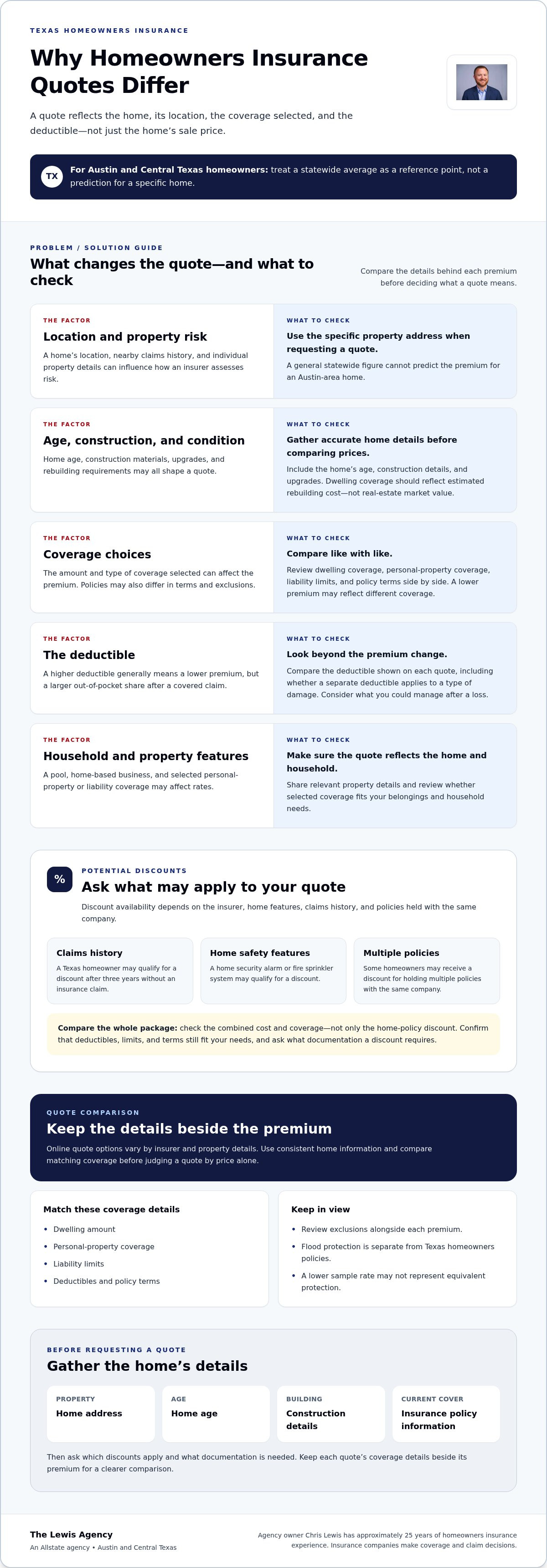
- Location, construction materials, home age, deductible, and coverage choices can all influence a premium.
- Learn which coverage details to review so you can prepare useful information for a homeowners insurance quote.
How Is the Average Cost of Homeowners Insurance in Texas calculated?
While industry data provides a statewide average annual premium to use as a baseline, that figure is only a general reference point, not a prediction for an Austin home. Location, age, construction, coverage choices, and the deductible can all shape a quote. Homeowners insurance quote information in Texas is most useful when it reflects the specific property and protection you need.
Texas doesn’t require homeowners insurance by law, though a mortgage lender will likely require it. Don’t end an existing policy until replacement coverage begins or you have written confirmation that coverage is in place.
Homeowners insurance commonly includes coverage for the dwelling, personal property, liability, and additional living expenses. Dwelling coverage may help pay to repair or rebuild after covered damage, such as hail or fire. Personal property coverage applies to belongings, while liability coverage may help with certain injury or property-damage expenses. Additional living expenses can help with extra costs if a covered loss makes the home temporarily unlivable. Texas homeowners policies don’t cover flood damage, so consider flood protection separately.
Check the policy for details beyond these core coverage types. Identity-theft assistance and refrigerated-food loss may have specific terms or limits. For valuable belongings, such as jewelry or artwork, review how the policy covers them and whether additional coverage is available. Quote details should clarify how the policy treats these items.
To choose a dwelling coverage amount, estimate the cost to rebuild the house, not its real-estate market value. Construction materials, home features, and rebuilding requirements shape that estimate. Then assess personal-property and liability limits in light of your belongings and household needs. An Austin homeowner with a pool, for example, should consider how liability protection relates to that feature.
Home insurance discounts
Discounts may depend on the insurer, home features, claims history, and policies held with the same company. Texas homeowners may qualify for a discount after three years without an insurance claim. A home security alarm or fire sprinkler system may also qualify. Ask how each discount applies to the quoted coverage instead of assuming it reduces every part of the premium.
Bundling home and auto insurance means placing both policies with one insurance company. Some homeowners may receive a discount for buying multiple policies from the same company. Compare the combined cost and coverage, not just the home policy’s discount. Check that the home and auto deductibles, limits, and terms still fit your needs.
Which Texas homeowners insurance companies offer online quotes? Online quote options vary by insurer and property details. Use an insurer’s own quote process where available, and provide consistent information about the home, its construction, and the coverage you want.
Compare quotes with matching dwelling amounts, personal-property coverage, liability limits, and deductibles. A lower sample rate may reflect different coverage or a different deductible, so it may not represent equivalent protection for a covered loss. If flooding is a concern, note whether flood insurance is handled separately. Keep each quote’s coverage details beside its premium for a clearer comparison.
Before requesting quotes, gather the home’s address, age, construction details, and current insurance policy information. Then ask which discounts apply and what documentation each requires. A homeowners insurance resource center can help you organize coverage questions before reviewing quote details.
Factors that affect homeowners insurance premiums
Texas premiums reflect the property’s risk and the amount and type of homeowners insurance coverage selected. Compare equivalent coverage before judging a quote by its premium alone.
Annual Premiums by Insurer
Annual premiums differ by insurer because companies assess property and coverage details differently. Compare quotes using the same dwelling amount, personal-property coverage, liability limits, and deductible. Then review exclusions and policy terms alongside each premium. A lower figure may reflect less coverage, so it doesn’t necessarily represent equivalent protection for the same property.
How Deductibles Affect Premiums
A higher deductible generally results in a lower premium. The tradeoff is a larger out-of-pocket share after a covered claim. Compare the deductible shown in each quote, including any separate deductible for a particular type of damage. Choose an amount you could manage after a loss, rather than focusing only on the premium change.
Other Premium Factors
Insurers may consider location, nearby claims history, construction materials, home age, and upgrades. Replacement cost estimates what rebuilding the home could require, rather than its market price. A pool, home-based business, or selected personal-property and liability coverage may also affect rates. Mortgage requirements can shape the coverage a homeowner selects.
What Makes Homeowners Insurance Quotes Different in Central Texas?
Homeowners in Austin, Leander, Cedar Park, Georgetown, and Round Rock face several considerations that can influence their homeowners insurance quotes. While every property is different, understanding these local factors can help homeowners make more informed coverage decisions.
Roof Age and Condition
In Central Texas, a home's roof can play an important role in the insurance quoting process. Insurance companies may consider the roof's age, material, condition, and replacement history when evaluating a property. Homeowners with older roofs may encounter different pricing or eligibility requirements than those with newer roofs.
Before requesting a quote, gather information about when your roof was installed, its construction materials, and any recent repairs or replacements.
Hail and Severe Weather Exposure
Austin and the surrounding communities experience severe thunderstorms that can bring hail, damaging winds, and heavy rainfall. Because roof damage is a common concern following these storms, homeowners should understand how their policy addresses wind and hail losses.
Coverage can vary depending on the insurance company, policy provisions, roof condition, and applicable exclusions or endorsements.
Wind and Hail Deductibles
Many Texas homeowners policies include a separate windstorm or hail deductible. These deductibles may be calculated as a percentage of the home's insured dwelling amount rather than as a fixed dollar amount.
For example, a 2% deductible on a home insured for $500,000 would equal $10,000. That amount represents the homeowner's deductible for a covered claim to which it applies, not necessarily the amount the homeowner will ultimately pay for repairs.
Understanding this distinction is particularly important for Central Texas homeowners comparing insurance quotes.
Local Rebuilding Costs
A home's market value is not necessarily the amount it would cost to rebuild after a covered loss. Construction labor, materials, architectural features, and local building requirements can all influence replacement costs.
In growing communities such as Leander, Georgetown, and Cedar Park, homeowners should periodically review their dwelling coverage to help ensure it reflects the estimated cost of rebuilding their home rather than simply its purchase price or current market value.
Get Guidance From a Central Texas Insurance Professional
With more than 25 years of insurance experience, Chris Lewis, owner of The Lewis Agency, helps homeowners throughout Austin and Central Texas understand how roof characteristics, deductibles, coverage options, and rebuilding costs can affect their insurance decisions.
Whether you're purchasing a new home or reviewing an existing policy, The Lewis Agency can help explain available Allstate coverage options and answer questions about your homeowners insurance quote.
The Lewis Agency: Homeowners Insurance Policies
The Lewis Agency is an Allstate agency offering homeowners insurance policies and guidance to help homeowners understand coverage. Agency owner Chris Lewis has approximately 25 years of homeowners insurance experience. He can explain policy language and answer questions about coverage options available through the agency.
A review can help when you’re buying a home, updating a policy, or reassessing coverage after renovations. Bring your quote or policy and note questions about how the home was evaluated. The Lewis Agency provides plain-English guidance on coverage and claims processes, while insurance companies make coverage and claim decisions.
For help with a quote or policy question, contact The Lewis Agency.
Make Your Next Coverage Review Count
A quote review can help you prepare for changes to your home, not just choose a policy today. Renovations, new belongings, or a change in how you use your property can make it useful to revisit your coverage. Keep notes about updates and questions so your next conversation focuses on what matters to your household.
For homeowners insurance quote information in Texas, The Lewis Agency can help explain policy language and answer questions about available coverage. The agency also offers Auto Insurance and Landlords Insurance for related needs. Coverage and terms depend on the policy and individual circumstances.
When you’re ready to talk through a quote or policy question, contact The Lewis Agency. A thoughtful review can help you take your next step with greater clarity.
Frequently Asked Questions
Is Home Insurance Mandatory in Texas?
Texas law doesn’t require homeowners insurance, but a mortgage lender will likely make it a condition of the loan. A lender will require flood insurance if the property is in a flood zone. Before closing, review the lender’s insurance requirements alongside the policy documents so you understand what coverage must be in place.
What risks does a homeowners insurance policy cover?
Depending on the policy, covered risks may include fire, theft, vandalism, lightning, wind, hail, explosions, falling objects, and the weight of snow or ice. For example, hail may damage a roof, while a falling tree limb may damage a structure. Review the policy’s exclusions and terms to understand how it treats each type of loss.
Are there ways I can help protect my home?
Yes. Keep records of roof work and home improvements, and store photos of important belongings in a secure location. Before a Central Texas storm, secure loose outdoor items and check that windows and doors close properly. After a storm, document visible damage from a safe location. These steps support preparedness but don’t change what a policy covers.
How Can I Lower My TX Home Insurance Rate?
Start by checking that the quote reflects the home’s current features and the coverage you want. Ask about discounts tied to safety features or policy eligibility, then compare the total premium, deductible, and coverage terms. A higher deductible may reduce the premium, but consider whether you could afford that out-of-pocket amount after a covered loss.
Trouble finding insurance?
If applications are declined or quotes are difficult to obtain, identify the reason given and gather relevant property details, such as roof age, construction, and repair records. Clear, consistent information can help explain the home’s condition during an application. The Texas FAIR Plan is an option Texas residents who can’t find an insurer may contact for information about coverage.
Article by
Chris Lewis
Chris Lewis is the owner of The Lewis Agency, an Allstate insurance agency serving Austin and Central Texas. With more than 25 years of insurance experience, Chris focuses on helping Central Texas homeowners better understand their insurance coverage, including deductibles, roofs and hail, severe weather risks, water damage and other important coverage considerations. He created LewisAgencyTX.com to provide practical homeowners insurance education and help homeowners better understand their coverage before they need it.