
What if a sewer backup damages your home and your homeowners policy does not cover the cleanup? Water or sewer backup can leave you facing repair costs, and coverage may depend on whether your policy includes a relevant endorsement. In Austin and across Central Texas, understanding your policy before a backup happens can help you spot potential gaps.
It is reasonable to expect homeowners insurance to help after water damage, but backup coverage may differ from coverage for other sudden, accidental losses. This article explains common causes of sewer backups, what homeowners insurance may cover, and how an optional endorsement could help. It also explains what can affect the endorsement’s cost and why its limits and terms matter.
Key Takeaways
- Learn how tree roots, blocked pipes, and heavy rain can contribute to sewage backups, and which everyday habits may reduce blockage risk.
- Understand why standard homeowners coverage may not include sewer backup damage and what policy details can affect coverage.
- See how an optional backup endorsement may help with certain losses, and why its terms and limits matter.
- Get a clearer sense of what can affect endorsement costs and when reviewing your policy may help you spot a coverage gap.
What Causes a Sewage Backup?
A sewage backup occurs when wastewater cannot move through the sewer system and returns through household drains. In Austin, heavy rain, blocked pipes, or damage to a sewer line can contribute to the problem.
Common Sewer Backup Causes
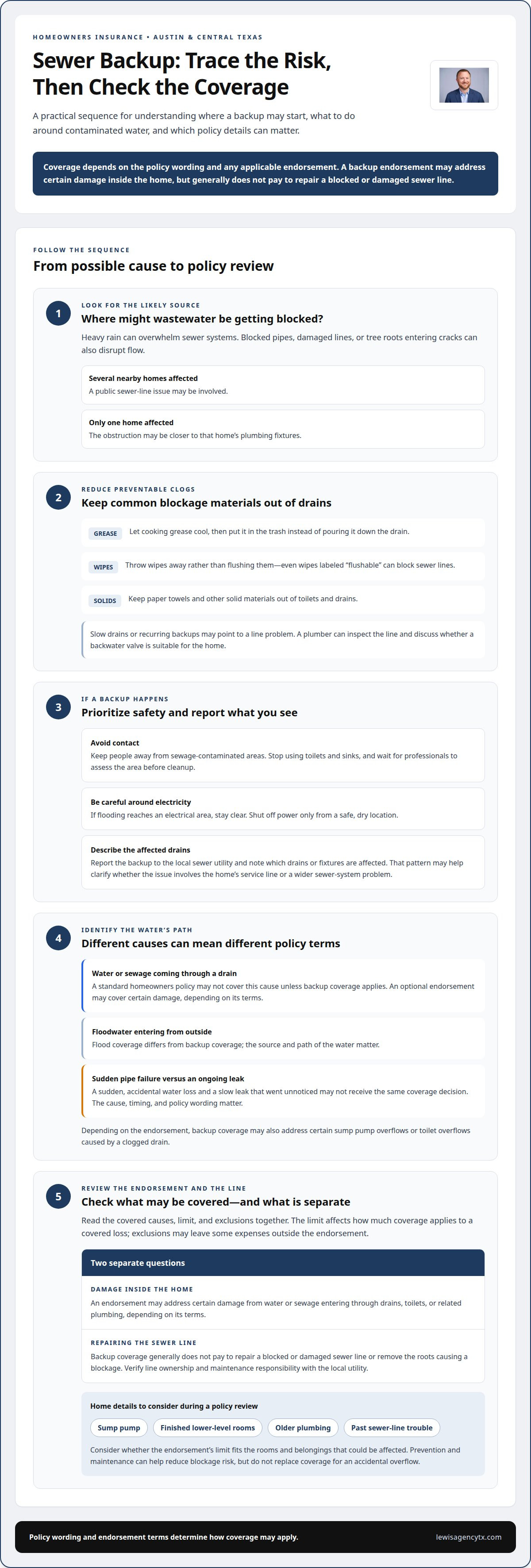
Backups can start in a home’s service line or in a municipal sewer main. Heavy rainfall may overwhelm sewer systems, while blockages can stop wastewater from flowing away. If several nearby homes report similar symptoms, a public-line issue may be involved. If only one home is affected, the obstruction may be closer to its plumbing fixtures. Noting this pattern can help direct your report.
Clogs From Grease and Wipes
Cooking grease can cool and harden inside pipes, while wipes can collect with other waste and obstruct flow. Paper towels and other solid materials can also contribute to clogs. Even wipes labeled flushable can block sewer lines. Let grease cool before putting it in the trash, and throw wipes and paper towels away instead of flushing them. These habits help reduce preventable drain clogs.
Pipe Damage and Tree Roots
Cracks or aging pipes can let tree roots enter sewer lines and restrict wastewater flow. A damaged pipe can also trap debris or disrupt drainage. Slow drains or recurring backups may point to a line problem that needs assessment. A plumber can inspect the line and discuss whether a backwater valve is suitable for your home.
After a backup, avoid contact with contaminated water and stop using toilets and sinks. If flooding reaches an electrical area, stay clear. Shut off power only from a safe, dry location.
Keep people away from sewage-contaminated areas until professionals assess them. Wait to clean up until the source is corrected and sewage has drained. Contaminated areas need appropriate disinfection.
To help prevent backups, keep grease, wipes, paper towels, and other solids out of drains, and address noticeable tree roots near sewer lines.
If a backup occurs at your Austin home, report it to the local sewer utility and describe which drains or fixtures are affected. Those details can help clarify whether the issue may involve your home’s service line or a wider sewer-system problem.
Does Homeowners Insurance Cover Sewer Backup Costs?
Homeowners insurance may not cover sewage entering through a drain unless the policy includes backup coverage. The policy wording and any applicable endorsement determine what a covered loss may include.
Homeowners Policy Coverage
Water backup coverage is optional protection that may cover certain damage from water or sewage coming through drains. It matters because a clogged sewer line can send contaminated water into a home, while a standard policy may not cover that cause of damage. Coverage may also apply to some sump pump overflows or toilet overflows caused by a clogged drain.
A backup endorsement generally addresses water entering from plumbing fixtures or drains, rather than outside flooding. That distinction matters in Austin and Central Texas, where the water’s source and path affect which policy terms apply. Review the wording for covered causes, limits, and exclusions.
Standard Policy Exclusions
A standard homeowners policy may exclude damage from a sewer backup if no backup endorsement applies. As a result, cleanup and repairs to flooring, walls, furniture, and other belongings may fall outside the coverage available for that loss. Read the exclusion carefully, including how the policy treats water forced through a toilet, shower, or floor drain.
Backup coverage generally does not pay to repair a sewer line or remove tree roots that caused a blockage. Depending on the location and circumstances, a homeowner may be responsible for maintaining the private service line, while the utility may handle its own main. Verify line ownership and maintenance responsibility with your local utility. Coverage for resulting damage and responsibility for pipe repairs are separate questions.
Water Damage Coverage
Homeowners insurance may cover water damage that is sudden and accidental, while ongoing leaks or damage related to poor maintenance are generally treated differently. For example, a sudden pipe failure and a slow leak that went unnoticed may not receive the same coverage decision. The cause, timing, and policy wording all matter.
Flood coverage also differs from backup coverage: floodwater enters from outside, while backup water comes through drains or related systems. For help understanding the wording in a homeowners policy, you can ask a coverage question.
Optional water and sewer backup endorsements
A water backup endorsement adds protection that a standard homeowners policy may not provide for certain backup losses. It may be relevant for Austin-area homes with a basement, sump pump, older pipes, or a sewer lateral vulnerable to blockages.
Depending on its terms, the endorsement may cover damage when sewage or water enters through drains, toilets, or related plumbing. Coverage may also include a sump pump overflow or failure of a system that removes subsurface water near the foundation. These situations differ, so consider which systems your home has. For example, a finished basement may contain flooring and belongings that need attention after an overflow.
Review the endorsement’s covered causes, limit, and exclusions together. The limit affects how much coverage applies to a covered loss, while exclusions may leave some expenses outside the endorsement. Backup coverage generally addresses damage inside the home, not repairs to a blocked or damaged sewer line. If roots block the service line between your house and the utility main, repairing that pipe is separate from covering damage to your home.
For a practical review, list your home’s risk factors: a sump pump, finished lower-level rooms, older plumbing, or a sewer line with a history of trouble. Then consider whether the endorsement’s limit fits the rooms and belongings that could be affected. Keep maintenance and prevention separate from insurance: clearing debris from a sump pump pit and keeping grease and wipes out of drains can help prevent blockages, but does not replace coverage for an accidental overflow.
Use the homeowners insurance resources to understand policy terms and prepare focused questions about backup protection.
The Lewis Agency
The Lewis Agency helps Austin and Central Texas homeowners understand how their policies address sewer backups and optional endorsements. If you are unsure whether backup protection is included, what limits apply, or how the wording treats a sump pump overflow, a policy review can clarify what your documents say. The agency explains coverage language and the claims process, while the insurer makes coverage and claim decisions.
Bring questions about how a specific backup scenario relates to your policy, including whether damage to belongings and repairs to a private sewer line are treated separately. Clear answers can help you understand your coverage before a loss and identify points that may need attention.
Contact The Lewis Agency to discuss your homeowners coverage questions.
Make Your Next Policy Review More Useful
Use your next policy review to connect coverage questions to how you use your home. Note changes, such as finishing a room or adding equipment that handles water, so the review can focus on what matters to your household. Ask how water and sewer backup coverage is described, what the endorsement costs, and which terms affect the price. The Lewis Agency can explain policy wording and the claims process; coverage and claim decisions remain with the insurer.
The Lewis Agency offers Homeowners Insurance Policies, Auto Insurance, and Landlords Insurance. If you’d like to talk through your homeowners coverage, contact The Lewis Agency. A thoughtful conversation can help you take your next step with greater clarity.
Frequently Asked Questions
What does water backup coverage include?
Water backup coverage may help with certain damage and cleanup expenses after water or sewage backs up into a home. The endorsement wording determines which property and expenses qualify. For example, a claim involving damaged flooring may be handled differently from one involving personal belongings. Review the covered costs, exclusions, and limit together to understand how the protection applies to your home.
What affects the cost of water removal and sewage remediation?
Cleanup and remediation costs depend on the affected area, how far contaminated water spread, and which materials need removal or treatment. A small area with hard surfaces may require different work from a finished basement with contaminated carpet and furnishings. The time before cleanup begins and the steps needed to address odors can also affect the work involved.
What Does it Mean When Your Sewer Backs Up in the basement?
It means wastewater is entering the basement through a drain or other plumbing connection instead of flowing away from the home. Because basements often have low-lying drains and finished materials, the source and route of the water matter. A drain backup differs from water entering through basement walls, so noting where water appeared can help clarify what happened.
What are signs of a potential sewer backup?
Gurgling drains, water rising from a floor drain, or water backing up in a shower or bathtub can signal a developing problem. Water coming from the sewer cleanout is another warning sign. Note which fixtures are affected and whether the symptoms occur together. That information can help distinguish a localized fixture issue from a wider sewer-line concern.
What is a water or sewer backup?
A water or sewer backup occurs when wastewater or water reverses direction and enters a home through drains or connected plumbing. It may involve sewage from a sewer line or water from a sump pump system. This differs from outside floodwater entering the home. Identifying the source can help you understand which policy terms and protections may apply.

Article by
Chris Lewis
Chris Lewis is the owner of The Lewis Agency, an Allstate insurance agency serving Austin and Central Texas. With more than 25 years of insurance experience, Chris focuses on helping Central Texas homeowners better understand their insurance coverage, including deductibles, roofs and hail, severe weather risks, water damage and other important coverage considerations. He created LewisAgencyTX.com to provide practical homeowners insurance education and help homeowners better understand their coverage before they need it.