
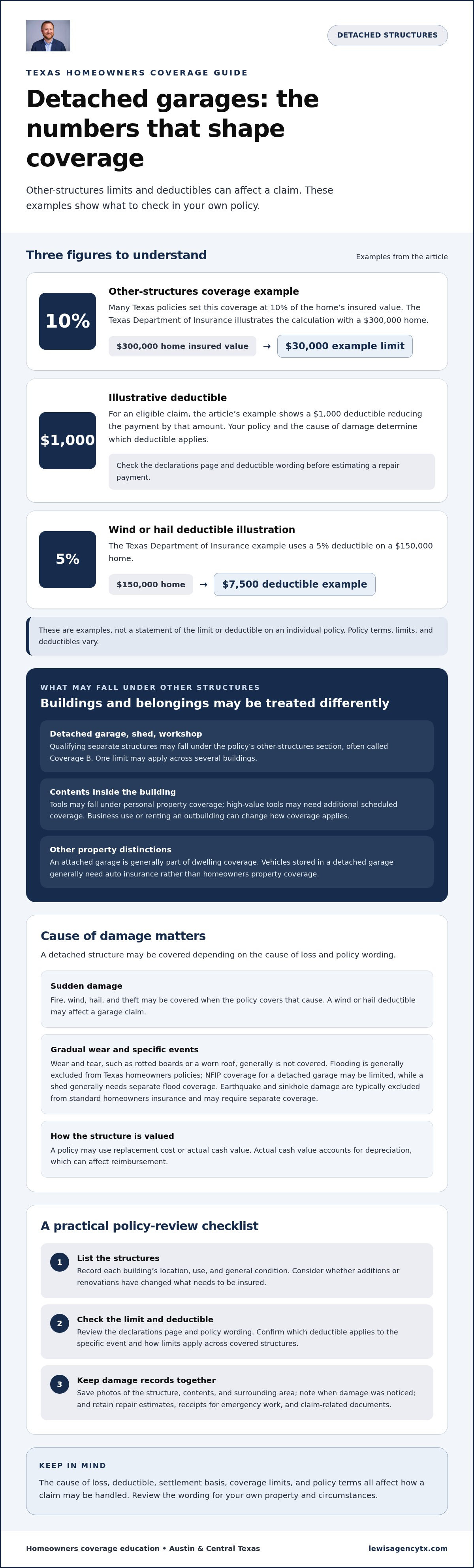
A detached garage may be covered under the other-structures portion of a homeowners policy, but the deductible can affect what a claim pays. Many Texas policies set this coverage at 10% of the home’s insured value. In its example, the Texas Department of Insurance shows that a home insured for $300,000 may have $30,000 in other-structures coverage, and it says most home policies include a deductible for this coverage.
It’s reasonable to expect a garage or shed to be treated differently from the house itself. Understanding detached garage and outbuilding insurance coverage in Texas means knowing which structures and belongings may be covered, what exclusions may apply, and how the deductible affects a claim. Here’s how to review the coverage, including why damage to a detached building may be subject to the same deductible as other covered property.
Key Takeaways
- List detached garages, sheds, and other buildings on your property, then consider whether renovations or additions have changed what needs to be insured.
- Separate sudden damage from gradual wear and understand how flooding and earthquake damage may be treated differently.
- Before filing a garage claim, identify the cause of damage and the deductible that applies to that loss.
- Remember that a building and the tools or other belongings inside it may fall under different parts of a homeowners policy.
Does Homeowners Insurance Cover a Shed?
Detached garage and outbuilding insurance coverage in Texas usually falls under the policy’s other-structures section, often called Coverage B. Whether a shed qualifies, and how much protection applies, depends on the policy wording, limits, and deductible.
Other Structures Coverage Limits
Coverage B refers to protection for qualifying structures separate from the dwelling. The Texas Department of Insurance gives an example of a home insured for $300,000 with $30,000 in other-structures coverage, or 10% of the home’s insured value. Use your declarations page to find the limit that applies to your own policy.
After adding a shed or enlarging a garage, review whether the listed limit still fits the buildings on your property. Ask the insurer about increasing it, then keep the updated policy documents with your home records.
Shared Limits Across Outbuildings
One other-structures limit may apply across several buildings, such as a garage, shed, and workshop. That matters when estimating whether the available amount could address damage to more than one structure. Make a property list that records each building’s location, use, and general condition.
Use that inventory when reviewing your policy wording and declarations page. Flood damage generally falls outside homeowners insurance. Under the National Flood Insurance Program, coverage for a detached garage may be limited, while a shed generally needs separate flood coverage.
Documenting a Detached Structure Claim
For a damage claim, keep photographs of the structure, affected contents, and surrounding area. Record when you noticed the damage and save receipts for emergency work or repairs. A dated record helps you describe the loss consistently.
Keep repair estimates and a list of damaged belongings with those images. Review the declarations page for the applicable deductible, and retain copies of claim-related documents. These records can help you explain the damage and keep claim details organized.
Is A Detached Garage Covered Under Your Homeowners Policy?
A detached garage may be covered as an other structure, but the cause of damage and policy terms matter. Flooding, earthquakes, business use, and gradual deterioration may be treated differently from sudden covered damage.
Covered Perils for Detached Buildings
Fire, wind, hail, and theft may be covered when the policy covers that cause of loss. For hail damage to a garage, the applicable wind and hail deductible may affect a claim. Wear and tear, such as rotted boards or a worn roof, develops over time and generally isn’t covered.
Flood damage is generally excluded from Texas homeowners policies. National Flood Insurance Program coverage for a detached garage may be limited, while a shed generally needs separate flood coverage. Earthquake and sinkhole damage are typically excluded from standard homeowners insurance and may require separate coverage.
For a damaged structure, the policy may value it at replacement cost or actual cash value. Actual cash value accounts for depreciation, so the valuation method can affect reimbursement.
Business Use and Stored Property Exclusions
Using an outbuilding for business or renting it can change how coverage applies. Business property or use may be limited under homeowners insurance, so review the policy terms for the building and its contents. Tools inside a garage may fall under personal property coverage, while high-value tools may need additional scheduled coverage.
Vehicles stored in a detached garage generally need auto insurance, not homeowners property coverage. Equipment breakdown may also matter: a garage-door opener’s mechanical failure or wiring may not be covered without that protection. For a policy wording review, explore these homeowners insurance resources.
Deductibles for detached garage claims
A detached garage claim may use the homeowners policy’s deductible rather than a separate deductible for the building. The Texas Department of Insurance says most home policies include a deductible for other-structures coverage. A policy may apply the dwelling deductible unless its terms say otherwise, so read the declarations page and deductible wording before estimating a repair payment.
The deductible amount depends on the policy and the covered cause of damage. For example, a $1,000 deductible would reduce the payment for an eligible claim by that amount. Windstorm or hail damage may involve a percentage deductible instead. The Texas Department of Insurance illustrates a 5% deductible on a $150,000 home, which equals $7,500. That example shows why the deductible type matters before deciding whether to file.
Check which deductible applies to the specific event, then compare it with the estimated repair or replacement amount. A shared deductible can affect a detached garage and other structures covered under the same policy. Attached garages are generally part of dwelling coverage, while fences may fall under other-structures terms. A separate policy may apply to flood damage, so don’t assume the homeowners deductible governs every loss.
Keep the declarations page, damage photos, and repair estimate together when discussing a claim. Ask how the policy applies its deductible and coverage limits to the damaged structure. The deductible is not the only factor: the cause of loss, settlement basis, and policy terms also affect payment. For help understanding the wording, ask a homeowners coverage question.
The Lewis Agency: Homeowners Insurance Policies
The Lewis Agency can help homeowners understand how their policy addresses a detached garage, shed, or other outbuilding. As an Allstate agency, it can explain policy language, review coverage limits and deductibles, and help you understand the claims process. Coverage decisions remain with the insurer, and the policy terms determine how a particular loss is handled.
A policy review can be useful after adding a structure, changing how you use one, or finding that its limit or deductible is unclear. Focus the discussion on your homeowners policy and the details that matter to your property, rather than assuming every outbuilding has the same coverage. The Lewis Agency also offers auto, landlords, and condo insurance policies.
For help understanding your homeowners policy, contact The Lewis Agency with your coverage questions.
Make Your Next Coverage Review Count
A new structure, renovation, or change in how you use a garage can shift what you need to discuss at your next policy review. Keep a current record of outbuildings and their uses, then bring any questions about limits or deductibles to the conversation. A review of detached garage and outbuilding insurance coverage in Texas can help you understand how your policy’s wording applies to the property you have now. Because coverage depends on the policy, reviewing its terms with an insurance professional can clarify what to consider next.
Contact The Lewis Agency to discuss your homeowners coverage and questions about your property. A clear next step can make it easier to plan ahead with confidence.
Frequently Asked Questions
Home insurance: What structures are covered?
Home insurance may include structures on the residence premises that meet the policy’s definitions. For a less common feature, such as a built-in swimming pool, classification can depend on the insurer and policy wording. Check the declarations and definitions to see how the feature is categorized, especially if it’s part of a larger outdoor area or construction project.
What Counts as a Detached Structure?
A detached structure stands apart from the main home rather than forming part of its construction. For a borderline feature, note whether it shares a wall or roof with the house, and describe any connecting walkway or enclosure. Those details can help clarify how the policy classifies it, especially when additions change the property’s layout.
What about the things stored inside the shed?
Items stored in a shed are considered separately from the building itself. To prepare, keep a current inventory with descriptions, photographs, and receipts for belongings you may need to identify later. Record valuable equipment individually, since a policy may apply special limits or require additional coverage for certain items.
What types of damage does it pay for?
Coverage depends on the event that caused the loss and the policy’s terms. For example, a claim involving a fallen tree may require details about what fell, where it landed, and the resulting damage. Keep maintenance records and dated photographs of the structure’s condition; they can help distinguish a sudden event from deterioration that developed over time.
Does Texas homeowners insurance cover a detached garage or other outbuilding?
A detached garage or outbuilding may be covered, but construction status and use can affect how the policy applies. If you’re building a new garage, review how coverage applies during construction; a builders risk policy may be more suitable for that stage. Also review your policy if you rent the structure or use it for business.

Article by
Chris Lewis
Chris Lewis is the owner of The Lewis Agency, an Allstate insurance agency serving Austin and Central Texas. With more than 25 years of insurance experience, Chris focuses on helping Central Texas homeowners better understand their insurance coverage, including deductibles, roofs and hail, severe weather risks, water damage and other important coverage considerations. He created LewisAgencyTX.com to provide practical homeowners insurance education and help homeowners better understand their coverage before they need it.