
The purchase price alone won’t tell you what homeowners insurance will cost. When arranging home insurance before buying a home in Georgetown, Texas, the premium depends on factors such as rebuilding needs, roof condition, coverage choices, and deductibles.
It’s sensible to want a clear budget before closing, but choosing a policy involves more than comparing premiums. This guide explains what can shape the cost, how deductibles affect the premium, and what to review for a Georgetown property, including its roof, detached structures, and possible gaps such as flood coverage. You’ll also learn what to consider if the home will be empty before you move in, so you can make informed choices during the transition.
Key Takeaways
- Home insurance costs depend on the home and the coverage selected, so focus on what shapes a quote rather than relying on a general estimate.
- Choose a deductible with both the premium and the out-of-pocket amount you could manage in mind.
- Review the roof, detached structures, belongings, and loss-of-use coverage when assessing a Georgetown home.
- Consider how flood exposure, vacancy before move-in, or planned renovations could affect which coverage options fit the property.
How Much Does Texas Home Insurance Cost?
There’s no single premium for every Georgetown home. For home insurance before buying in Georgetown, TX, a quote depends on rebuilding needs, roof condition, coverage choices, and deductibles.
Core Home Coverage
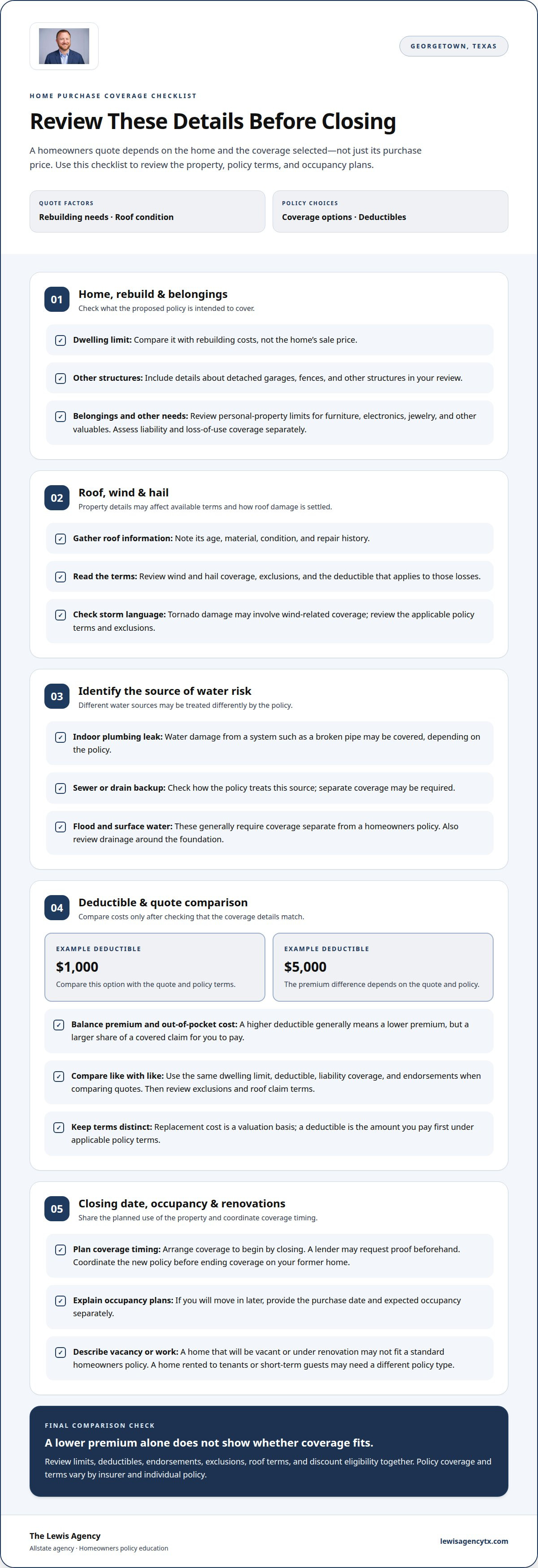
A dwelling limit should reflect rebuilding costs, not the home’s sale price. Include the roof and other structures, such as a detached garage or fence, in your property review. Personal property coverage applies to belongings such as furniture and electronics. Liability and loss-of-use coverage address separate needs, subject to the policy’s terms.
Mortgage lenders generally require homeowners insurance as a loan condition, often with replacement-cost coverage. Arrange coverage to begin by closing, and provide proof to the lender beforehand if requested. If you’ll move in later, give the insurer the purchase date and expected occupancy separately. Coordinate the new policy before ending coverage on your former home.
Optional Coverage Additions
Review exclusions and limits for plumbing leaks, drainage problems, and foundation concerns. Water damage from an indoor system, such as a broken pipe, may be covered depending on the policy. Sewer or drain backup may require separate coverage, so review how the policy treats that source of water.
Check personal-property limits for firearms, jewelry, and other valuables. Identity recovery coverage may also be available. The homeowners resources explain policy terms and coverage choices.
Weather and Water Perils
Review wind and hail terms, as well as the roof’s age, material, condition, and repair history. These details may affect available terms and how roof damage is settled. Tornado damage may involve wind-related coverage, so review the applicable policy terms and exclusions.
Flood and surface water generally require coverage separate from a homeowners policy. A sudden plumbing leak may be treated differently from groundwater or a backed-up drain. Review how the policy addresses each water source, including drainage around the foundation.
Choosing homeowners insurance deductibles
A deductible affects what you pay toward a covered claim and the policy premium. Compare the available choices with your budget and the policy terms.
Deductible Choices
Identify each deductible in the proposed homeowners insurance policy. A policy may have different terms for specific losses, so read the declarations and endorsements together. Compare a $1,000 deductible with a $5,000 deductible; the premium difference depends on the quote and policy. The right fit depends on what you could pay after a loss.
Replacement cost describes a valuation basis, not the deductible. Keep the terms separate when reviewing dwelling coverage: one concerns how a covered loss is valued, while the other is the amount you pay first under applicable terms.
Deductibles and Premiums
A higher deductible generally means a lower premium, but it also raises your share of a covered claim. Compare quotes using the same dwelling limit, coverage options, and endorsements. Otherwise, a lower premium may reflect less protection rather than a better deductible choice. For a Georgetown roof claim, review whether the deductible shown applies to wind or hail losses.
Endorsements can change coverage terms, so review any deductible-related provisions and eligibility rules before relying on them. Don’t assume a feature applies to every loss. If you have questions about a deductible, ask for clarification on the wording before choosing.
Home insurance options for Georgetown, Texas
Georgetown buyers should compare policy terms as well as premiums. Focus on how the coverage fits the home, your belongings, and the risks that matter to the purchase.
Policy Options for Buyers
Compare the dwelling limit and its valuation basis with the cost to rebuild, not simply the purchase price. Review roof settlement terms, other-structure limits for fences or detached garages, and personal-property limits for belongings such as jewelry. Liability coverage and additional living expense limits address different needs, so assess them separately. Flood and surface water generally require coverage separate from a homeowners policy.
A Georgetown home that will be vacant or under renovation may not fit a standard homeowners policy. Describe your occupancy plans and renovation scope accurately. A home rented to tenants or short-term guests may need a different policy type.
Discounts and Policy Comparisons
Ask which discounts are available and what eligibility rules apply. Don’t assume a discount applies until it appears in the quote. Compare policies using the same dwelling limit, deductible, liability coverage, and endorsements, then review exclusions and roof claim terms. A lower premium alone doesn’t show whether the policy provides the coverage you need.
If an insurance company declines a Georgetown home, identify the stated concern and correct or document property details where possible. Reviewing Georgetown home coverage options alongside that concern can help clarify which policy terms and property information matter. Continue pursuing eligible coverage rather than assuming one denial means no policy can fit.
The Lewis Agency: Homeowners Insurance Policies
The Lewis Agency can help Georgetown buyers understand an Allstate homeowners policy before closing. Bring the home’s details, planned occupancy date, roof information, and lender requirements into the conversation. The agency can explain policy language and help you review dwelling coverage, deductibles, exclusions, and options for detached structures or belongings.
Consider getting guidance if the home will be vacant before move-in, needs renovation, or has features that may affect coverage terms. A review can clarify what the proposed policy says and which questions to resolve before the purchase is complete. The Lewis Agency also offers auto insurance, which may be relevant when organizing coverage for a move.
Please contact The Lewis Agency with questions about a Georgetown homeowners policy.
Make Your Insurance Review Part of the Purchase Plan
Buying a home is a good time to make sure your insurance decision reflects how you’ll use the property, not just what the lender needs for closing. For home insurance before buying in Georgetown, Texas, bring questions about occupancy, planned renovations, and policy terms to a conversation before finalizing your choice. This gives you a chance to understand how the proposed coverage fits your plans.
The Lewis Agency offers homeowners, auto, and landlords insurance. If your plans change from living in the home to renting it, get guidance on how that affects the type of policy to consider.
Talk with The Lewis Agency about your Georgetown home purchase, and take the next step with a clearer understanding of your options.
Frequently Asked Questions
What can home insurance provide coverage for?
Depending on the policy, homeowners coverage may help with covered damage to the house and belongings, personal liability, or additional living expenses after an insured loss. For example, fire damage may involve repairs to building materials and replacement of damaged contents. A sudden indoor pipe leak may also be covered under some policies. Exclusions, limits, and claim terms determine how coverage applies.
Need a Homeowners Quote?
The Lewis Agency offers homeowners insurance guidance to help you understand proposed coverage. For a Georgetown purchase, have the property address, expected occupancy date, roof details, and lender requirements ready. Include information about additions or renovations, too. These details help frame the quote and clarify questions about the home before closing. You can ask about policy language as you review your options.
What Affects My Rates?
A Georgetown premium depends on the property and the coverage selected. Rebuilding needs, roof condition, deductibles, and policy limits can affect the quote. Renovation details matter, too: describe what work was done and when, rather than assigning one date to the entire house. The premium depends on the individual property and coverage choices and is provided after a quote request.
What is the Difference Between Homeowners Insurance and Home Insurance?
In everyday conversation, “home insurance” is often a shorter way to refer to homeowners insurance. The exact policy name matters less than its written terms. For a Georgetown purchase, review the named insureds, property address, coverage limits, deductibles, and effective date on the documents. Those details clarify which home and people the policy applies to.
What does homeowners insurance cost in Georgetown, Texas?
There isn’t one standard price for every Georgetown home. A quote reflects the property’s rebuilding needs, roof details, selected limits, and deductible choices. A home with different construction or renovation details may receive a different quote, even nearby. The practical way to estimate your cost is to request a quote with accurate information about the home and your intended occupancy.

Article by
Chris Lewis
Chris Lewis is the owner of The Lewis Agency, an Allstate insurance agency serving Austin and Central Texas. With more than 25 years of insurance experience, Chris focuses on helping Central Texas homeowners better understand their insurance coverage, including deductibles, roofs and hail, severe weather risks, water damage and other important coverage considerations. He created LewisAgencyTX.com to provide practical homeowners insurance education and help homeowners better understand their coverage before they need it.